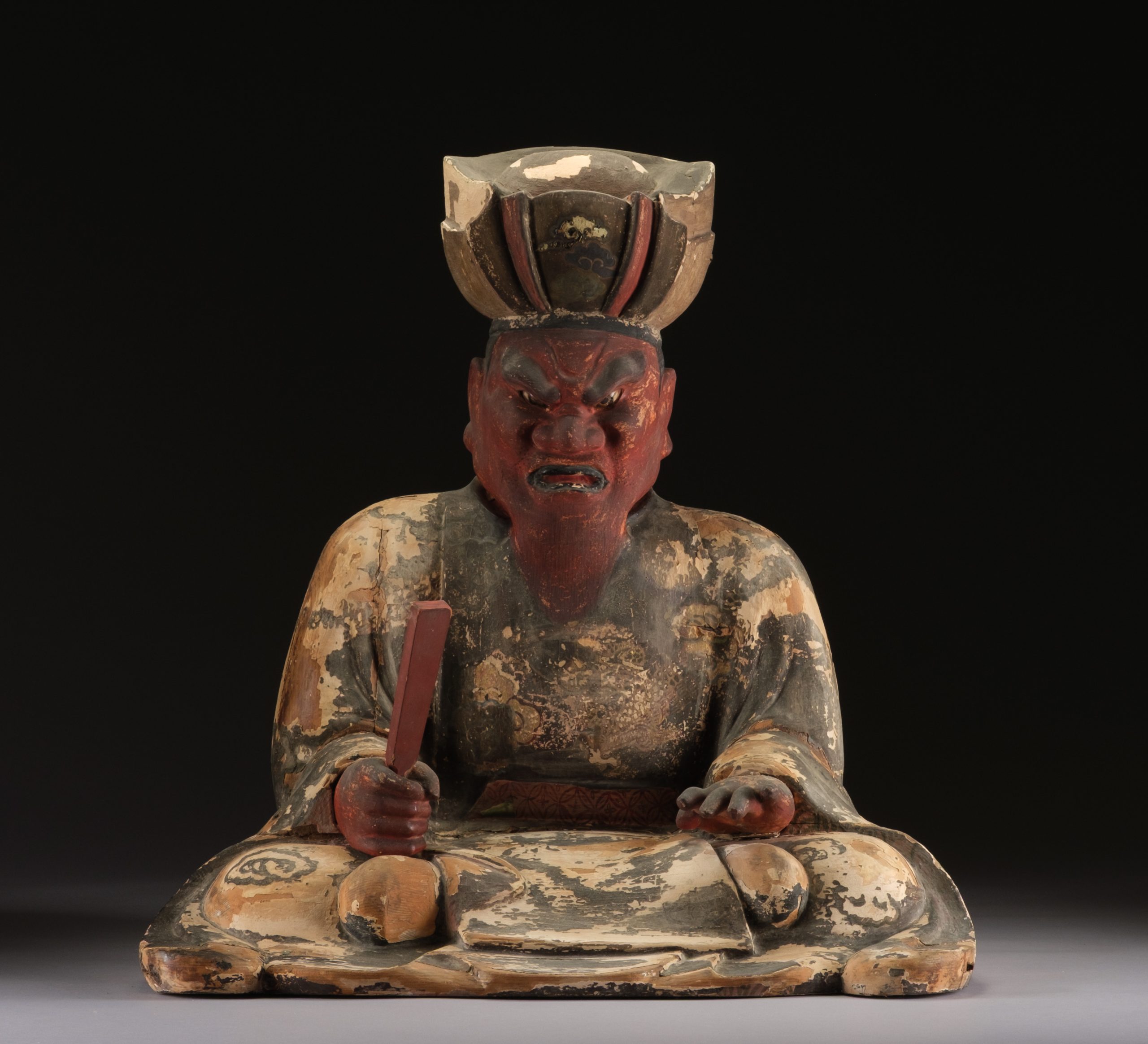
Early Edo period figures of Officials of the Five Paths 五道冥官 (Godô Meikan)
Price on request
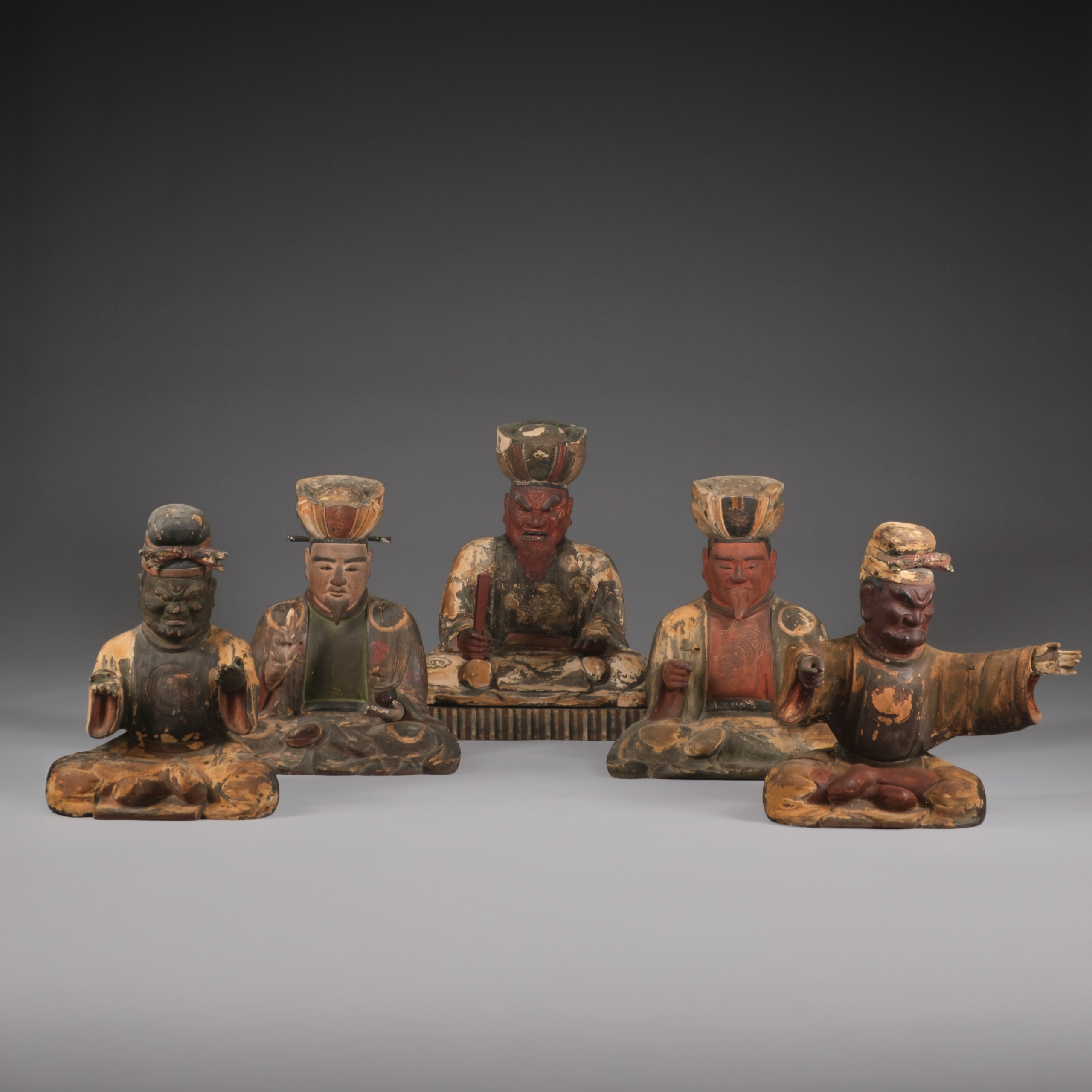
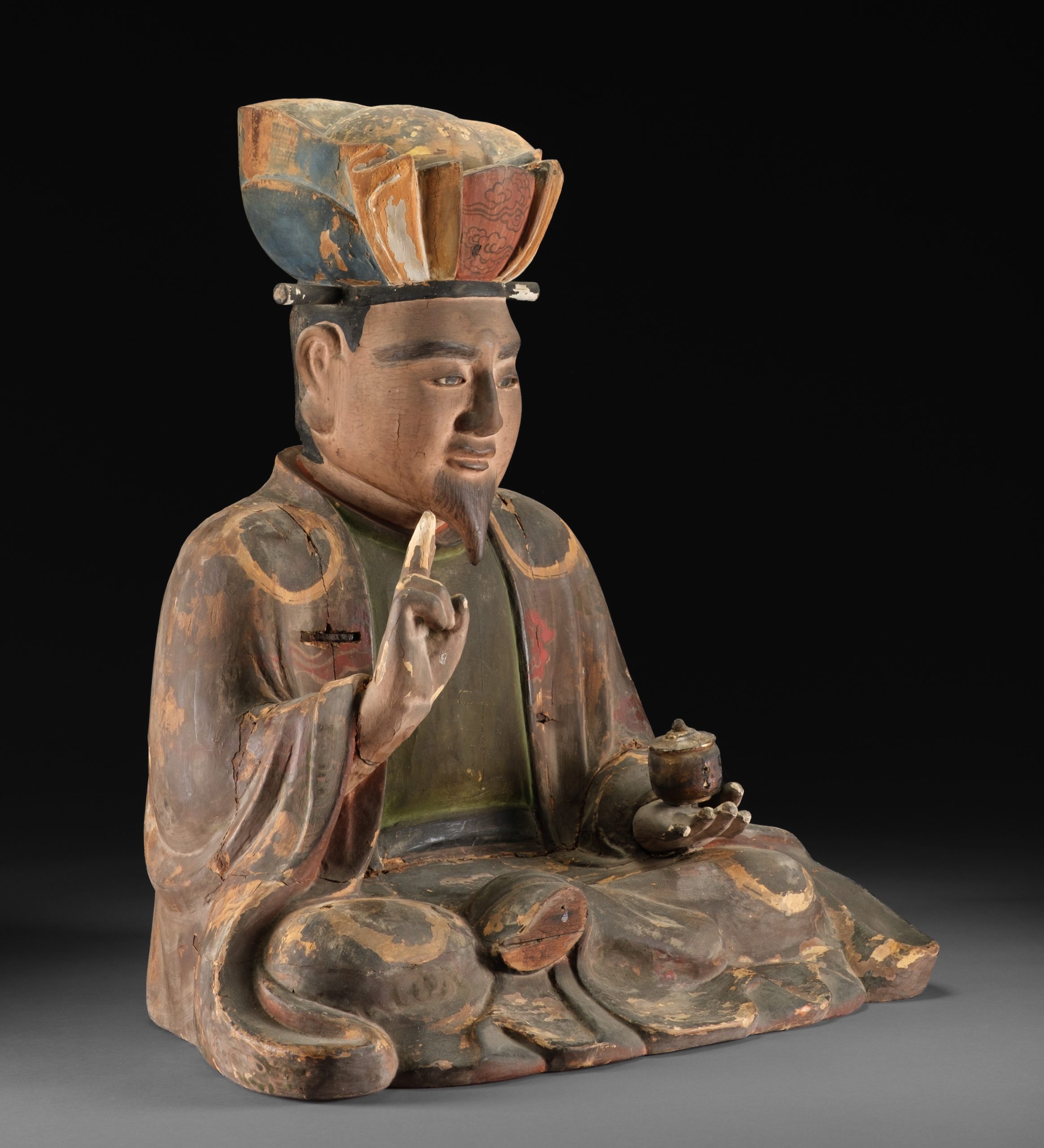
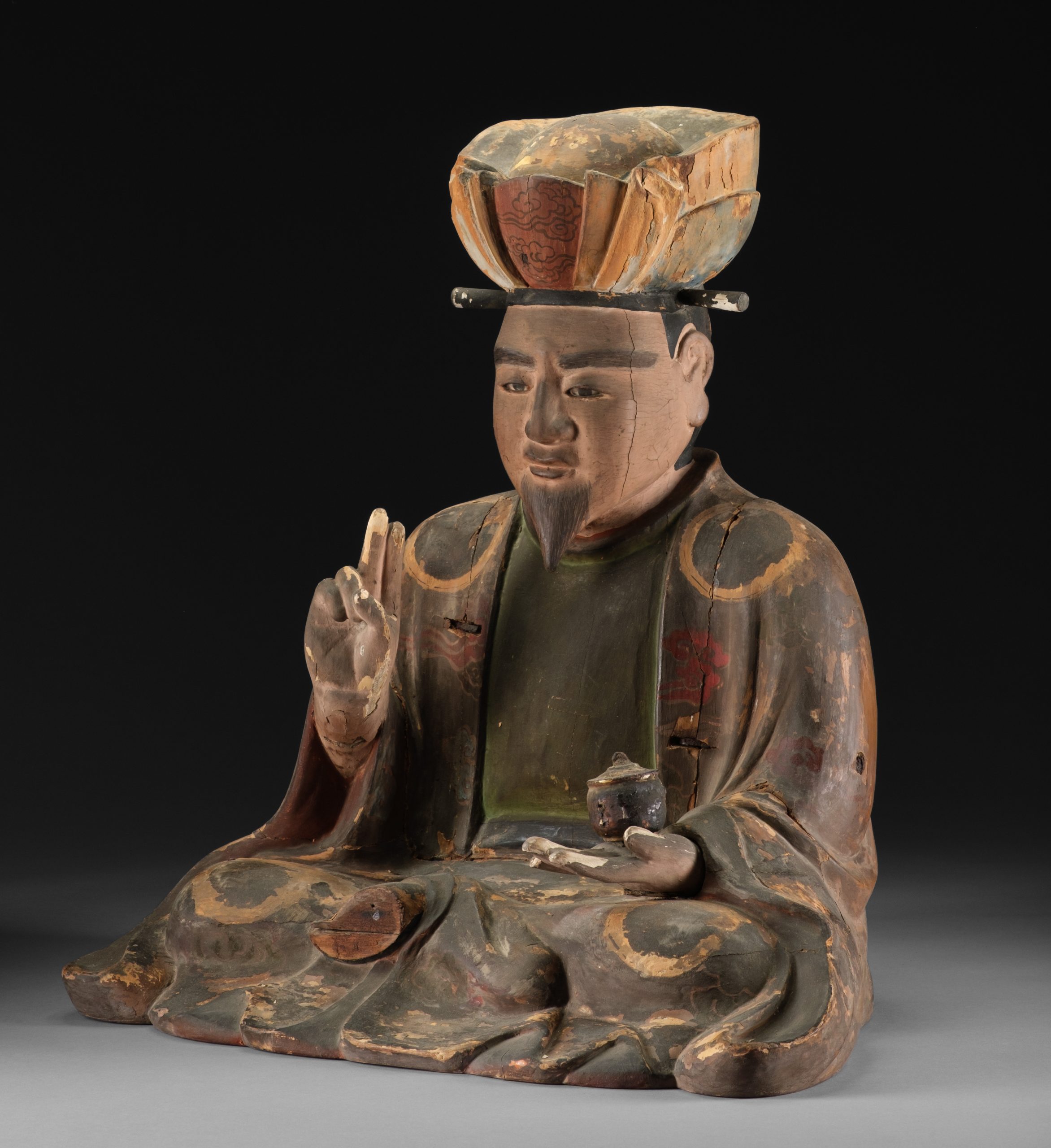
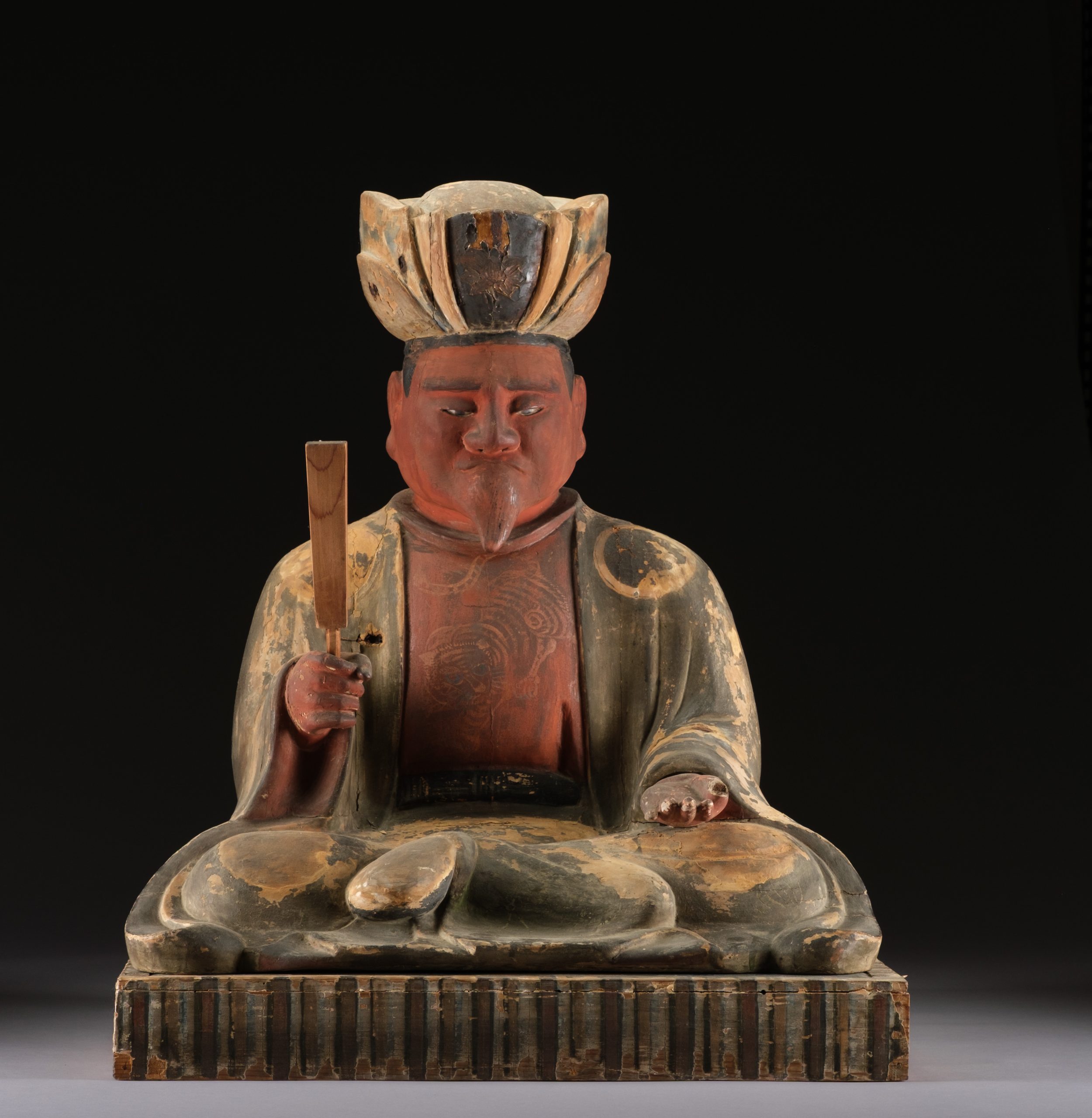
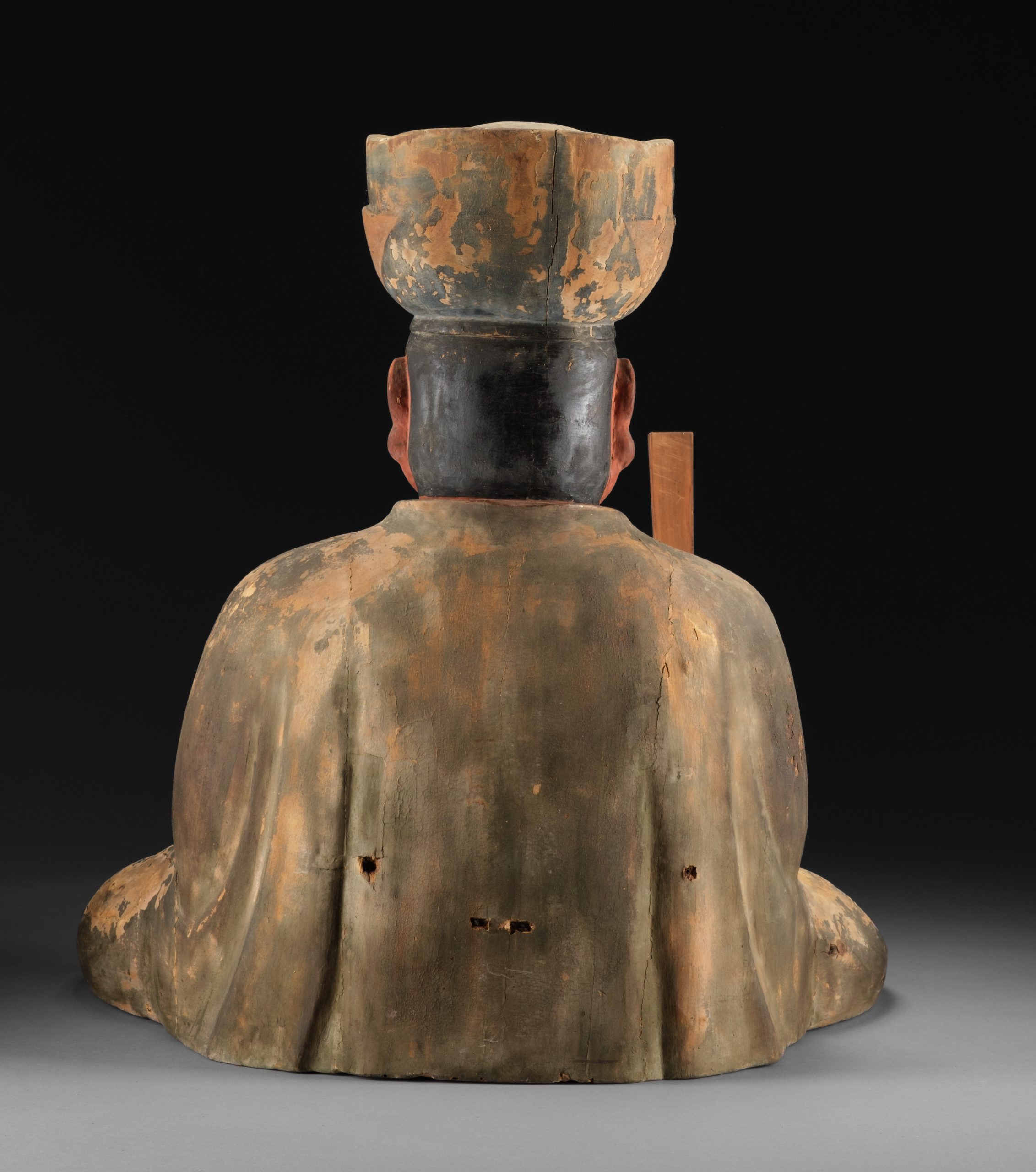
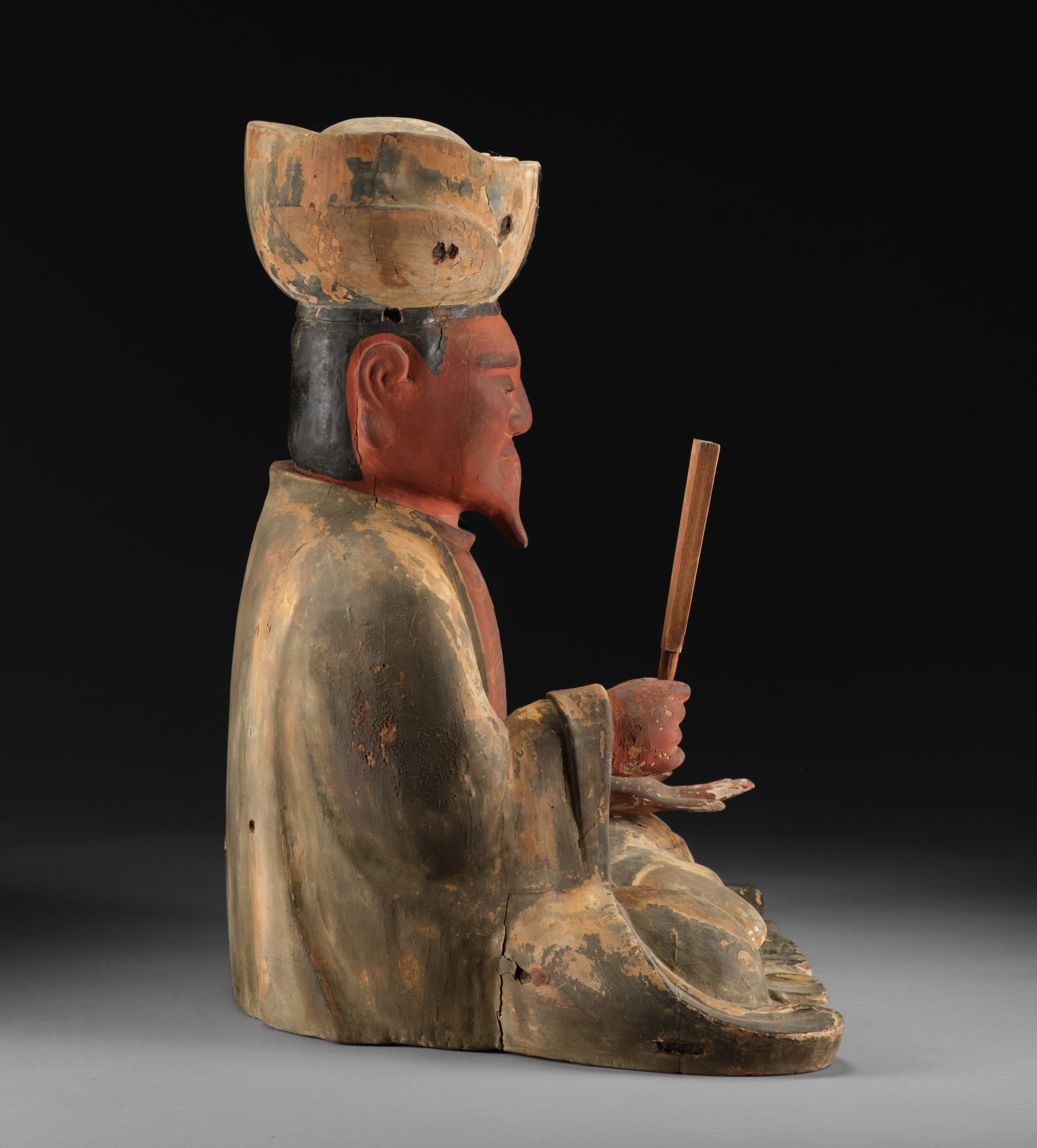
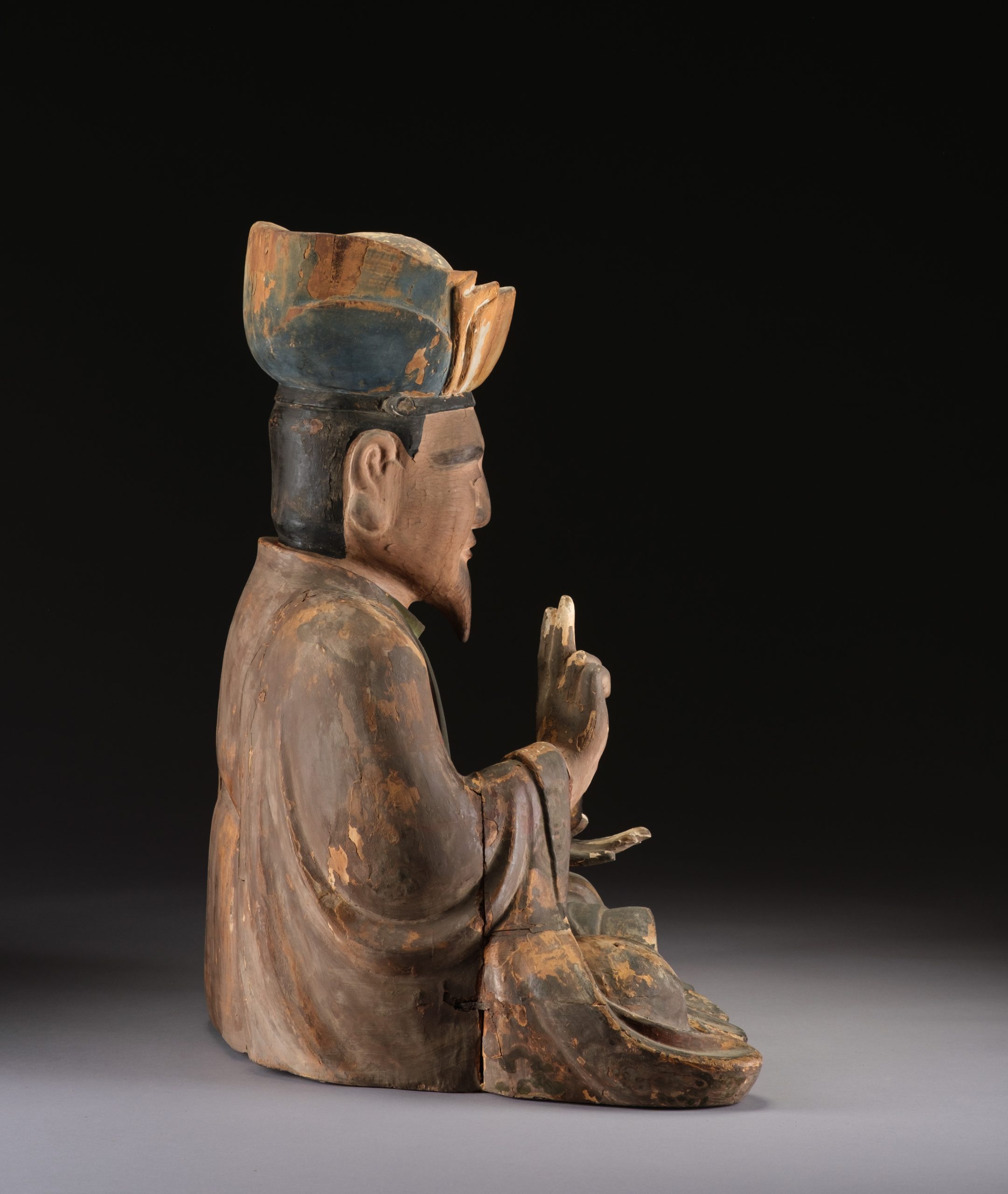
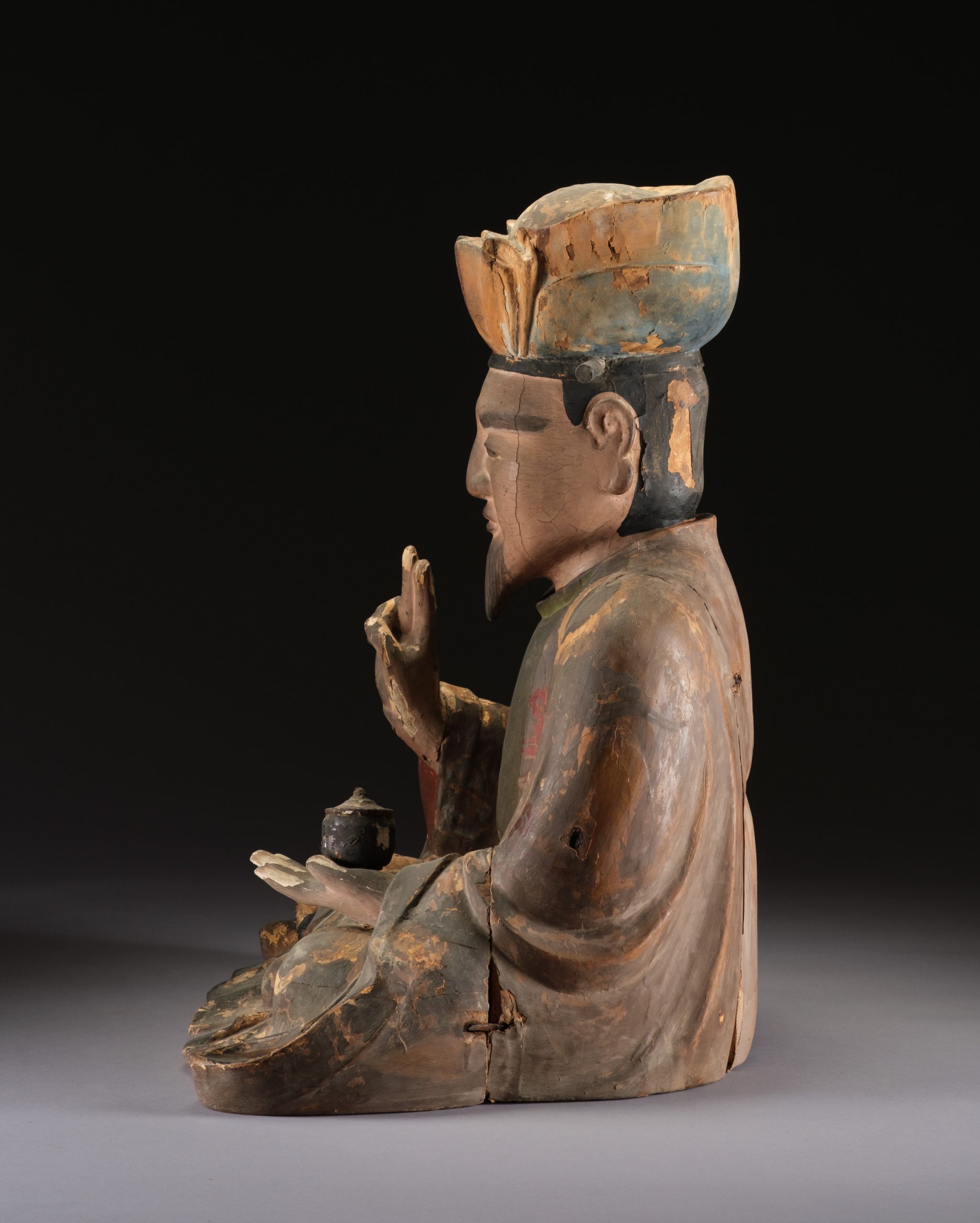
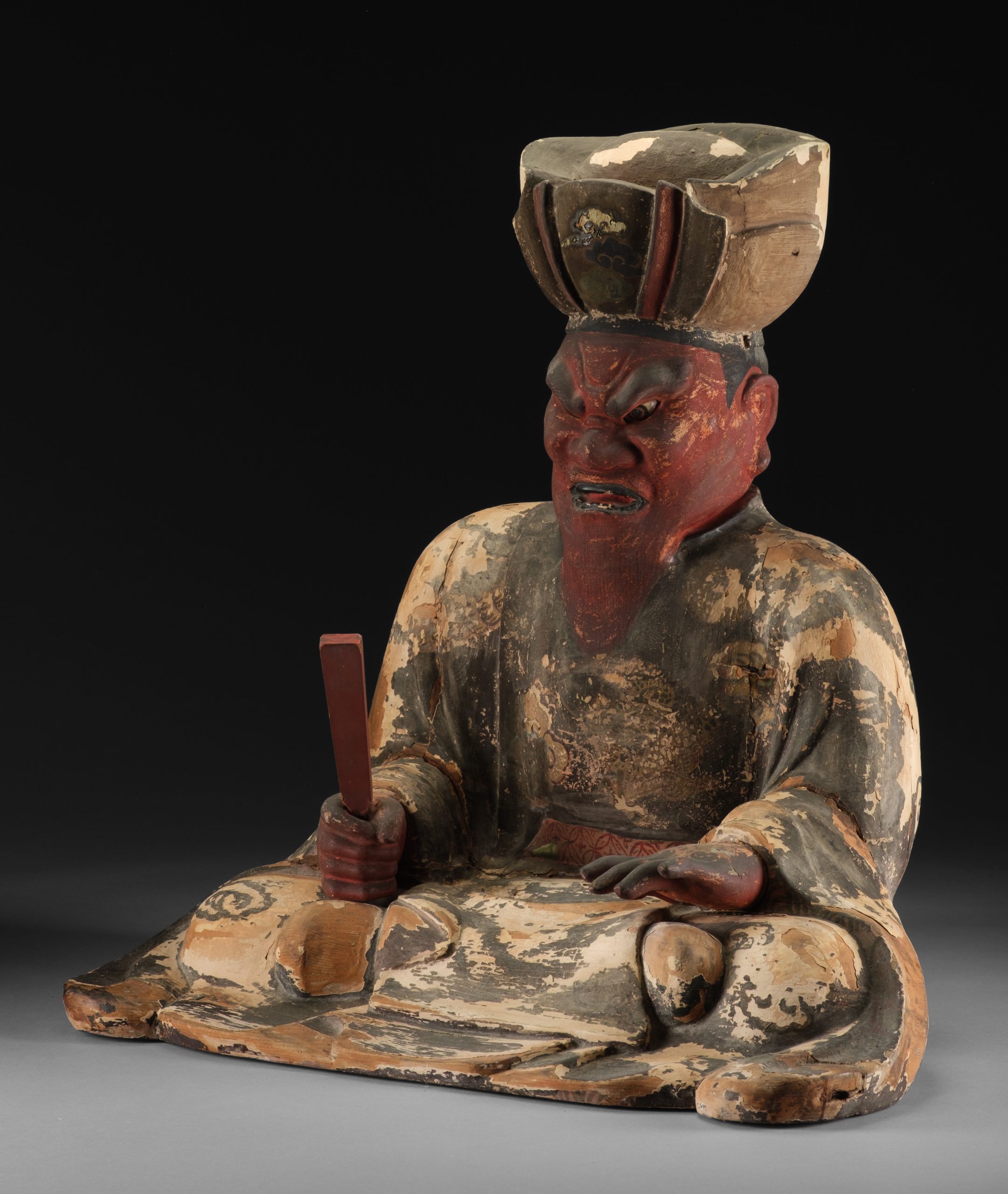
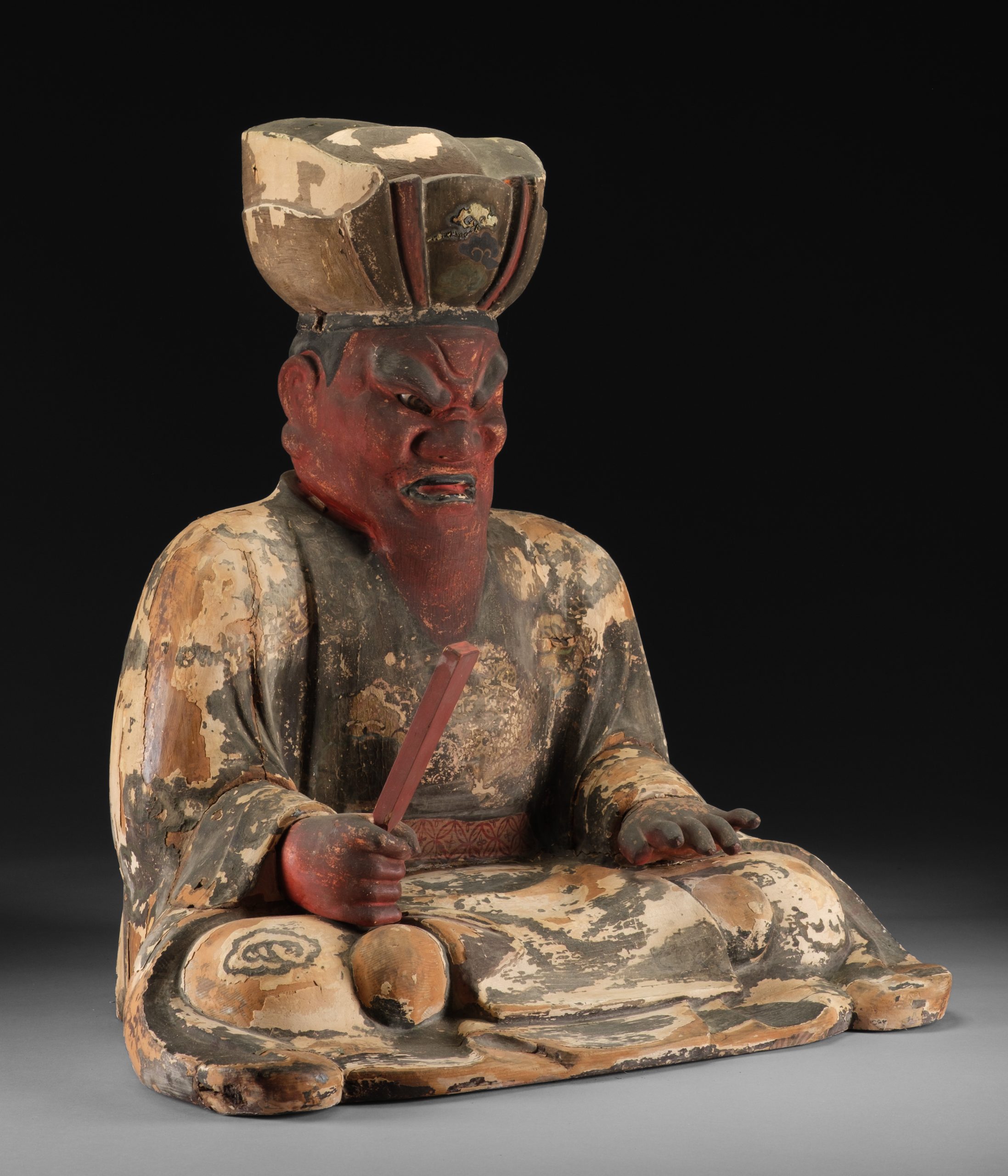
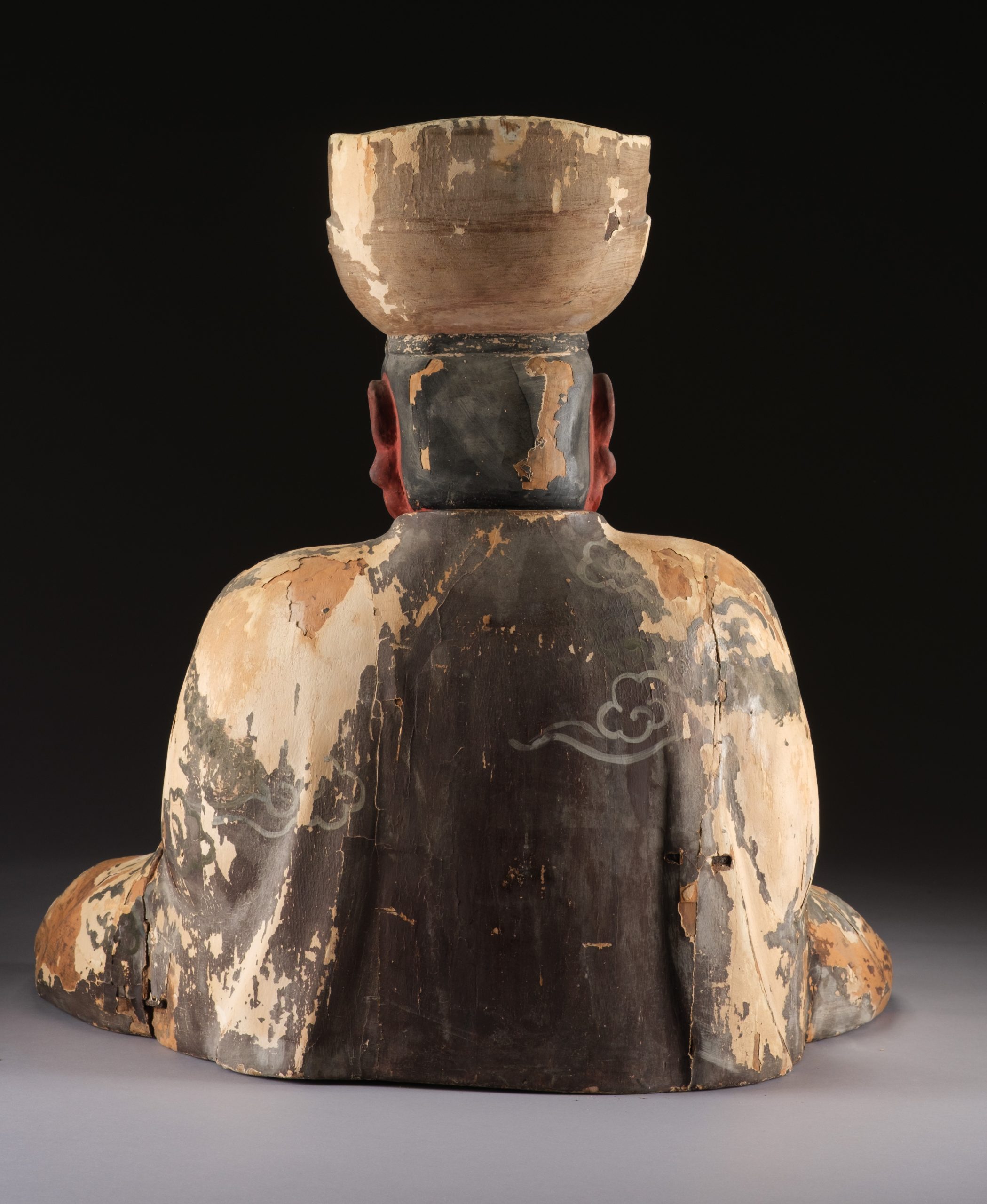
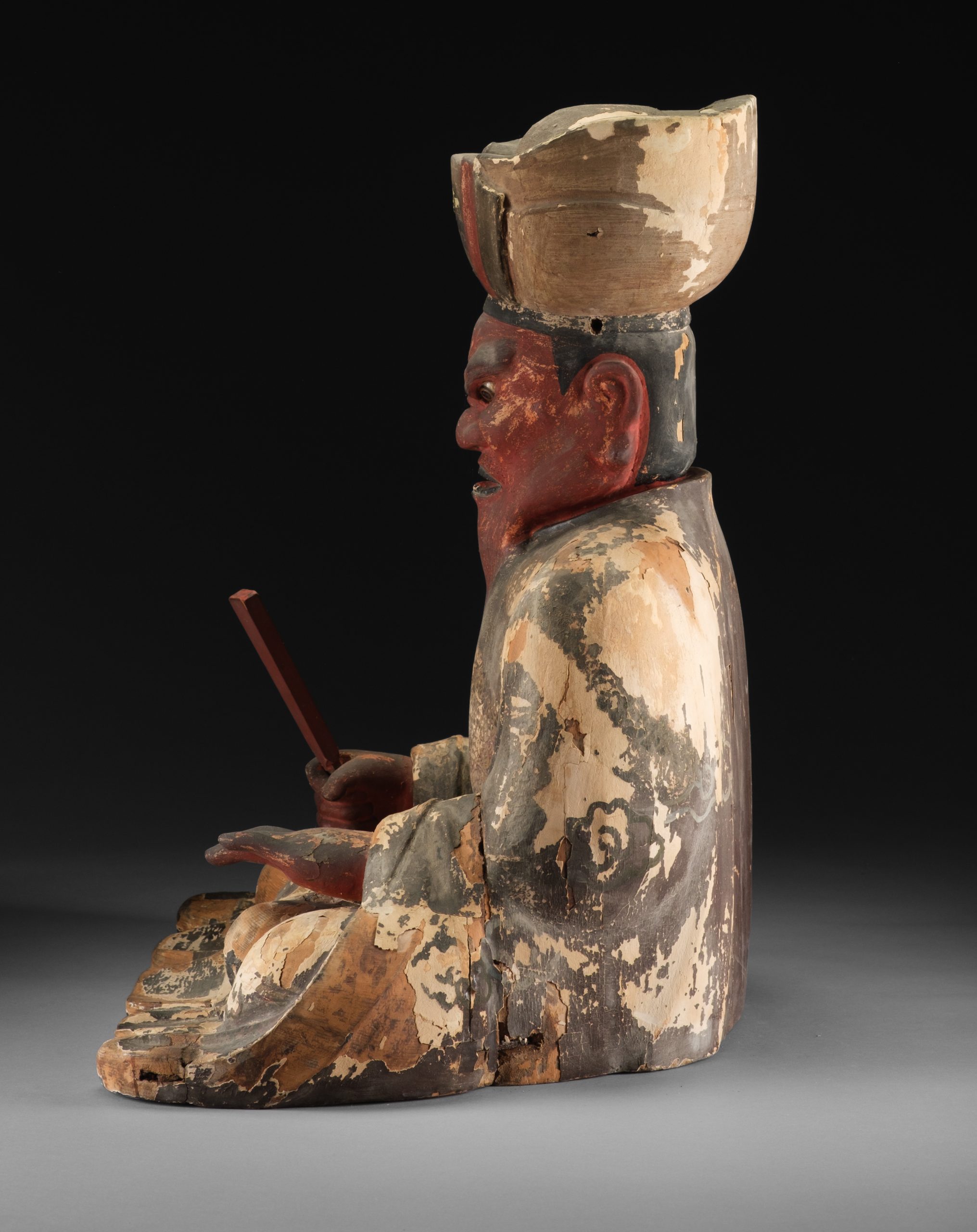
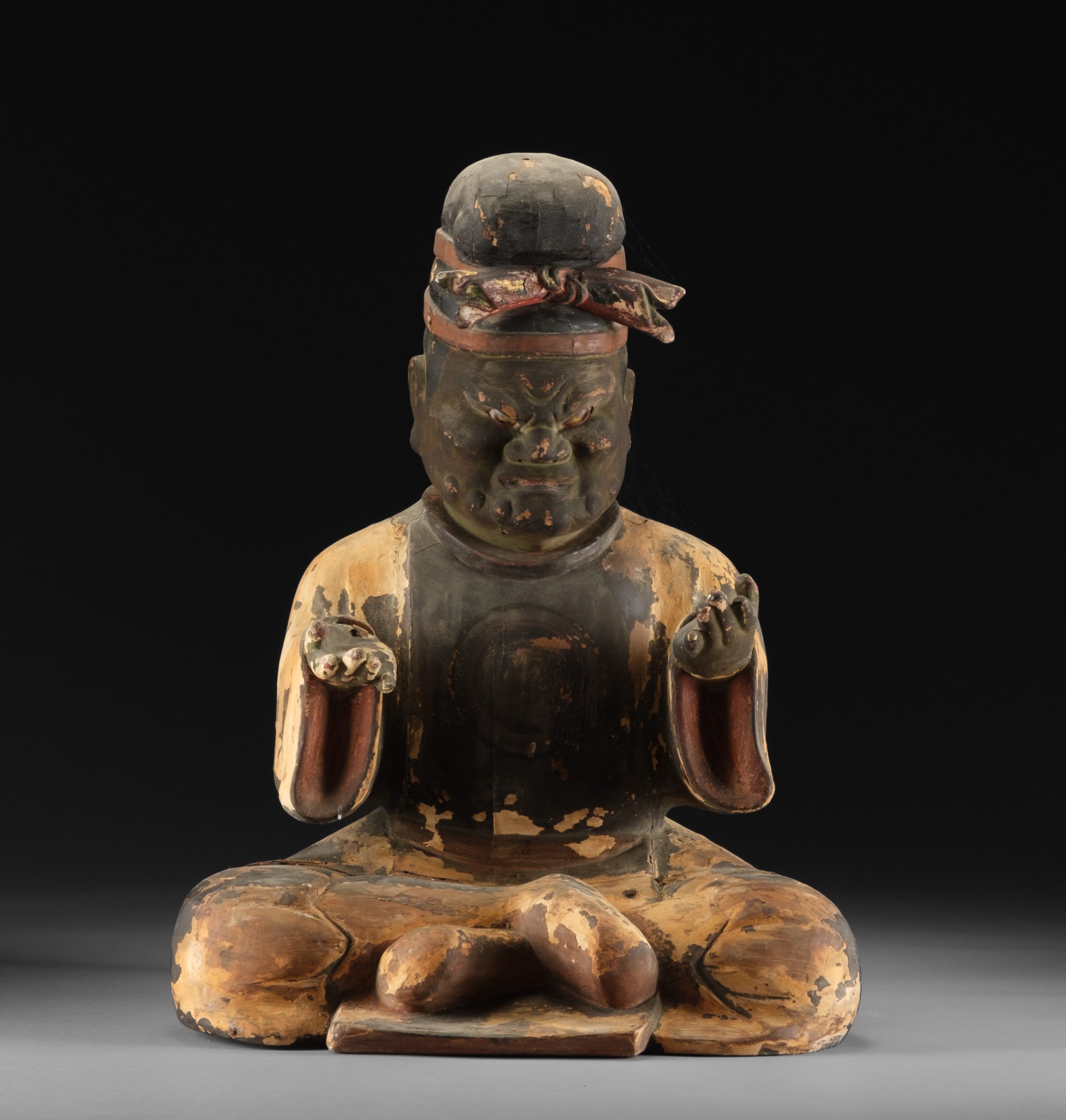
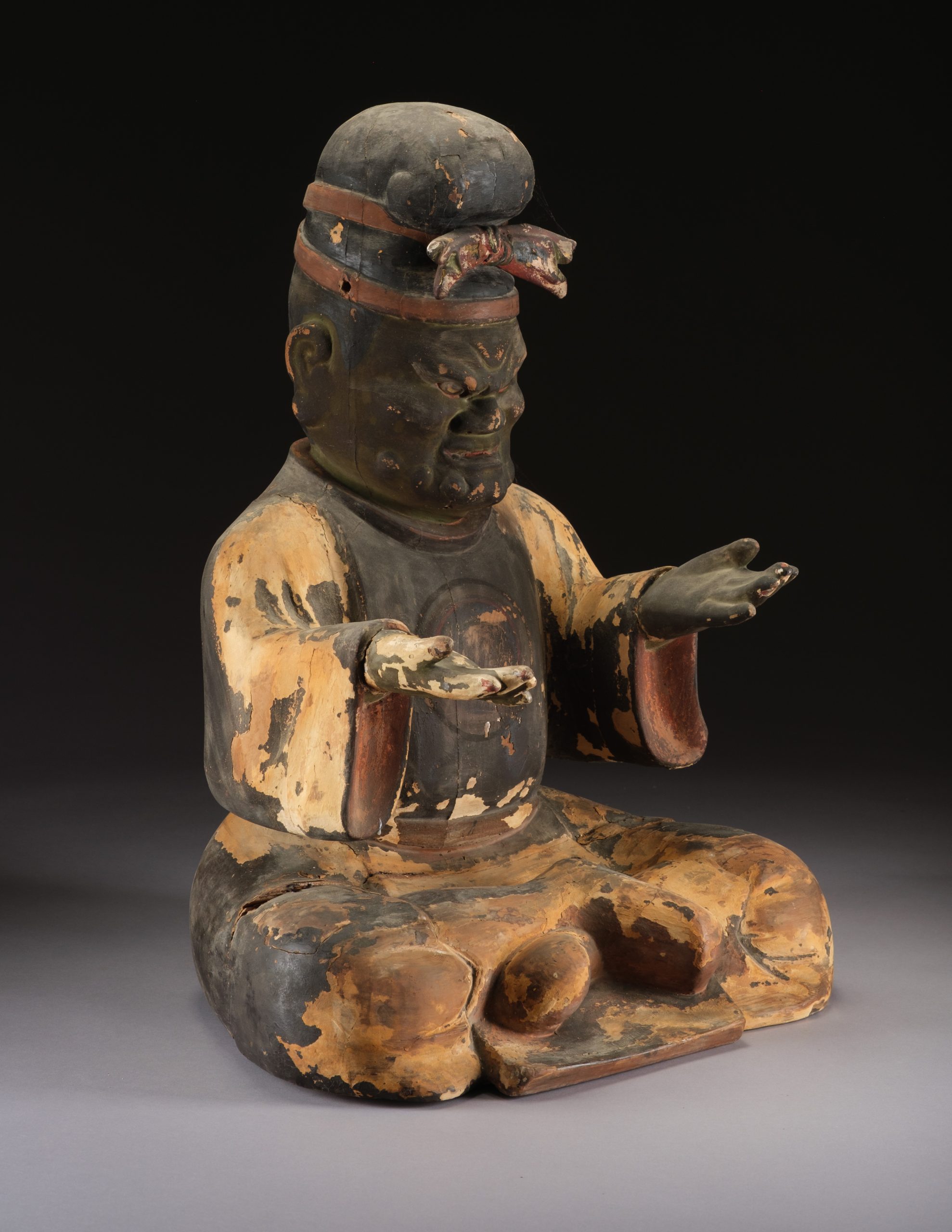
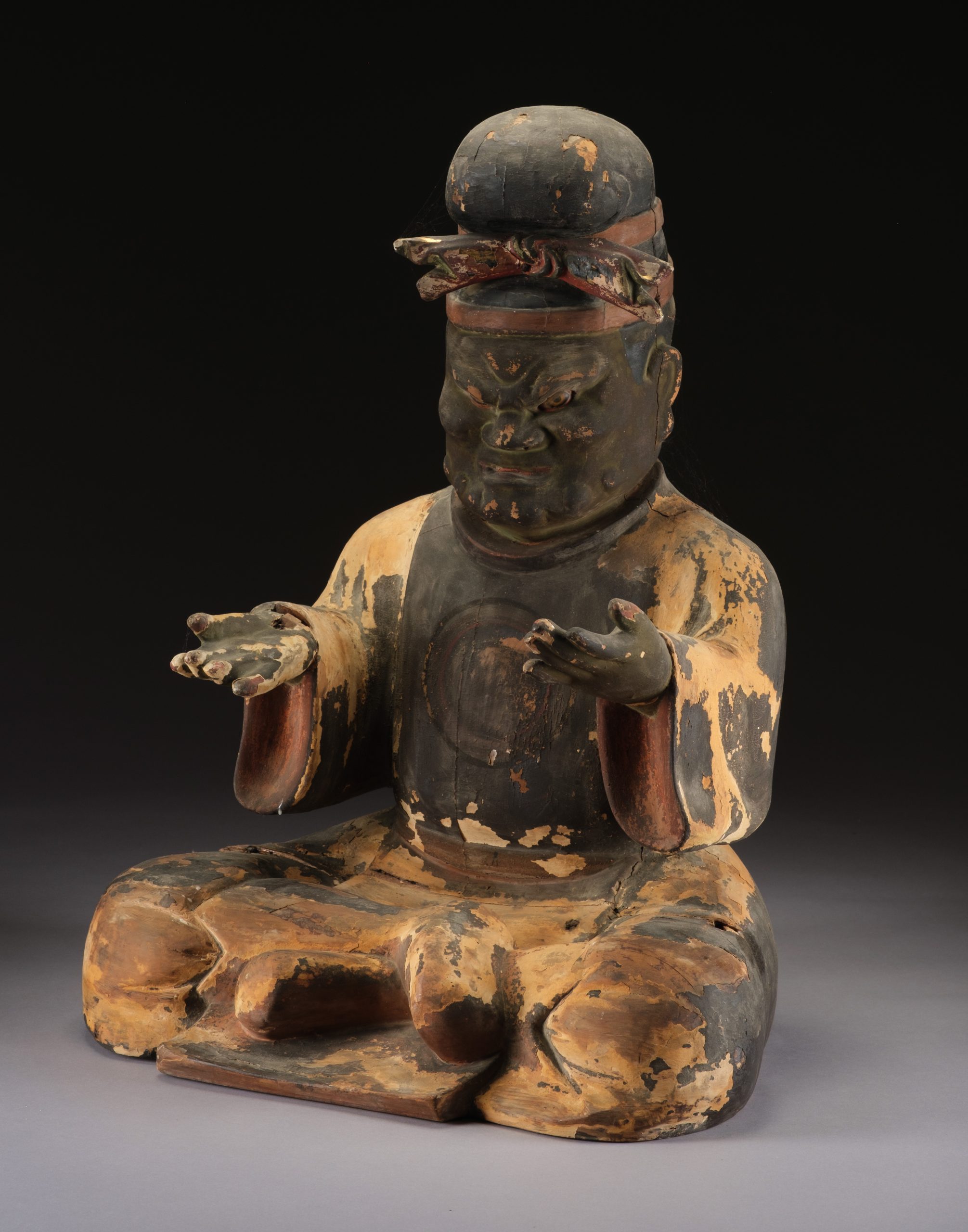
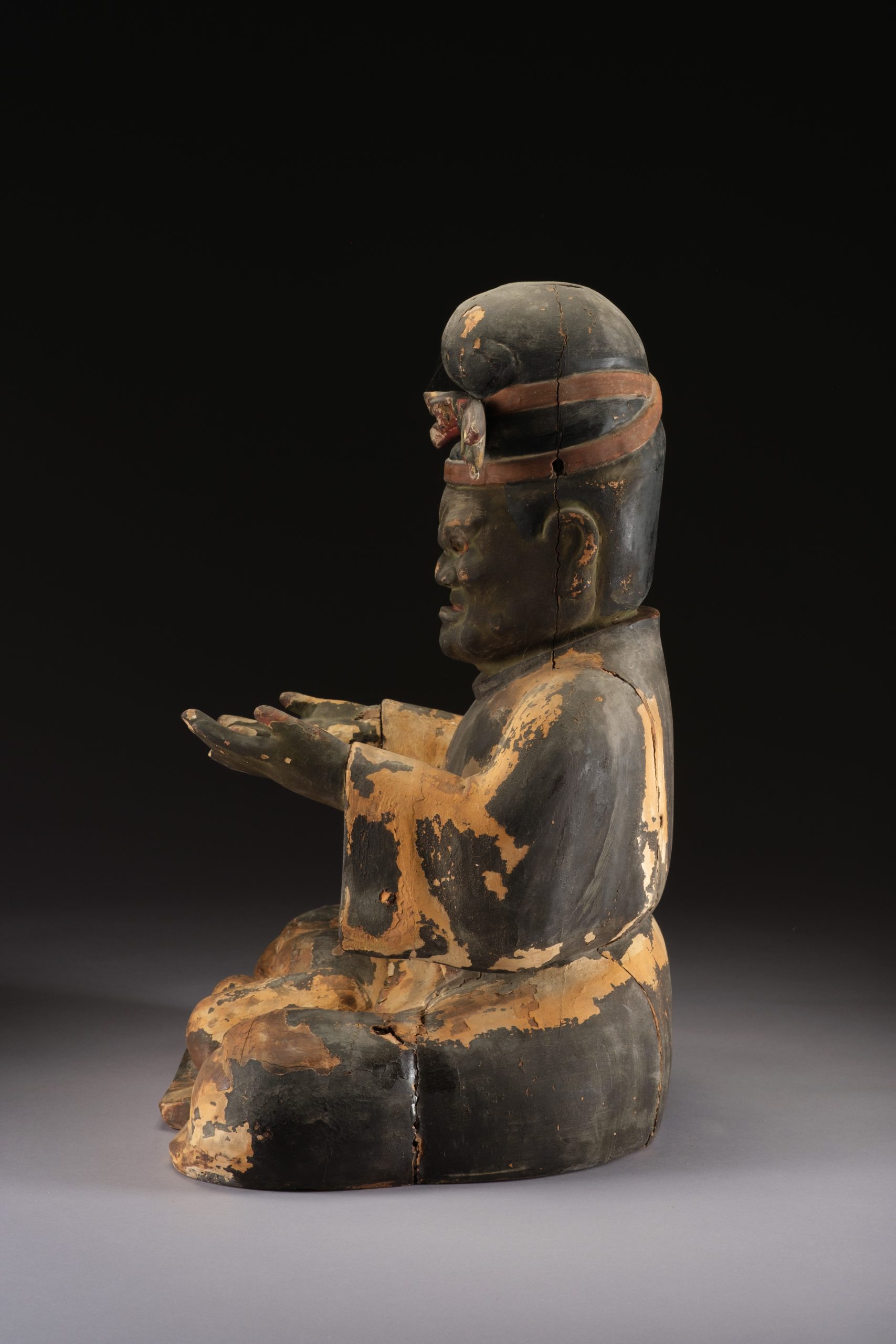
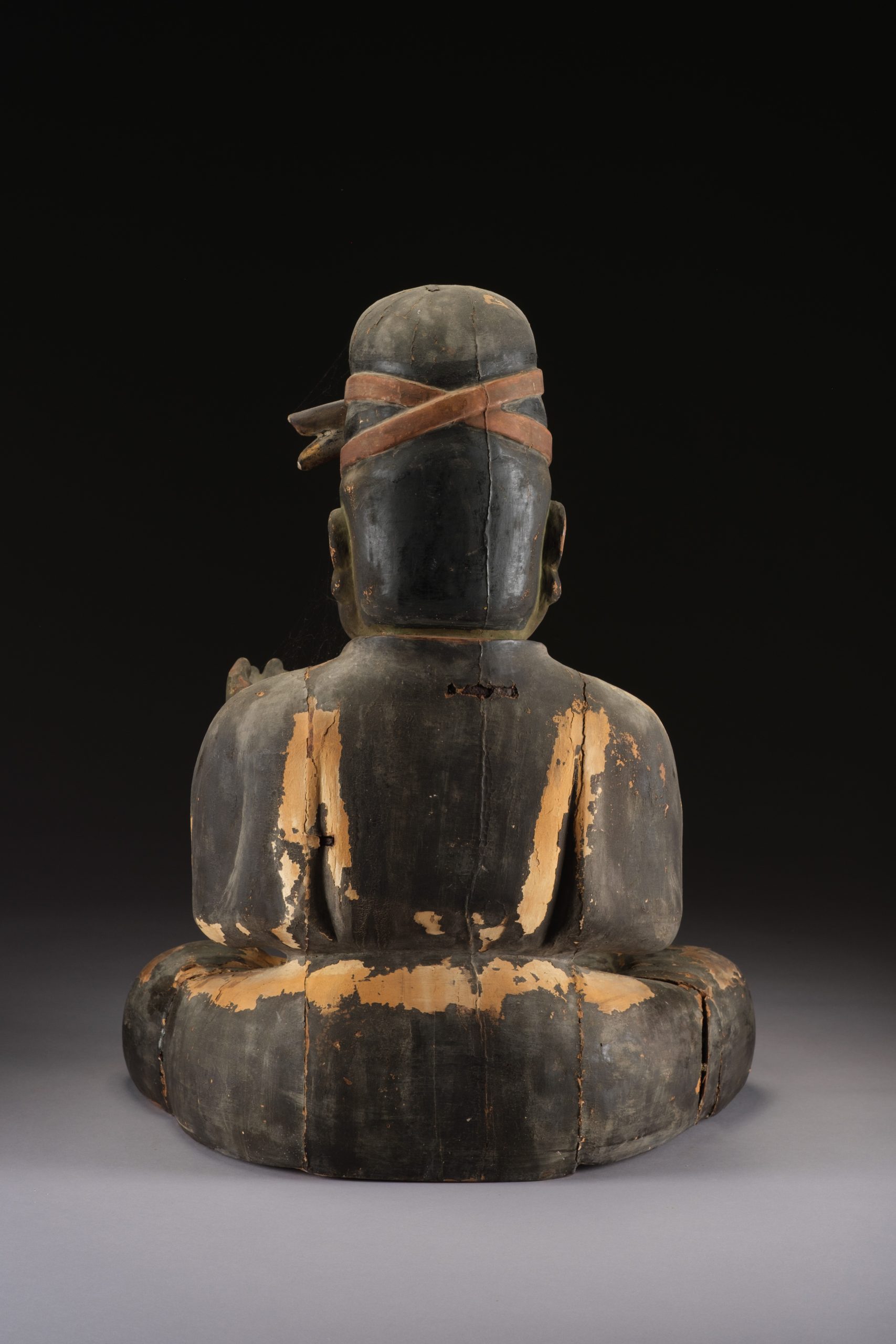
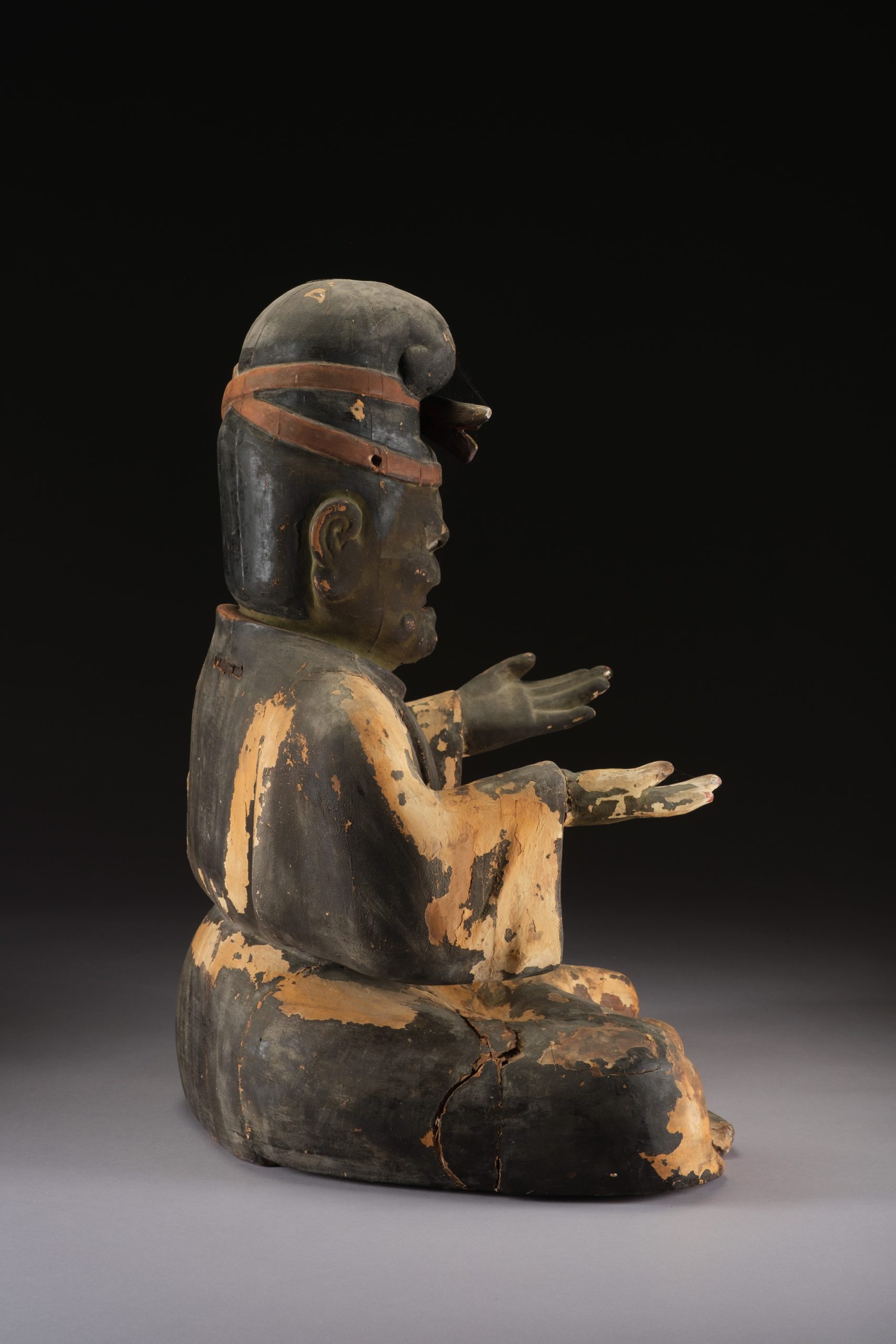
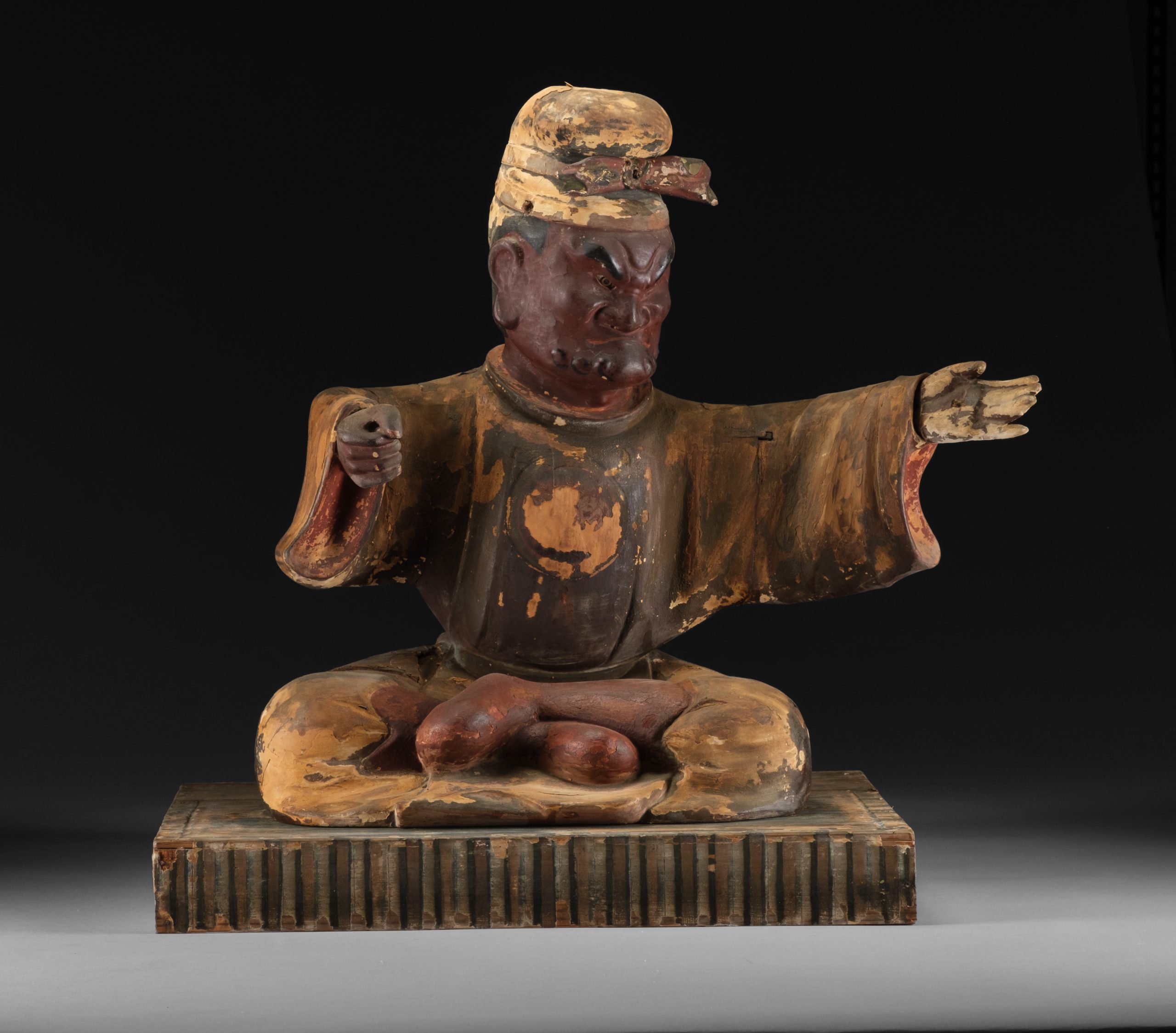
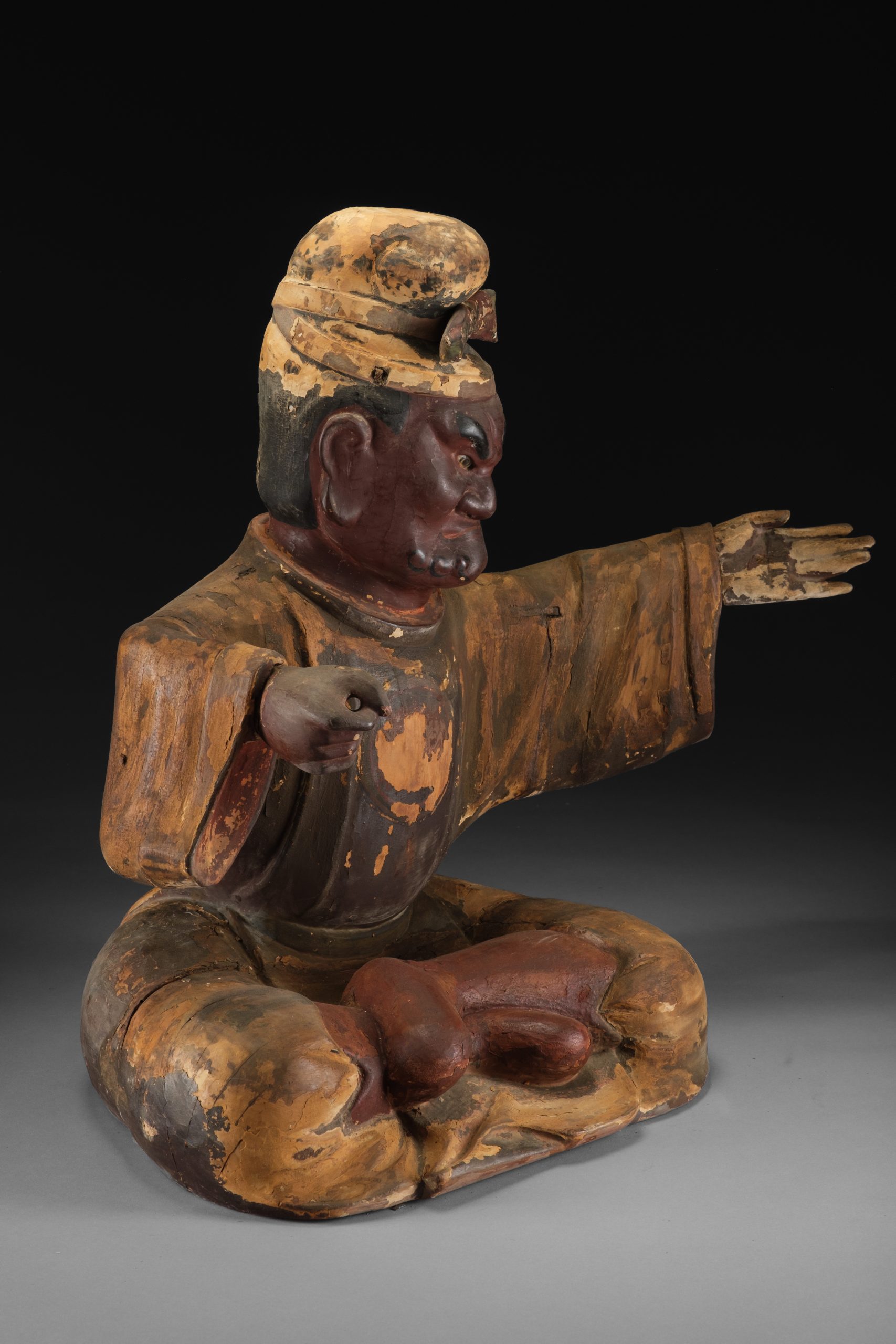
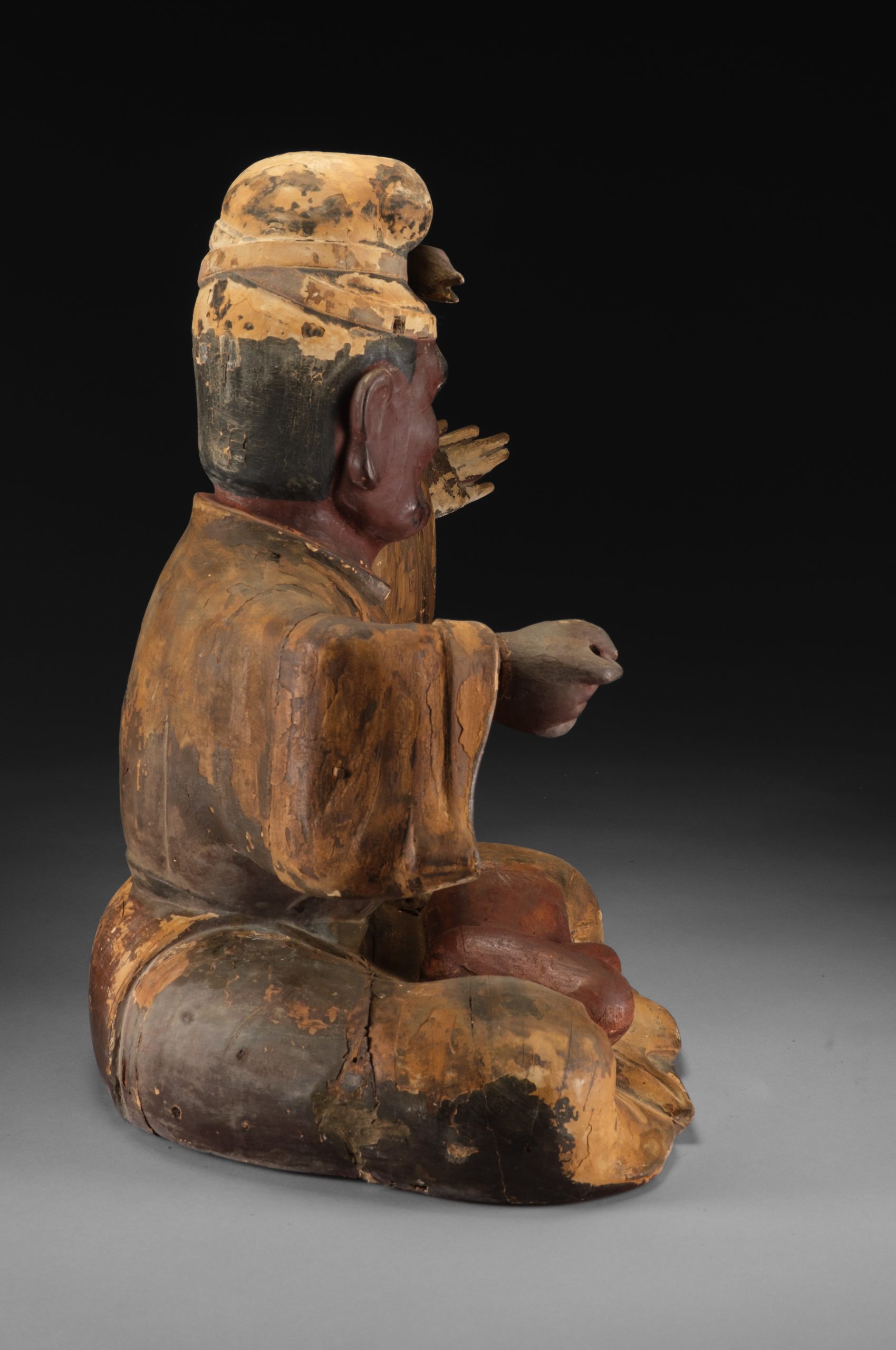
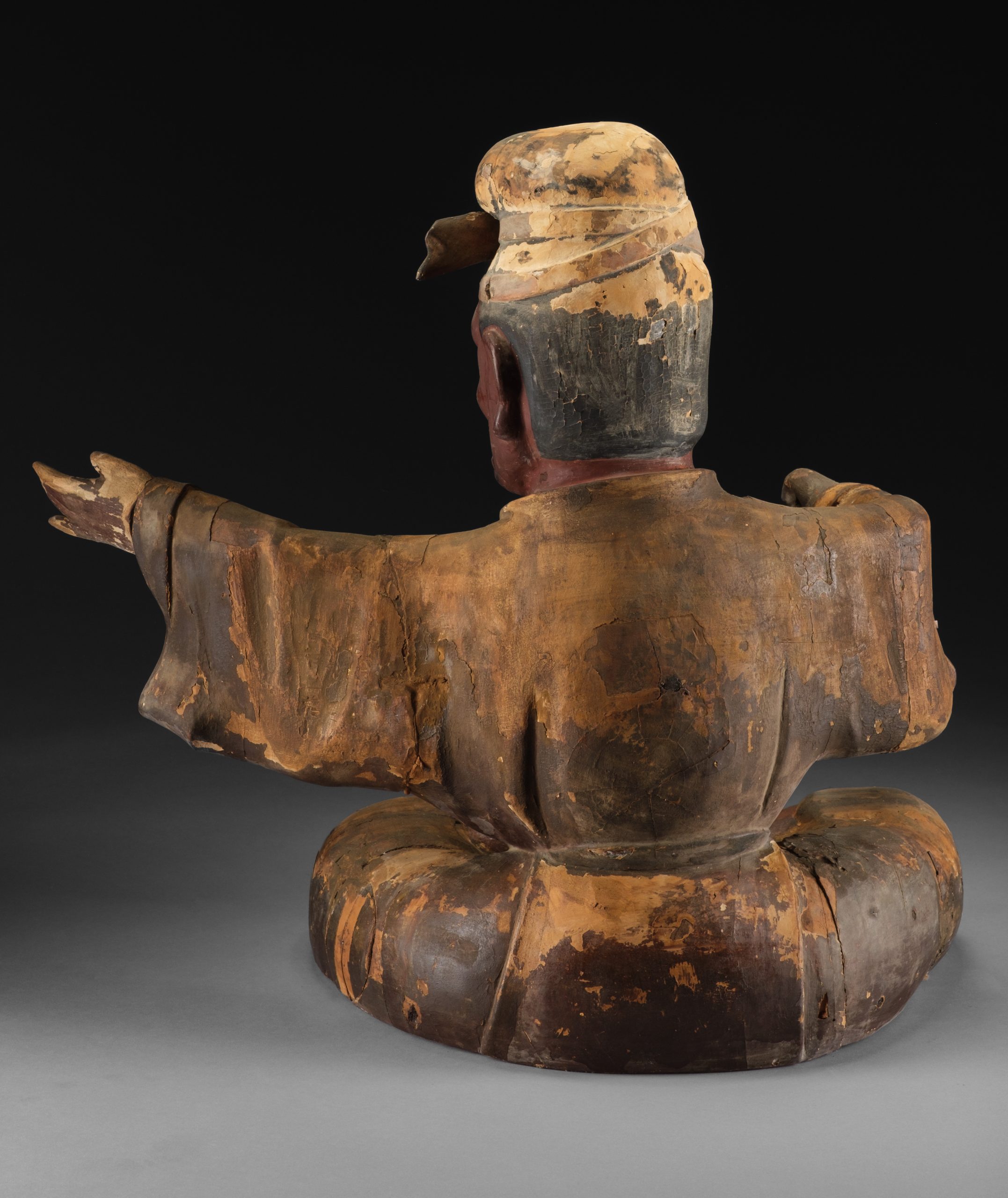
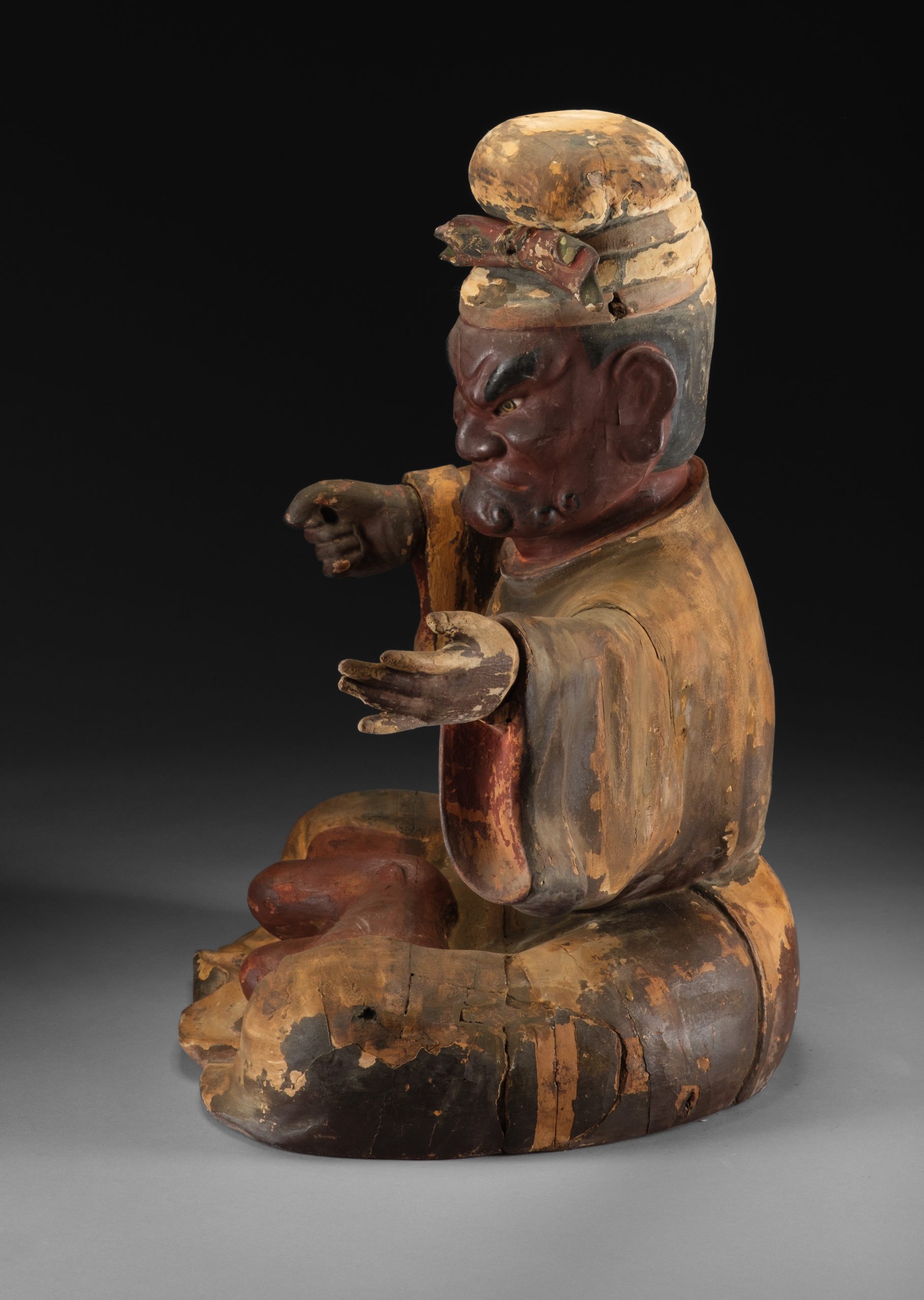
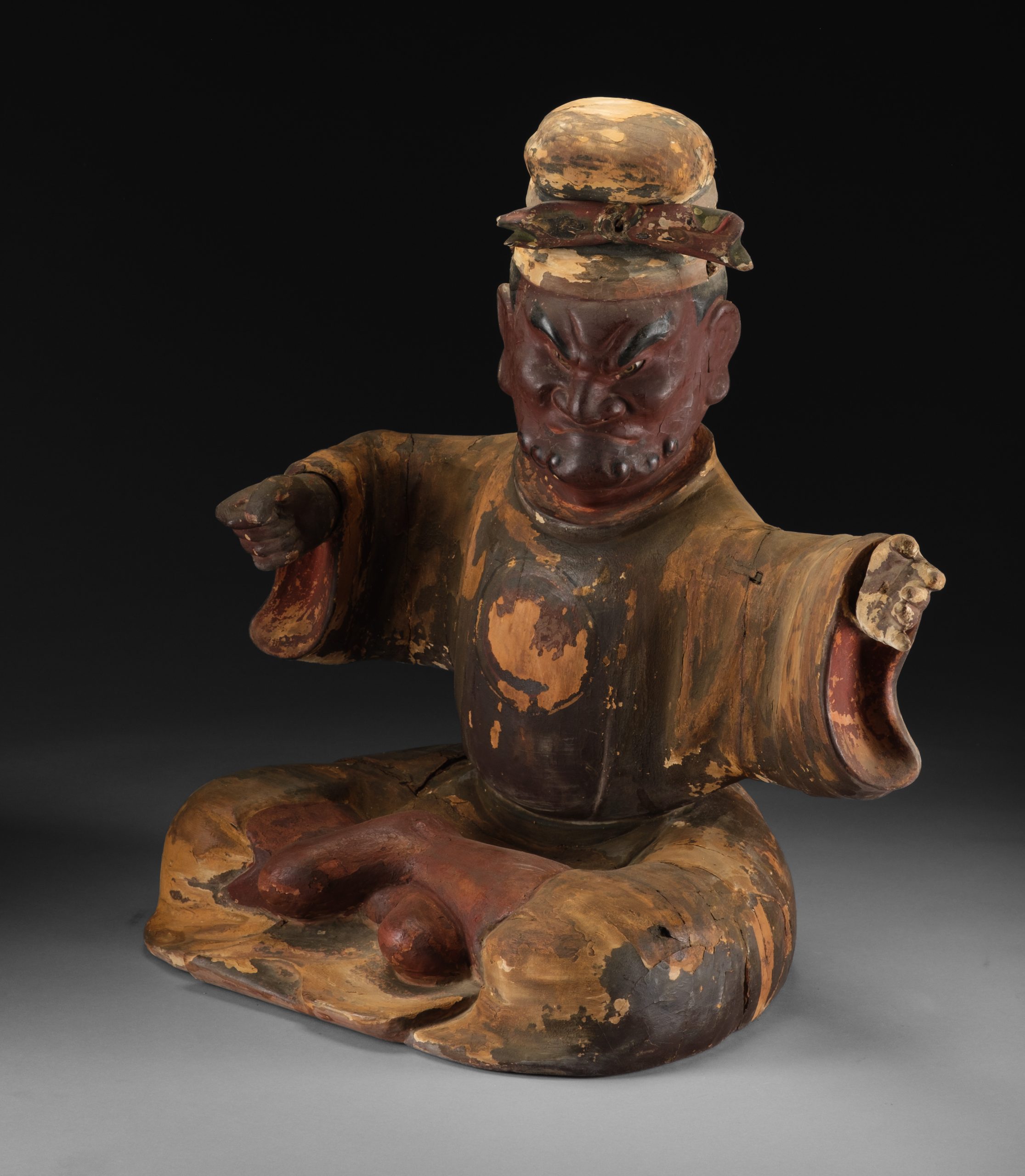
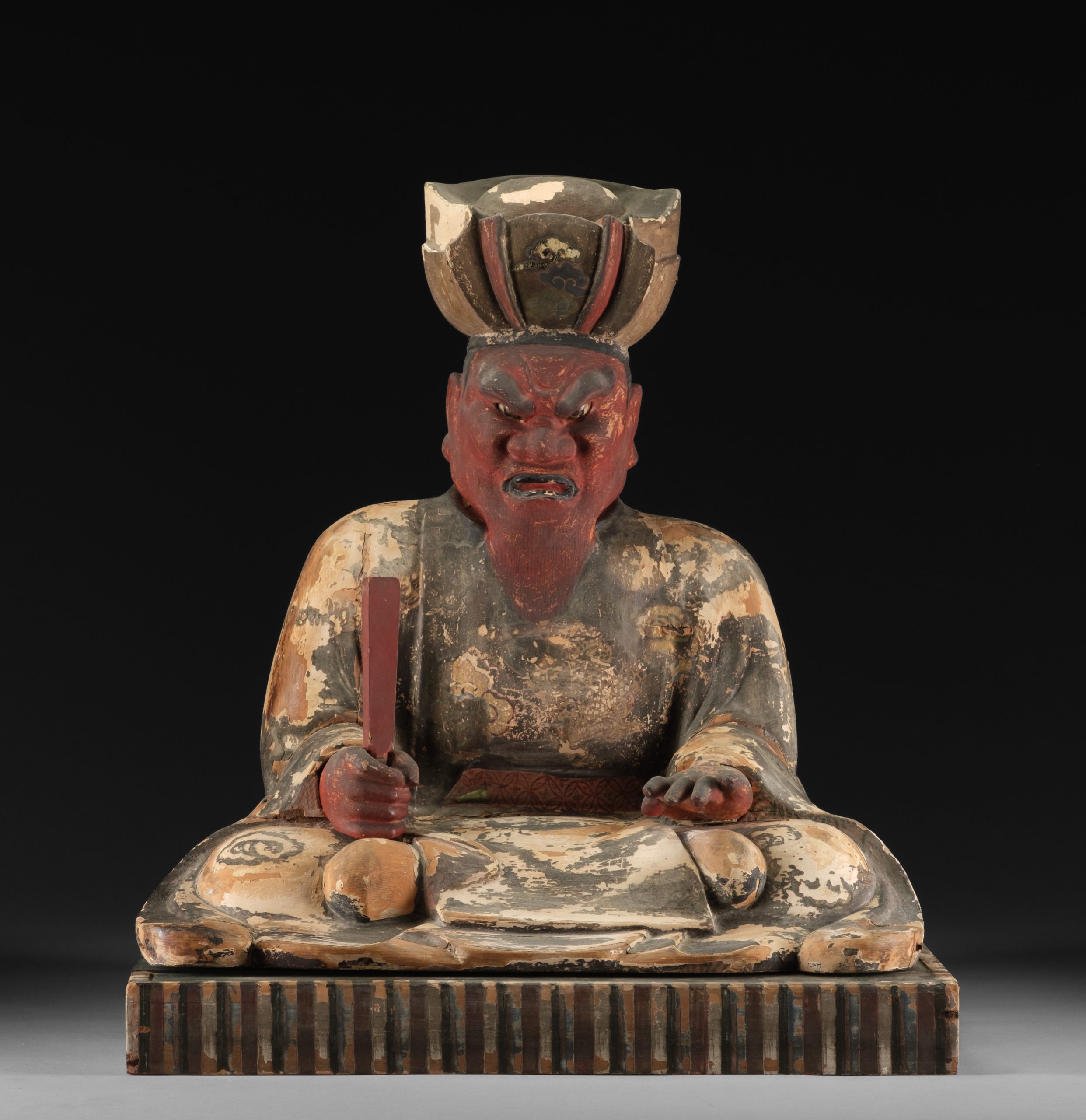
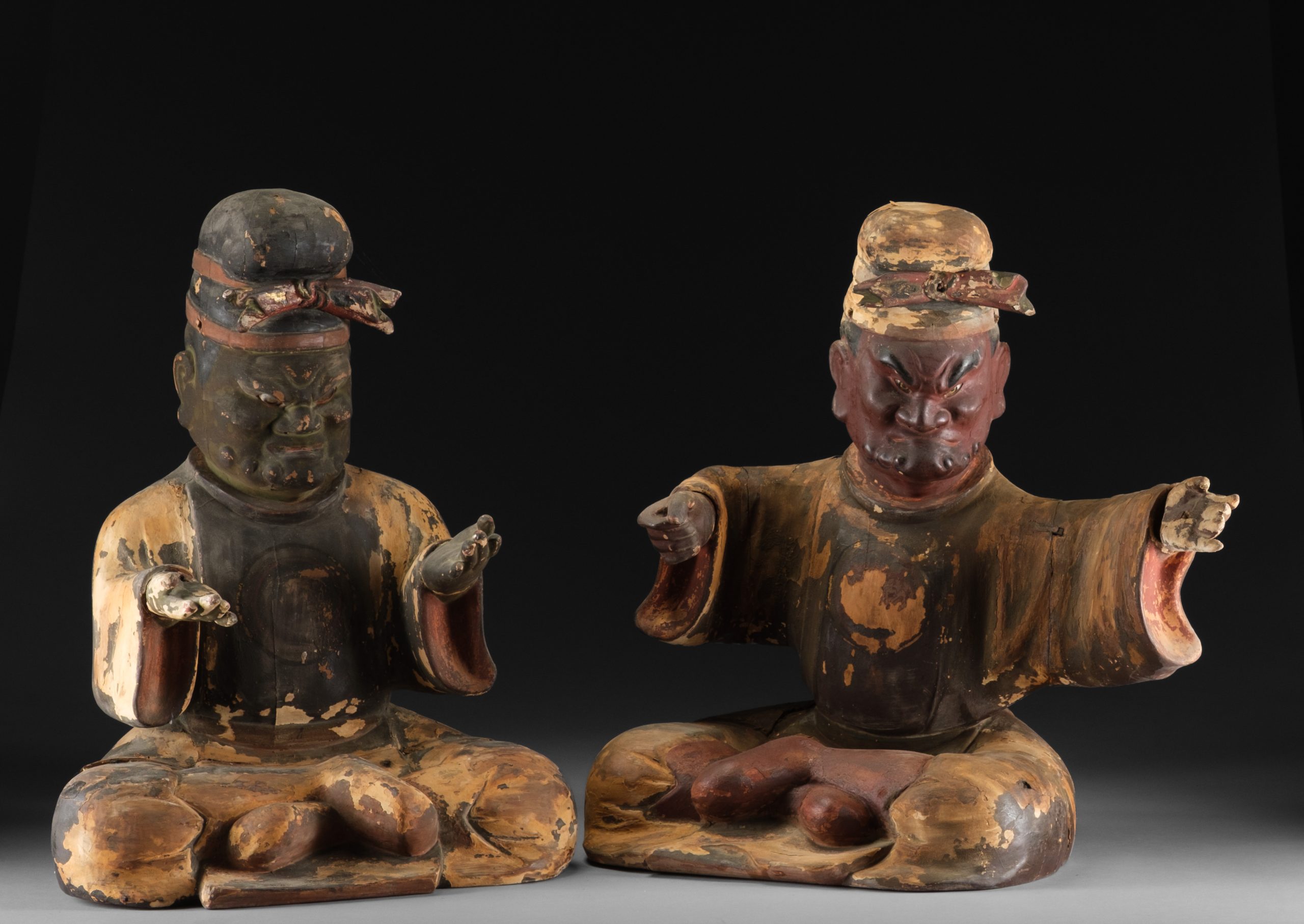
A very rare and impressive five-part set of polychrome wooden figures representing the Officials of the Five Paths 五道冥官 (Godô Meikan), centred by King Enma 閻魔王 (Enma-ô) and his entourage, consisting of two of the Ten Kings of Hell 十王 (Jûô) and two Kushôjin 倶生神, attendant deities associated with recording and reporting the deeds of the deceased. Remarkably, the complete group has remained together and all five figures bear inscriptions documenting two historical restorations.
At the centre sits King Enma 閻魔王 (Enma-ô), the best-known of the Ten Kings of Hell 十王 (Jûô). In Buddhist belief, the deceased pass before a succession of judges who examine their deeds and determine the course of their rebirth. The cult of the Ten Kings developed in China and was introduced to Japan during the late Heian period, becoming particularly widespread from the Kamakura period onwards. The kings are traditionally depicted as stern judicial figures dressed in elaborate robes and official headgear.
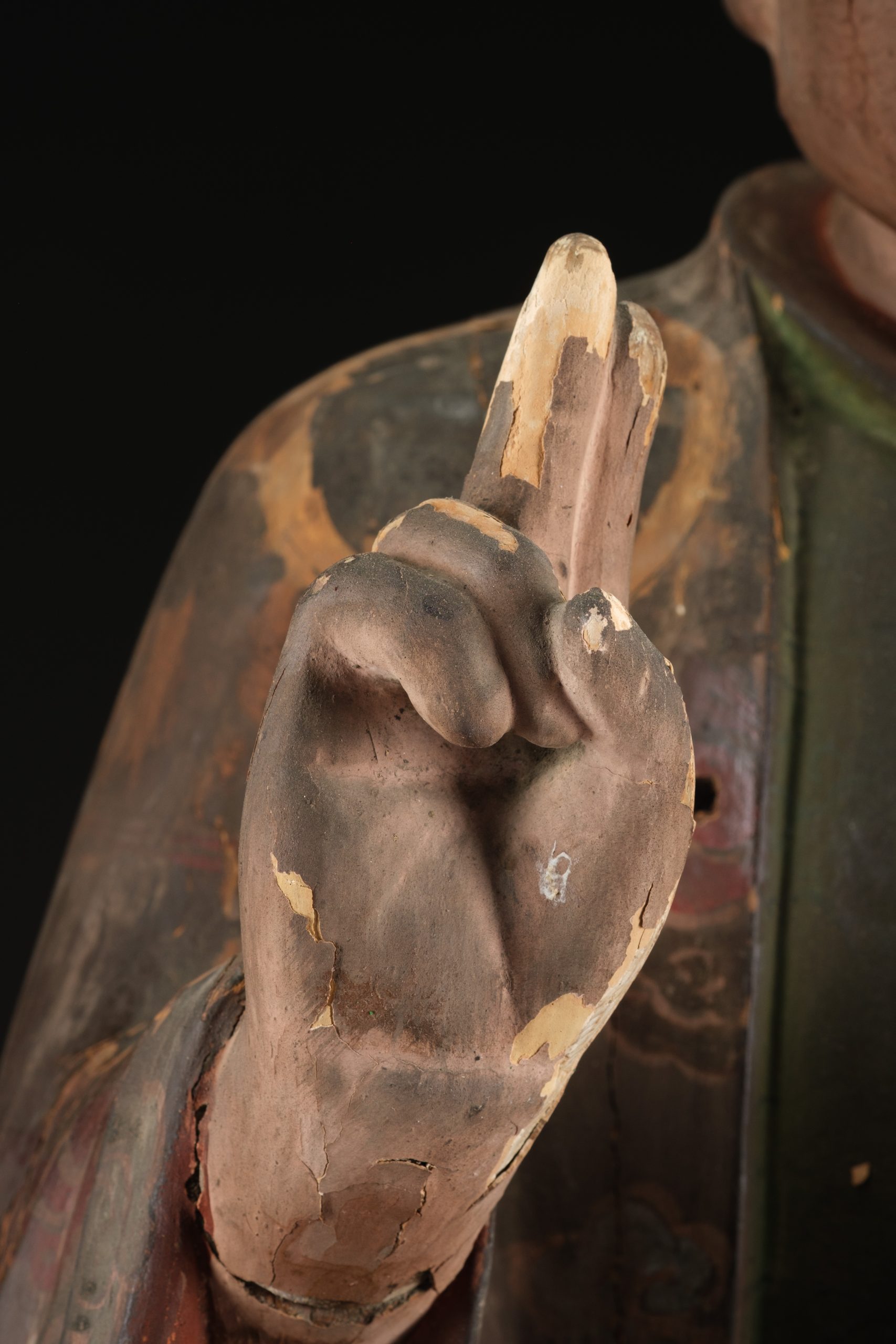
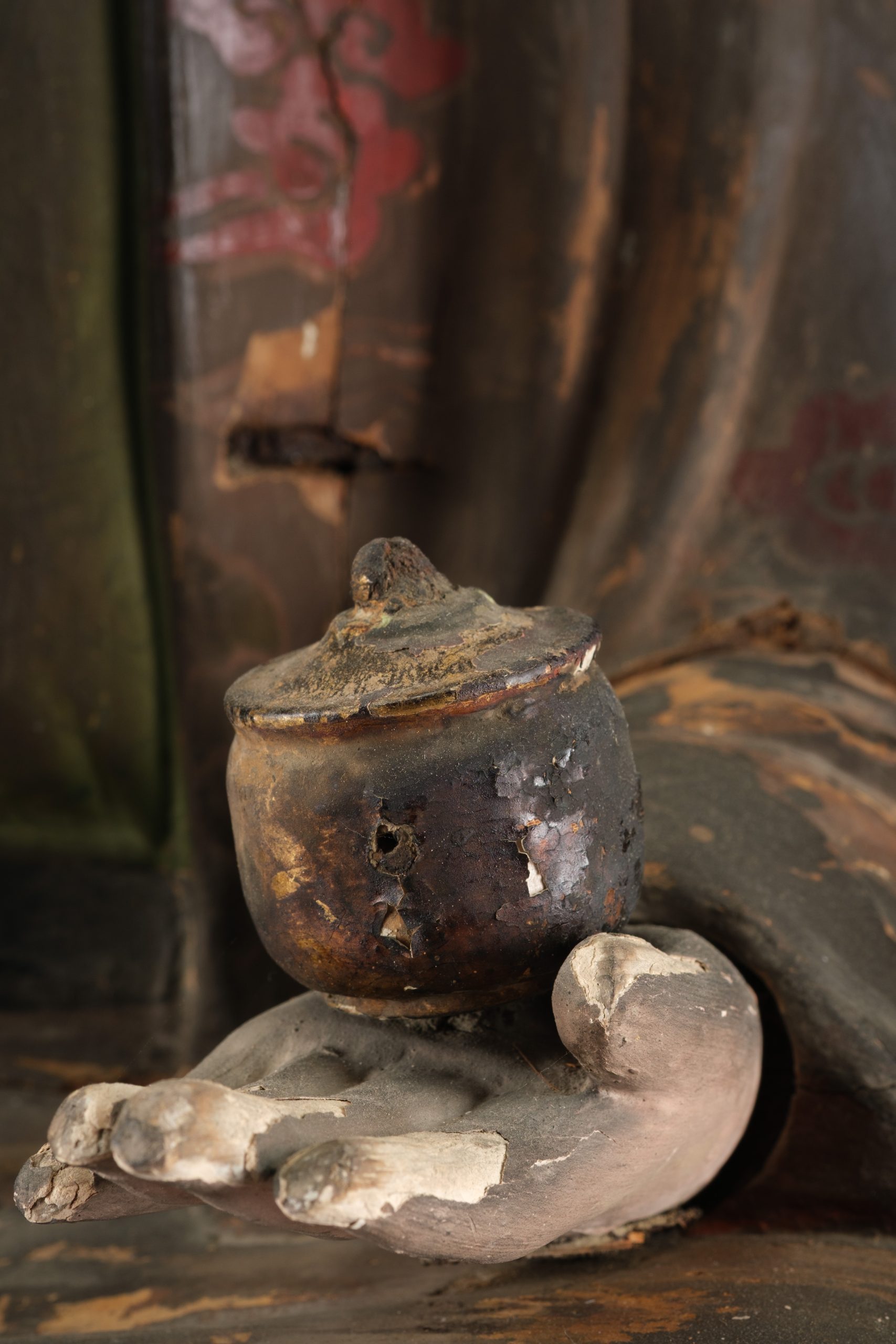
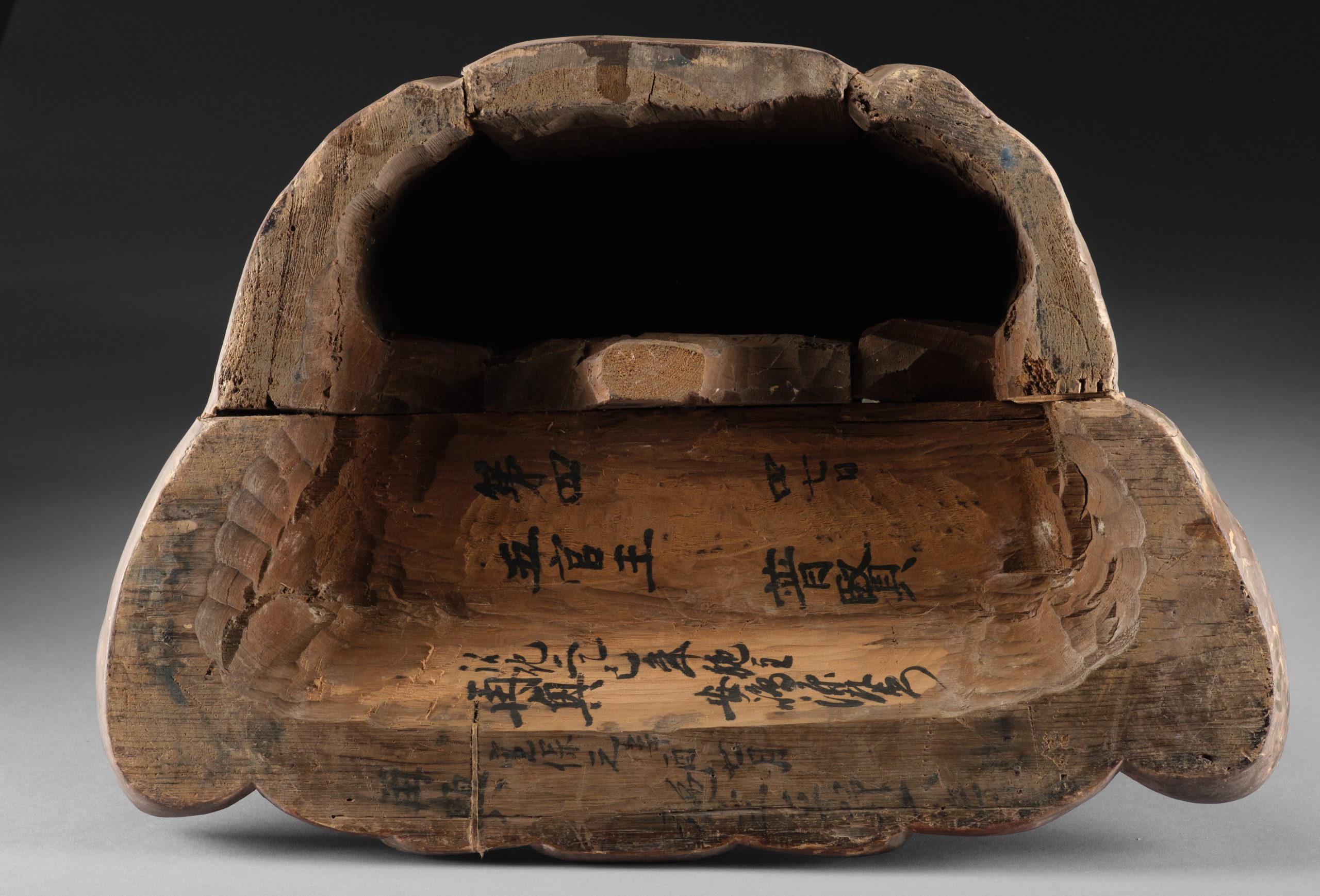
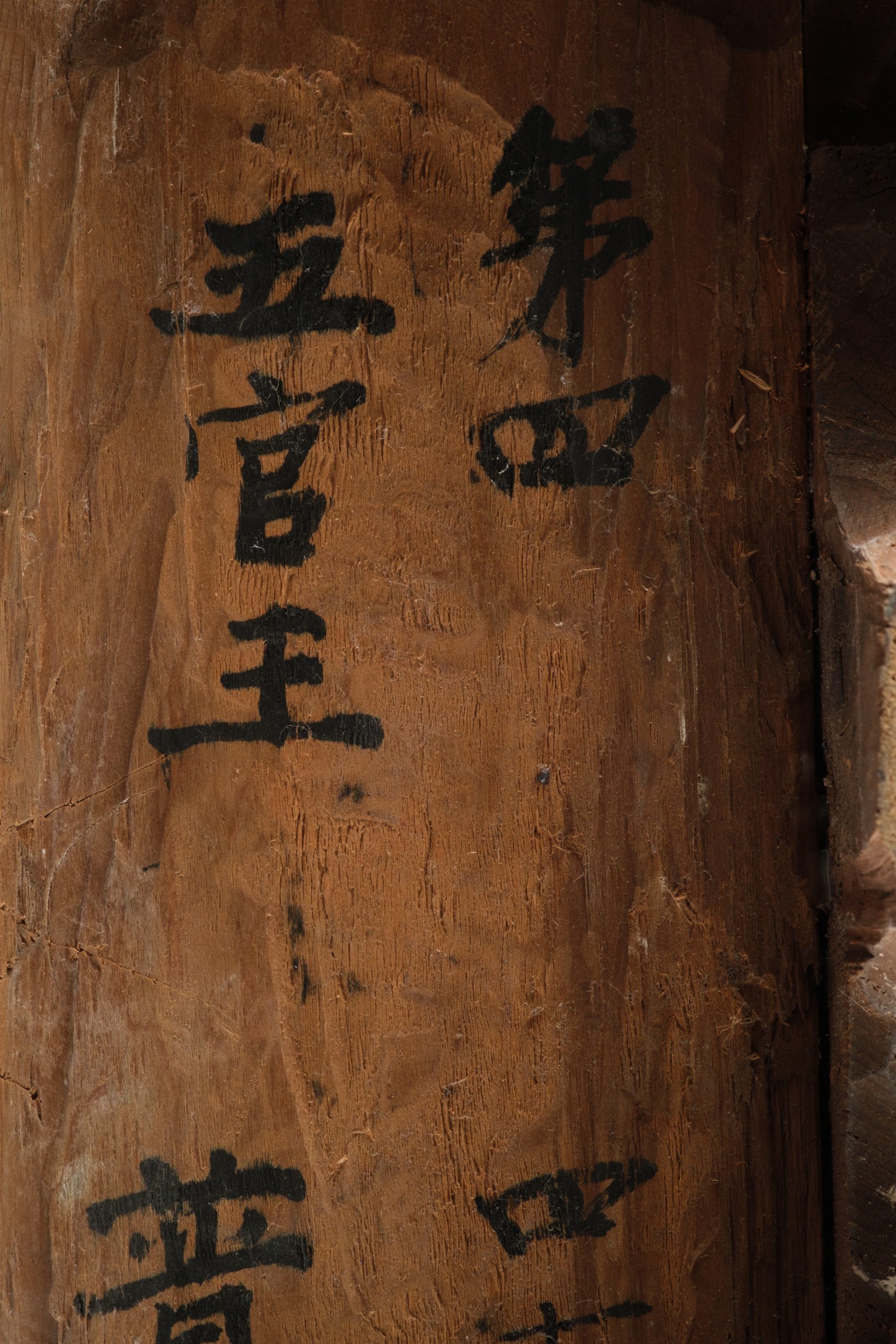
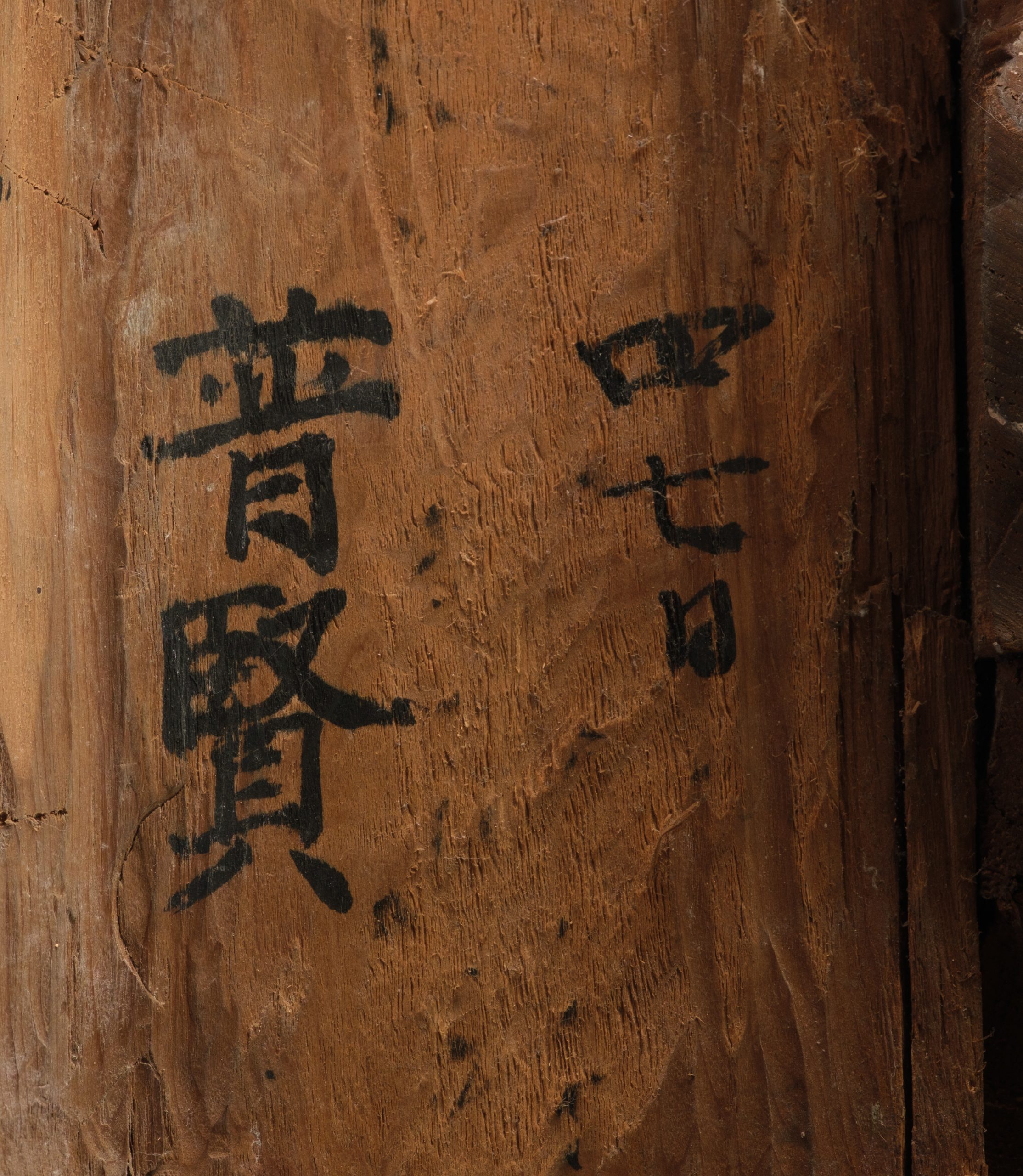
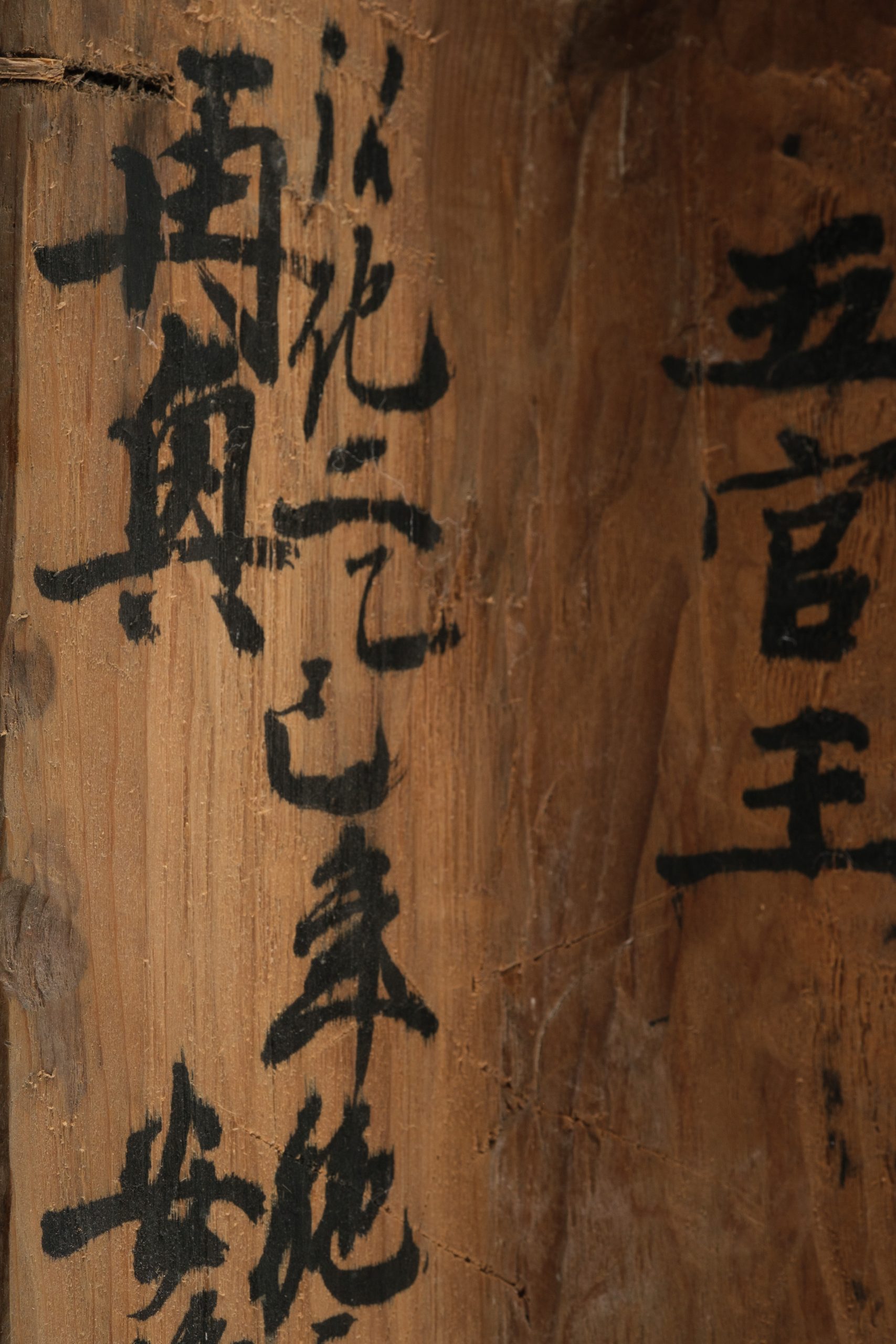
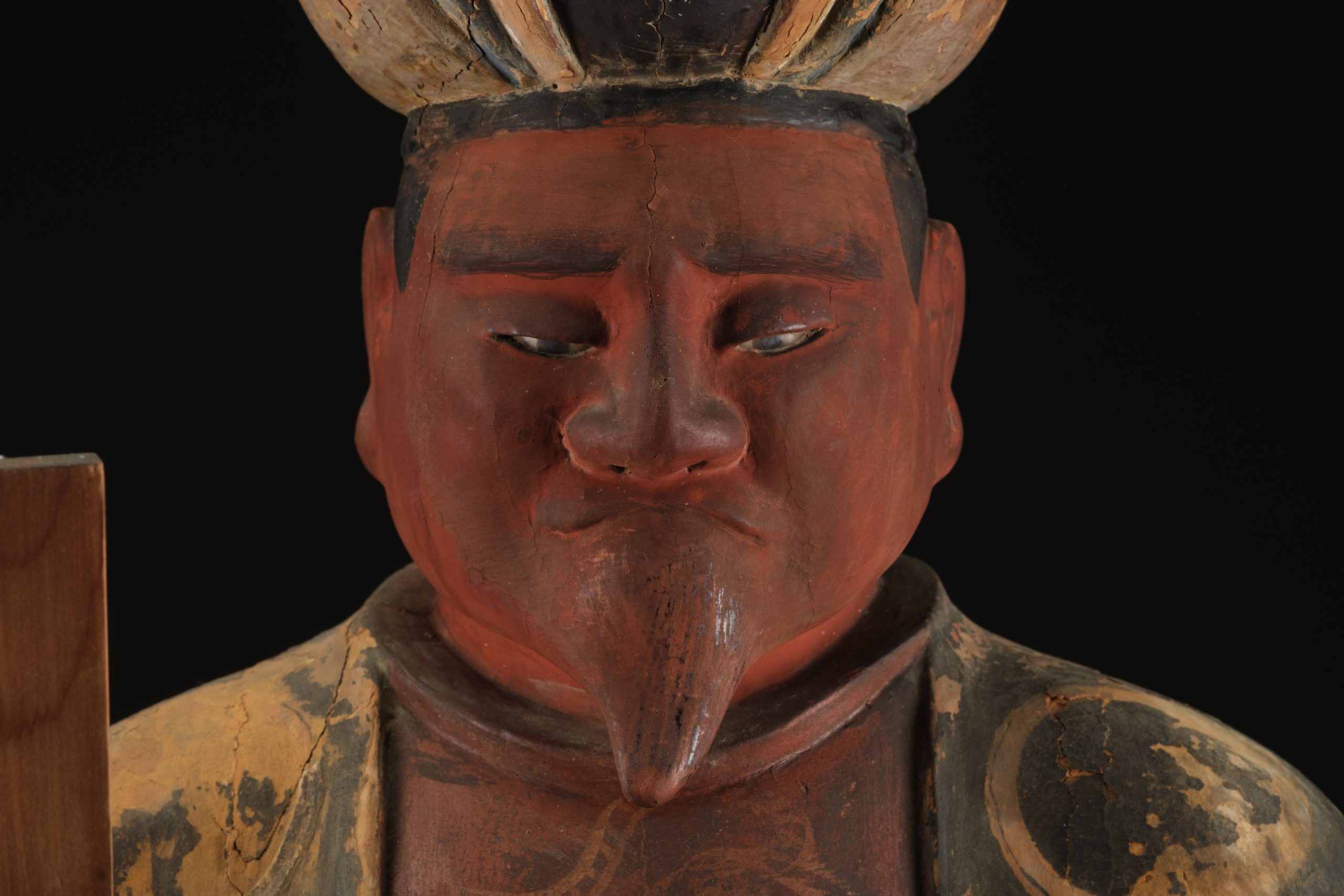
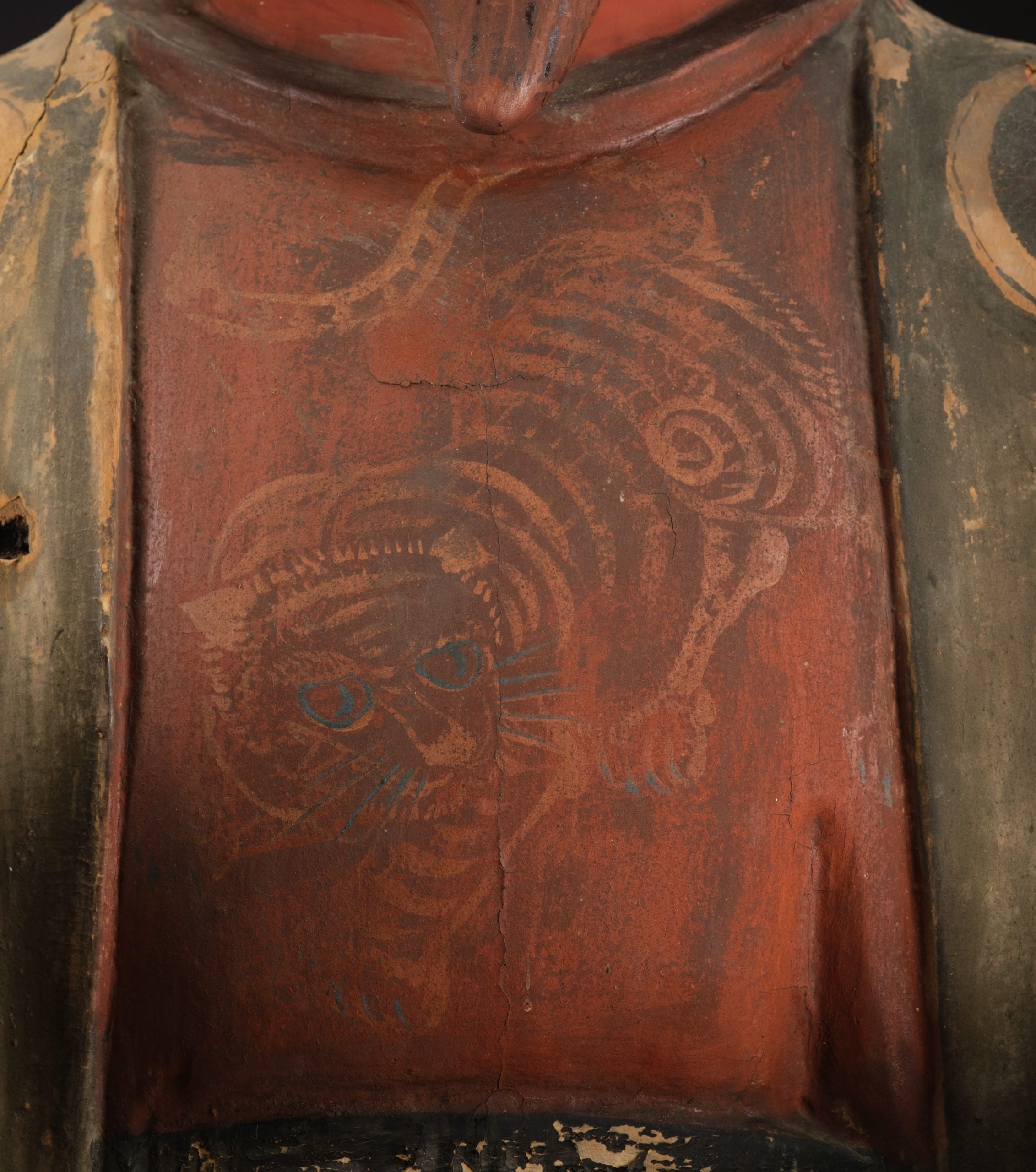
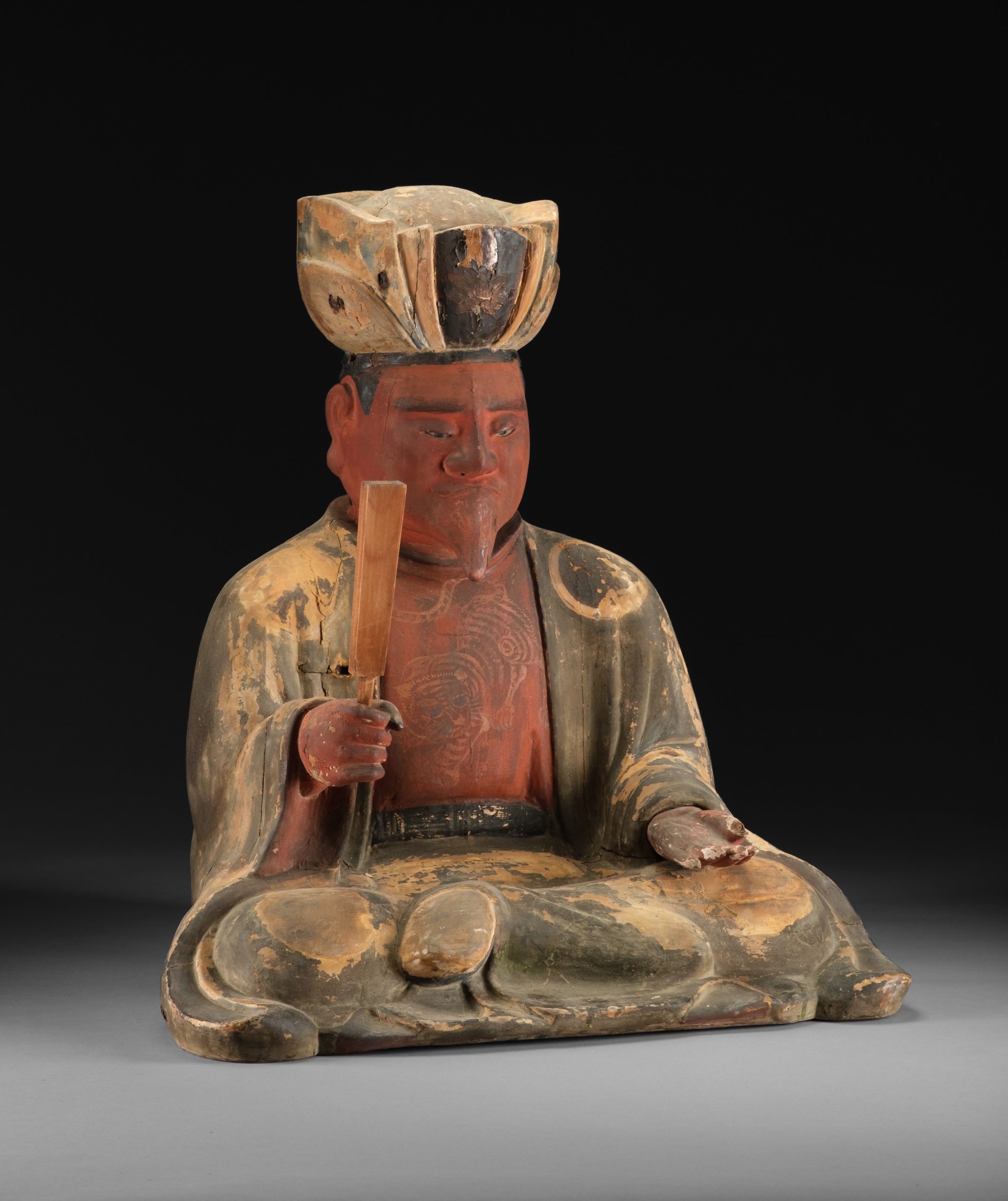
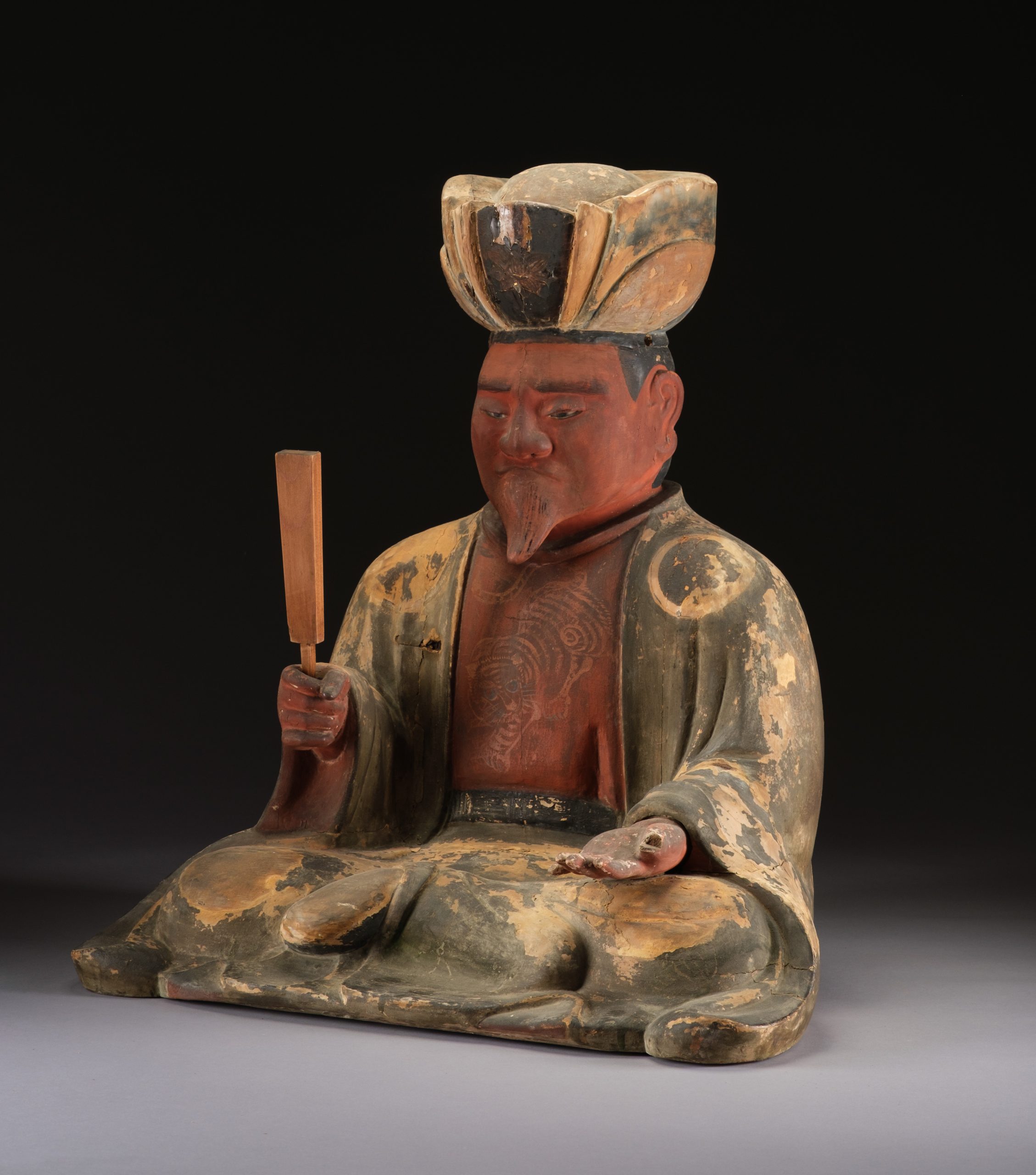
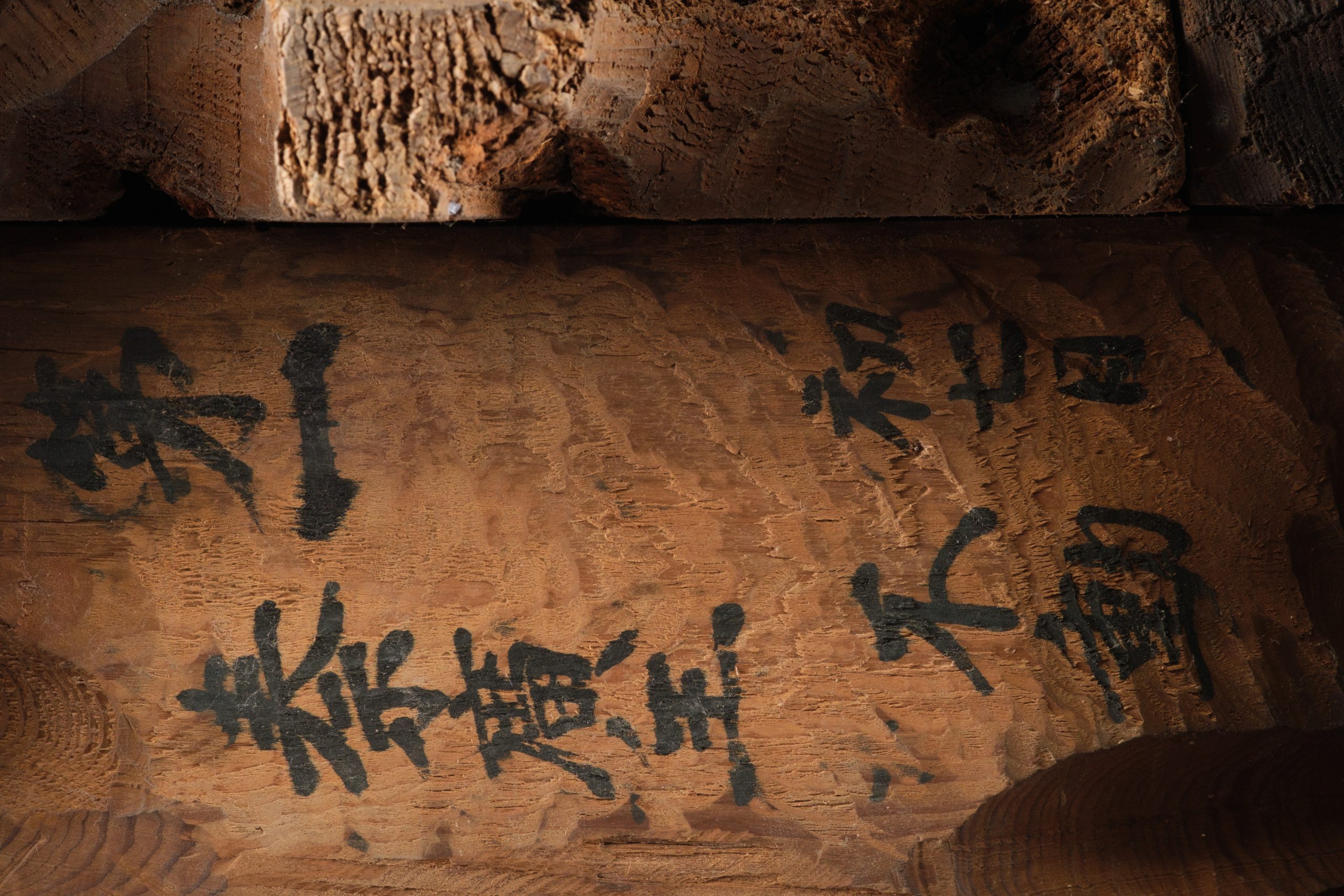
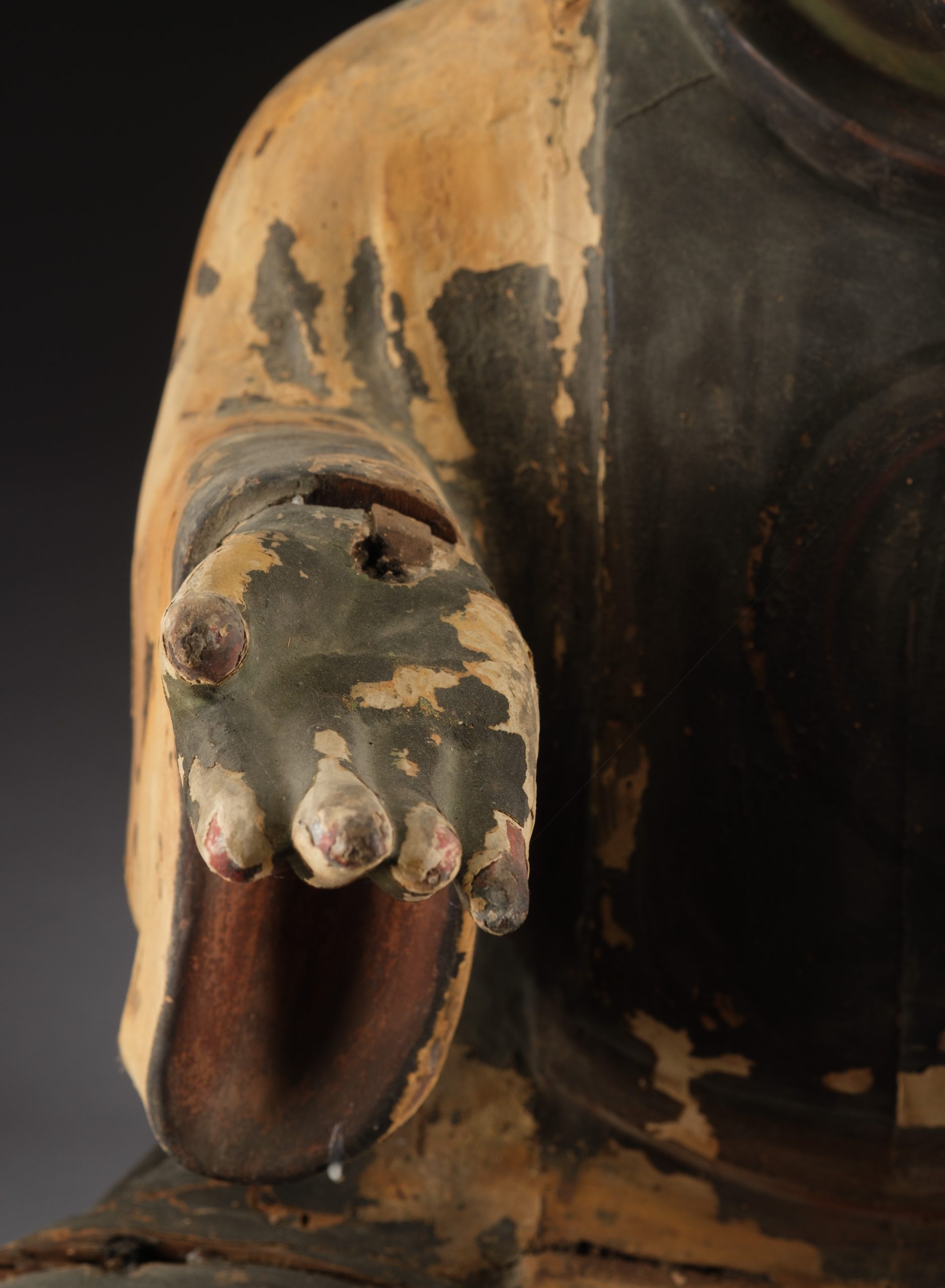
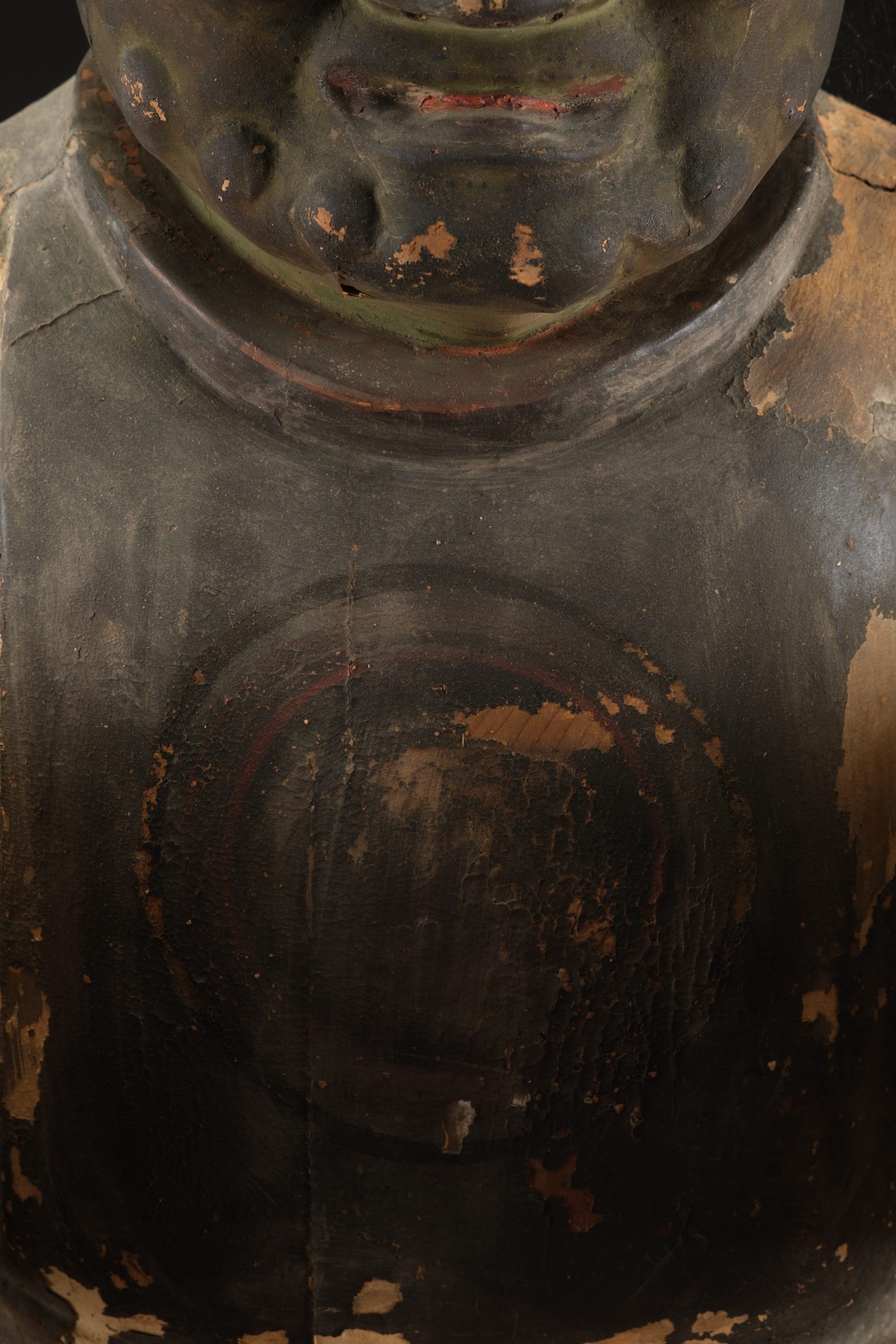
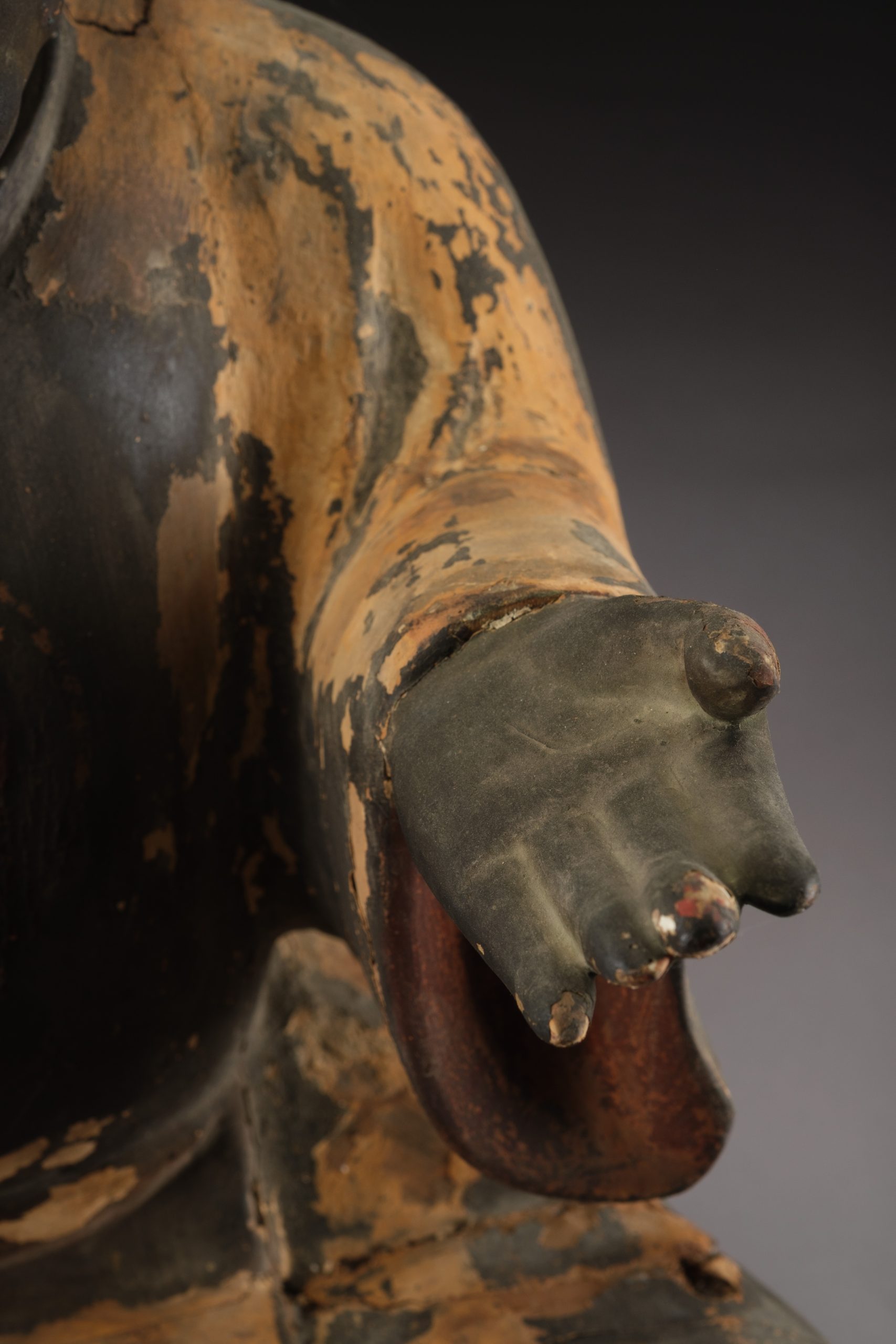
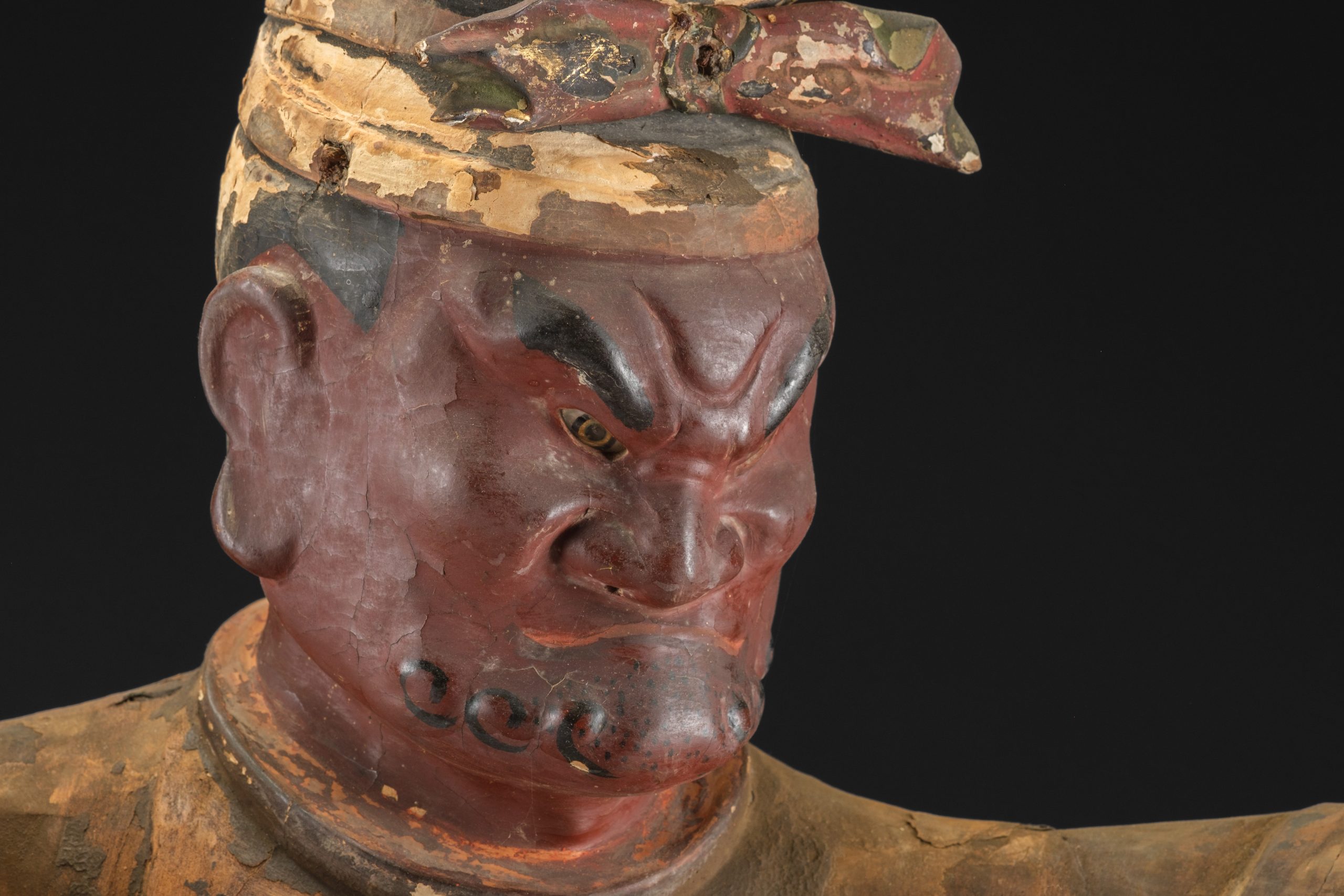
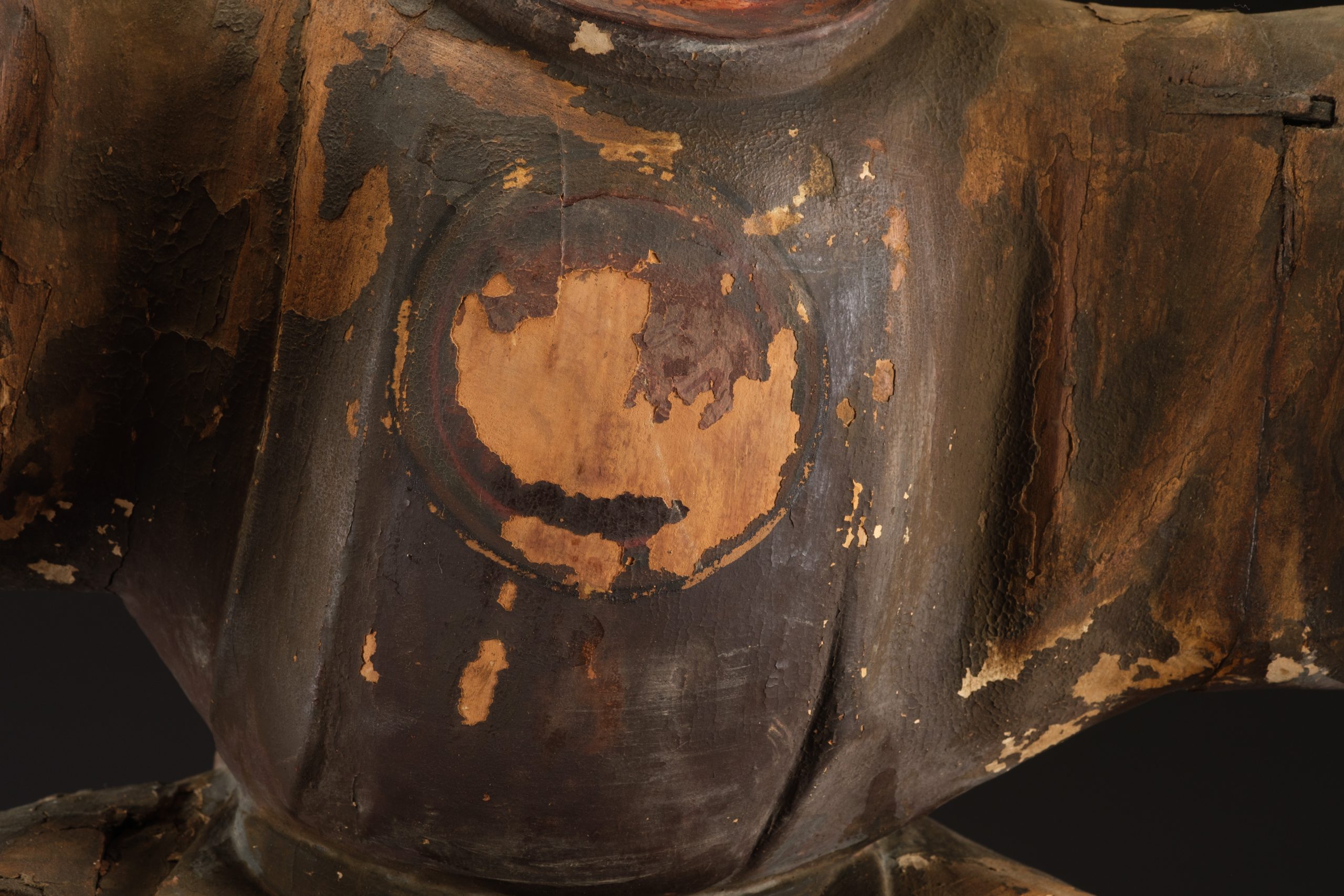
Enma is flanked by two further judges: King Gokan 五官王 (Gokan-ô), the Fourth King of the Ten Kings, and King Shinkô 秦廣王 (Shinkô-ô), the First King. Gokan-ô is shown holding a bowl or precious jewel and raising one hand in a mudra. His inscription also refers to Fugen Bosatsu 普賢菩薩 (Samantabhadra), regarded in the Japanese Ten Kings system as his honji 本地, or underlying Buddhist manifestation. King Shinkô, distinguished by his red complexion and tiger motif on the chest, judges the deceased at the first seventh-day observance and is associated with Fudô Myôô 不動明王 as his honji.
Positioned in front of the three kings are two Kushôjin 倶生神 (Kushôjin). In Buddhist belief, these attendant deities accompany a person from birth and keep account of their good and evil deeds, later presenting this record at the judgement after death. Their presence here therefore closely relates to the judicial role of King Enma and the Ten Kings.
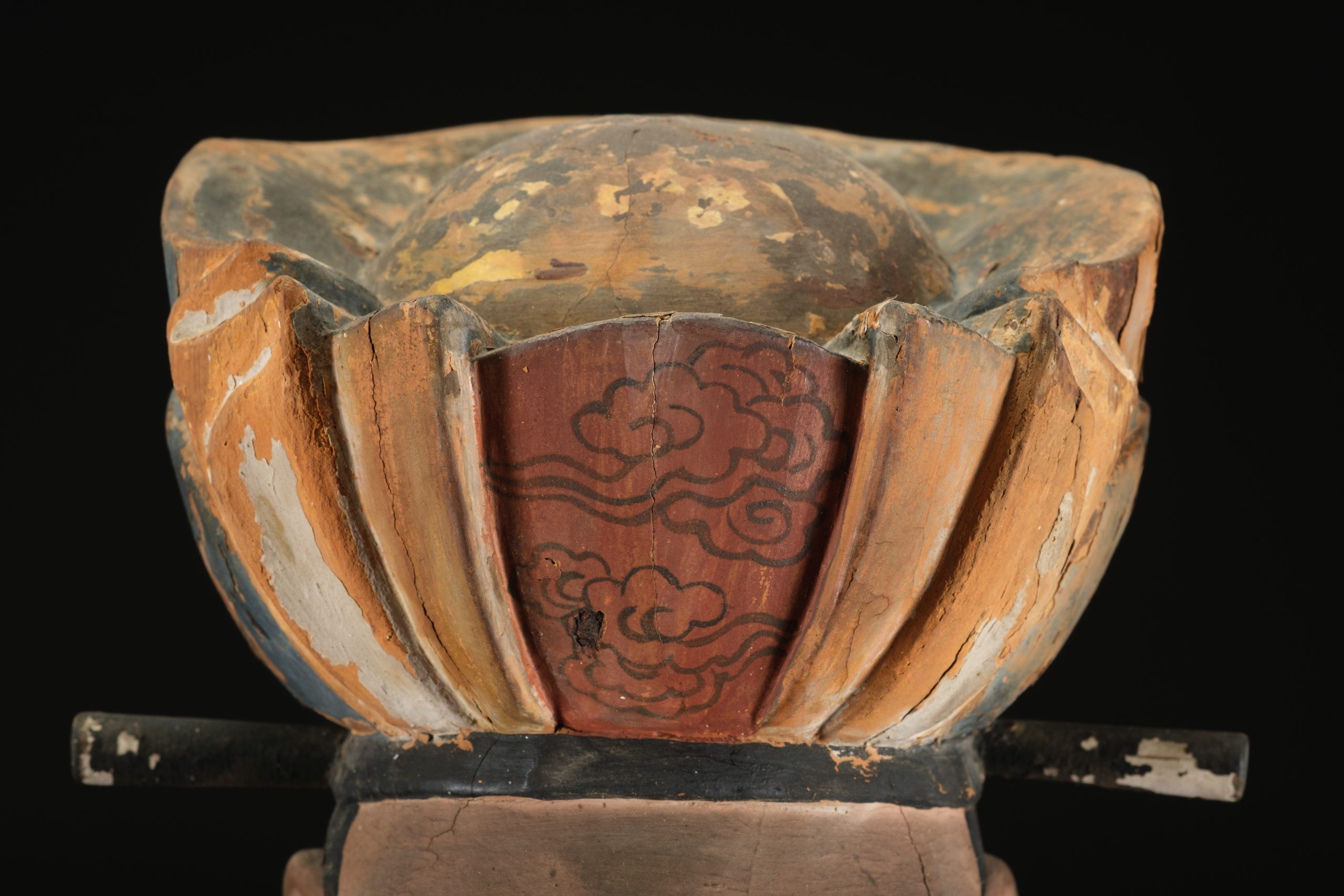
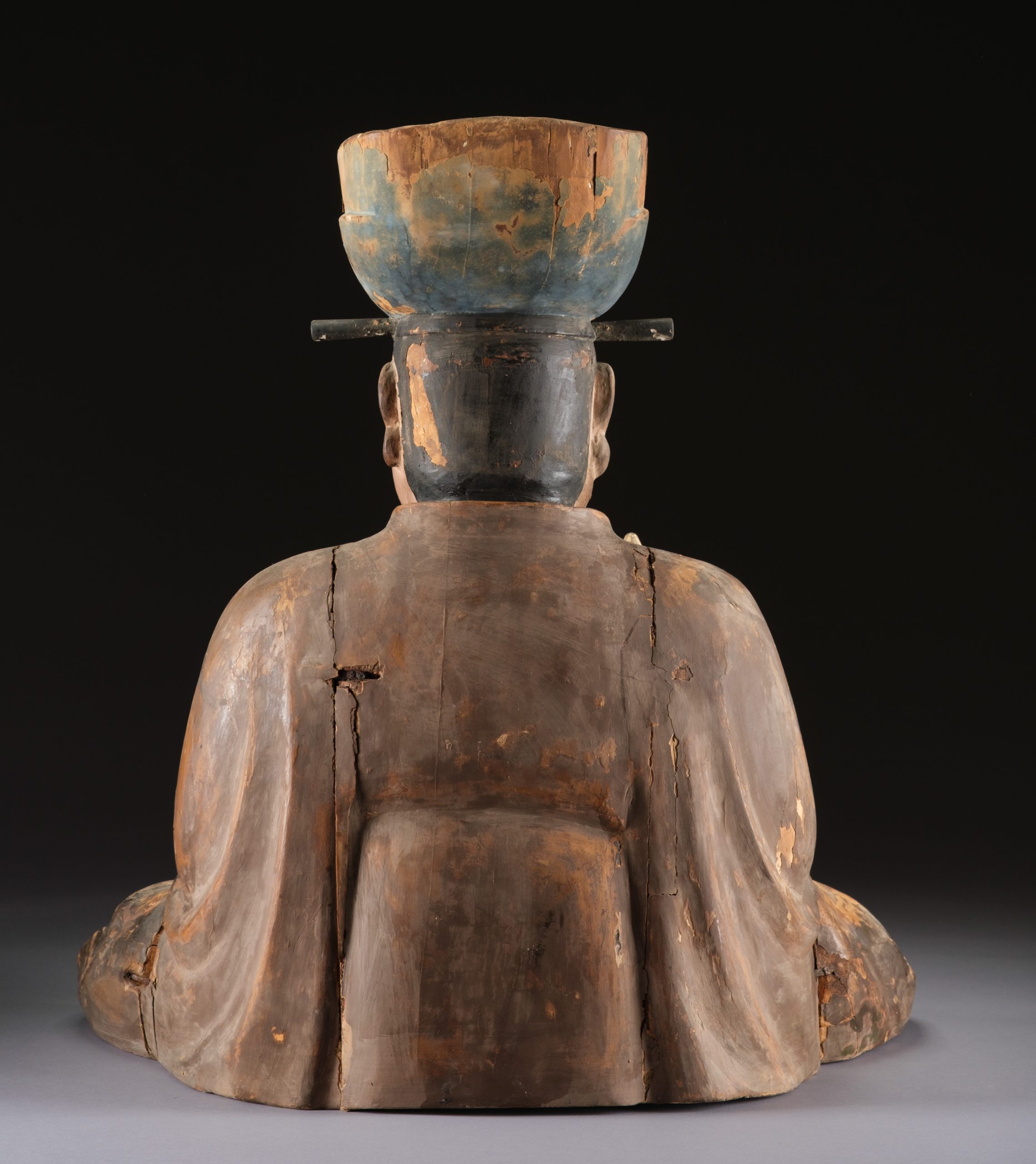
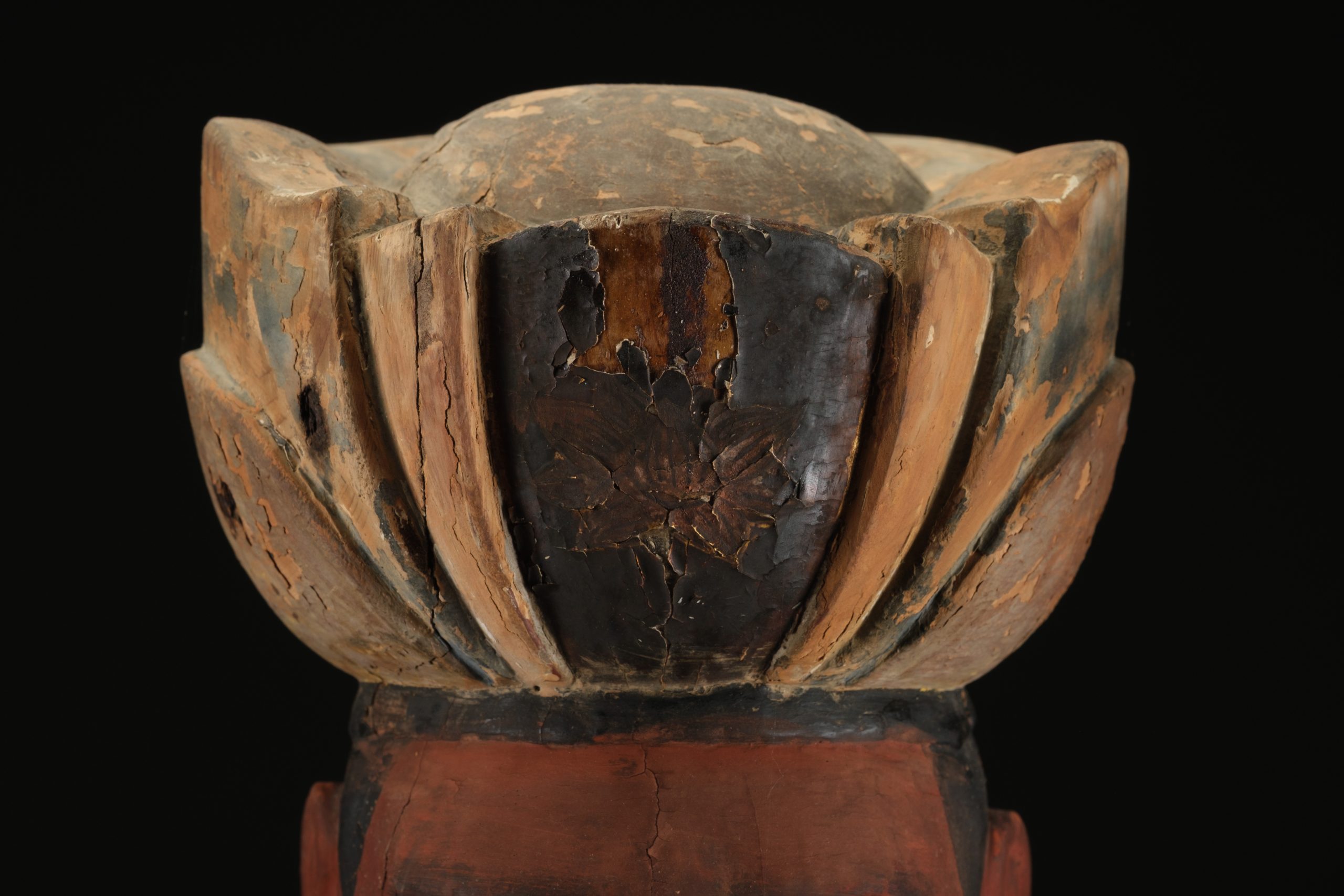
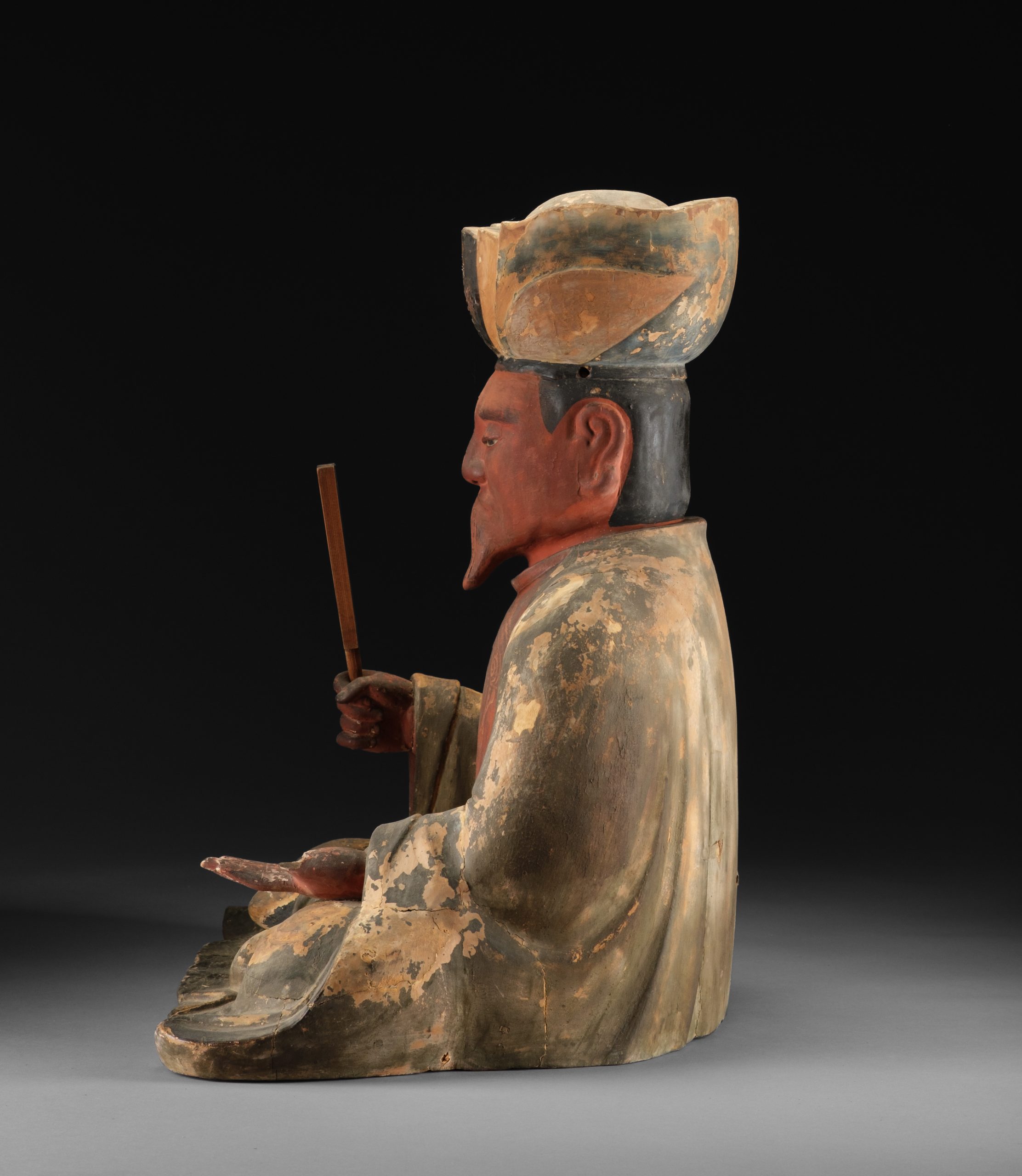
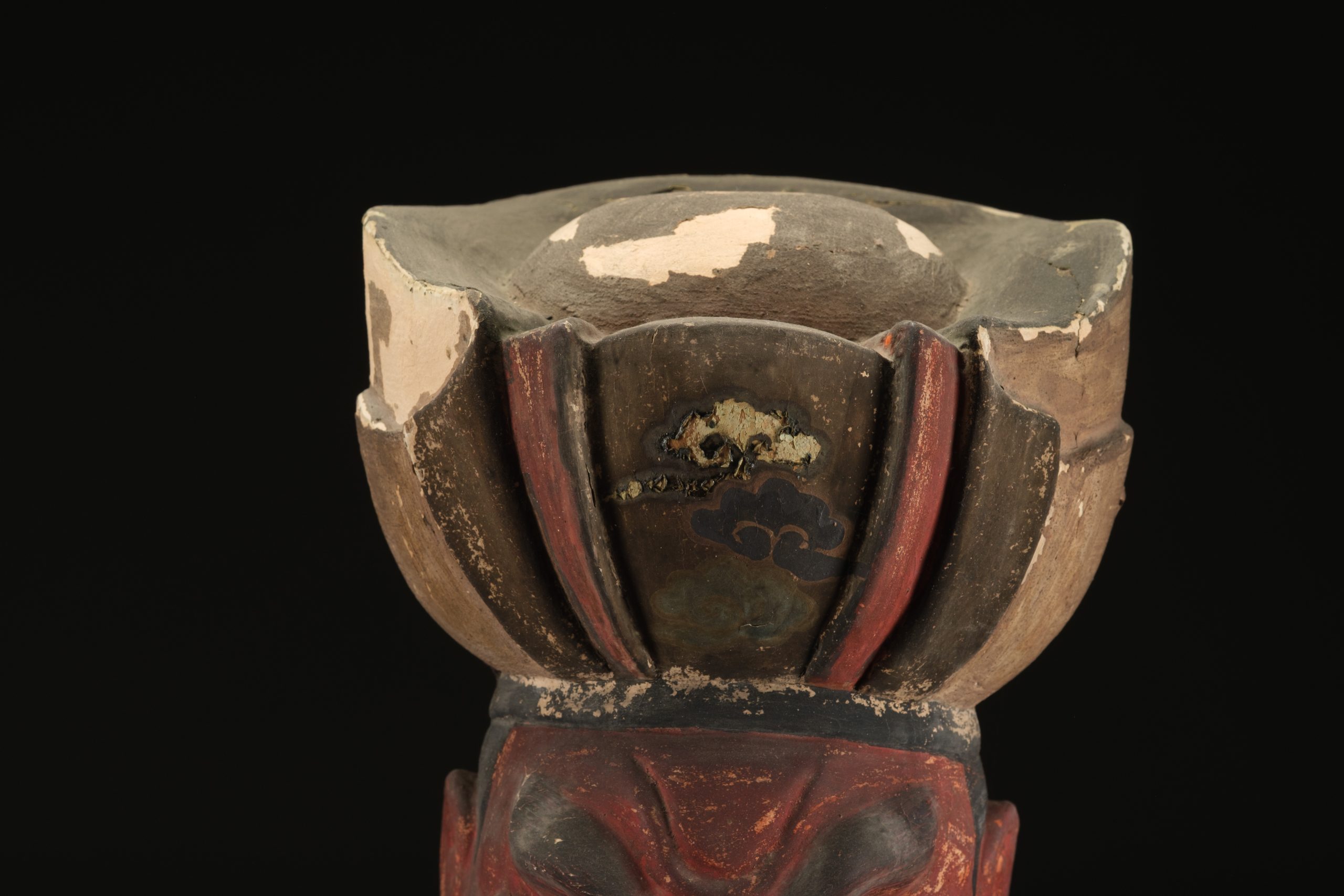
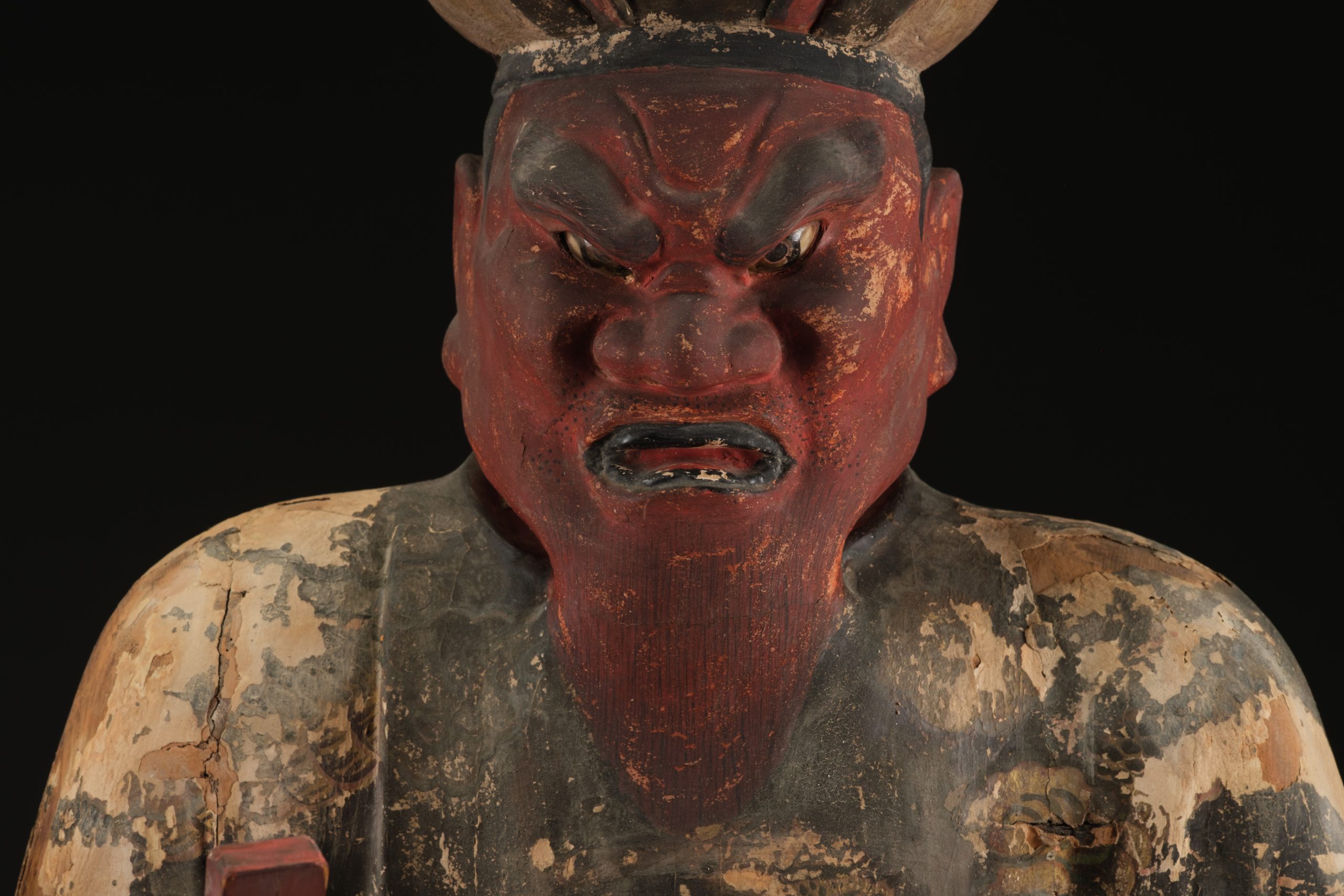
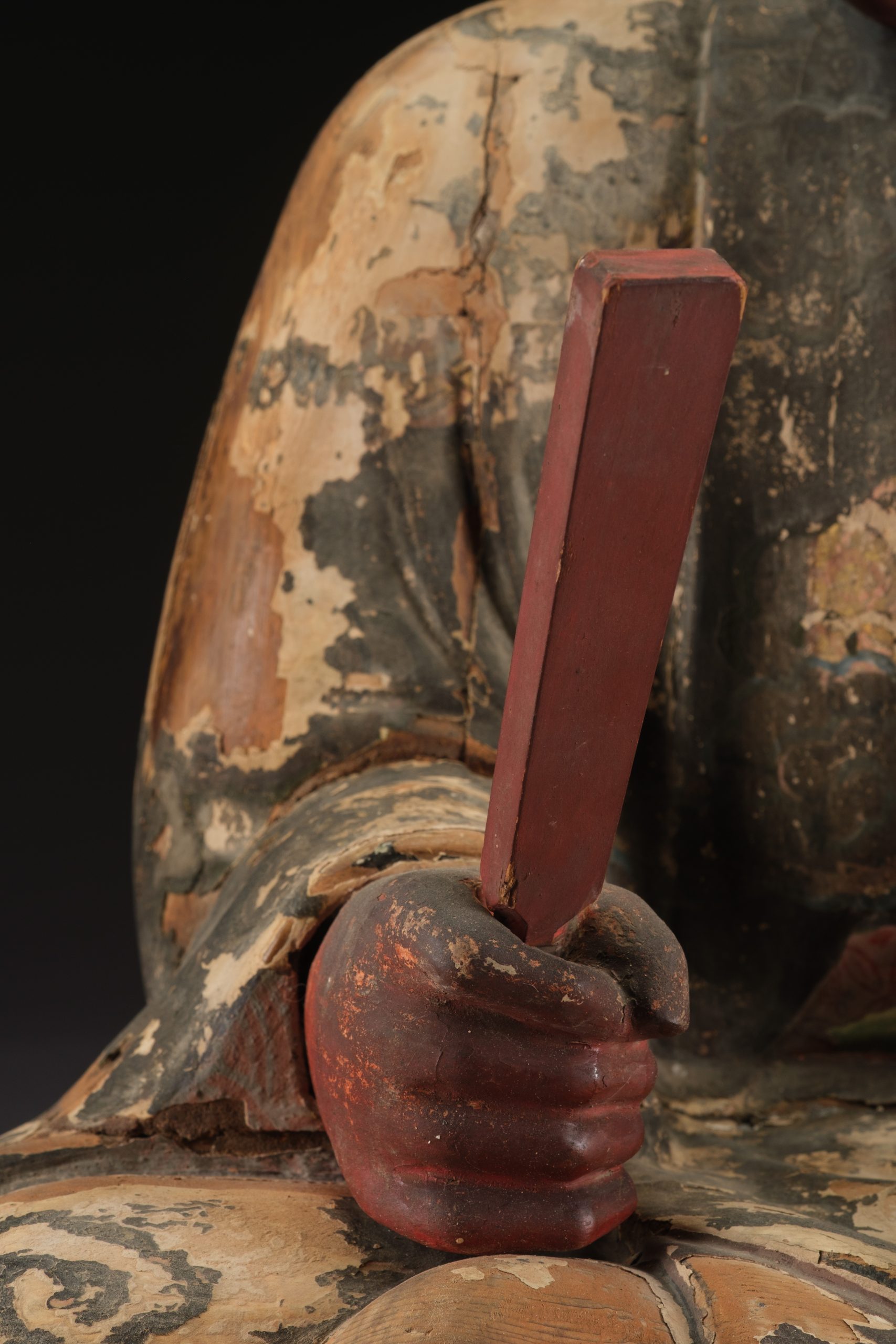
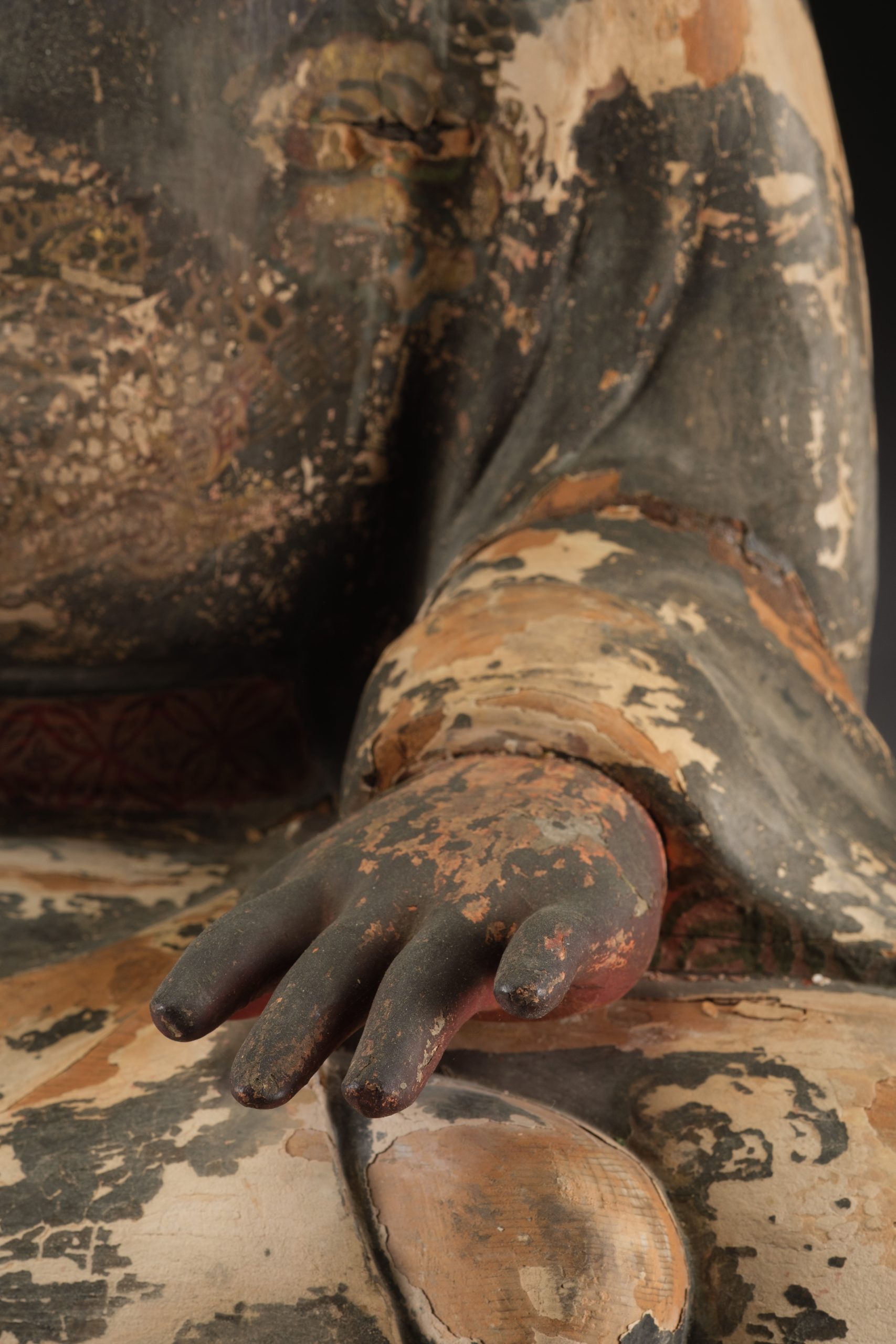
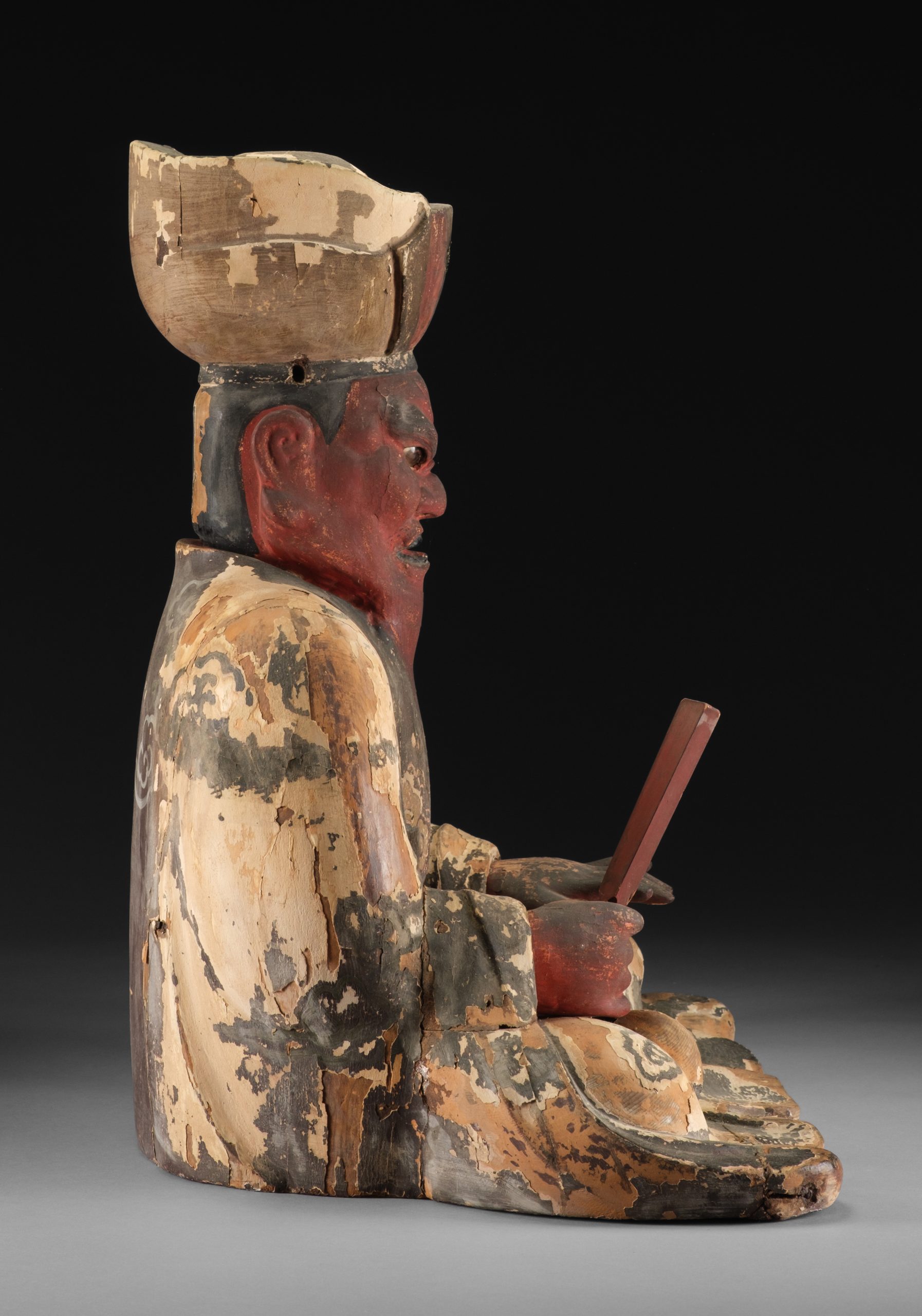
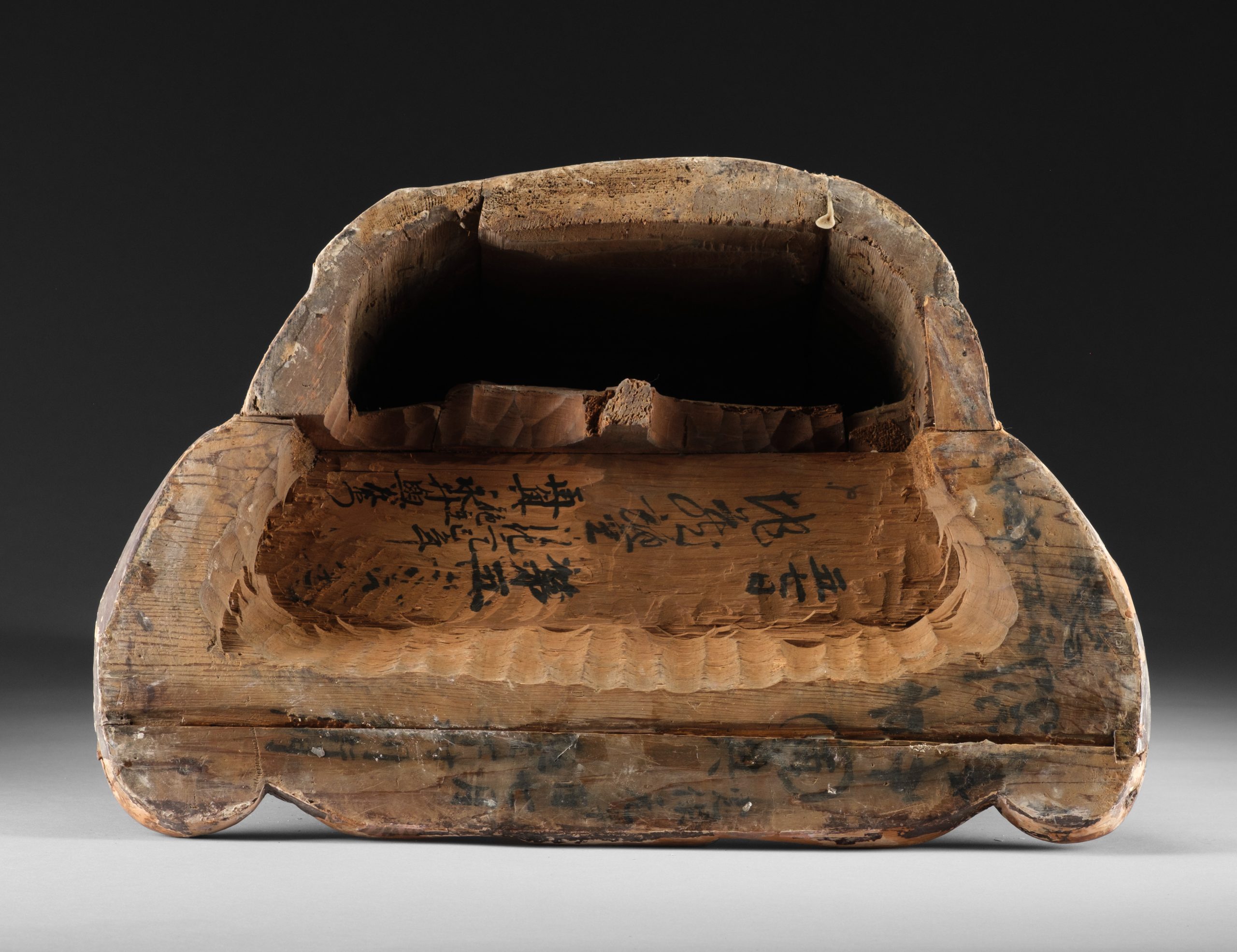
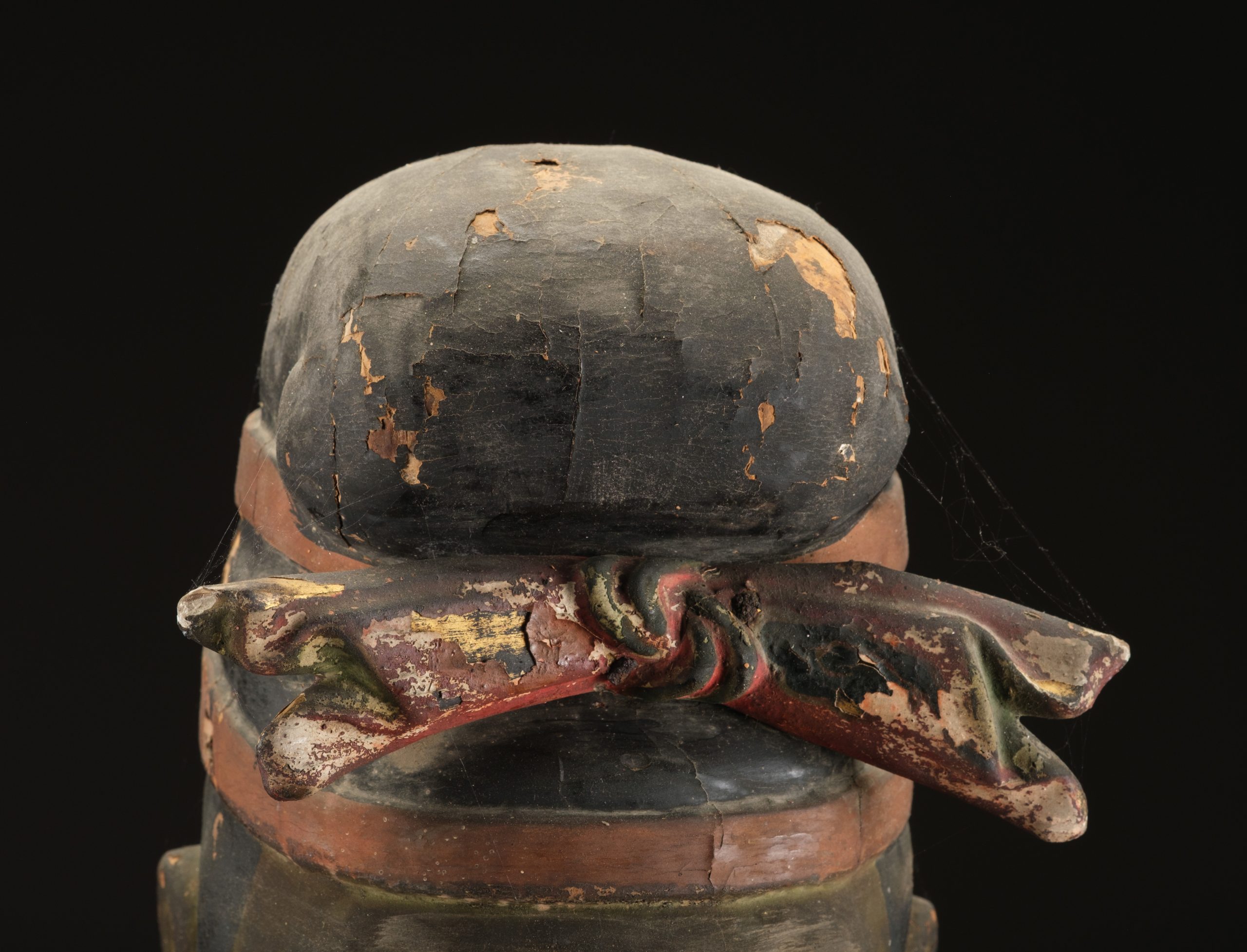
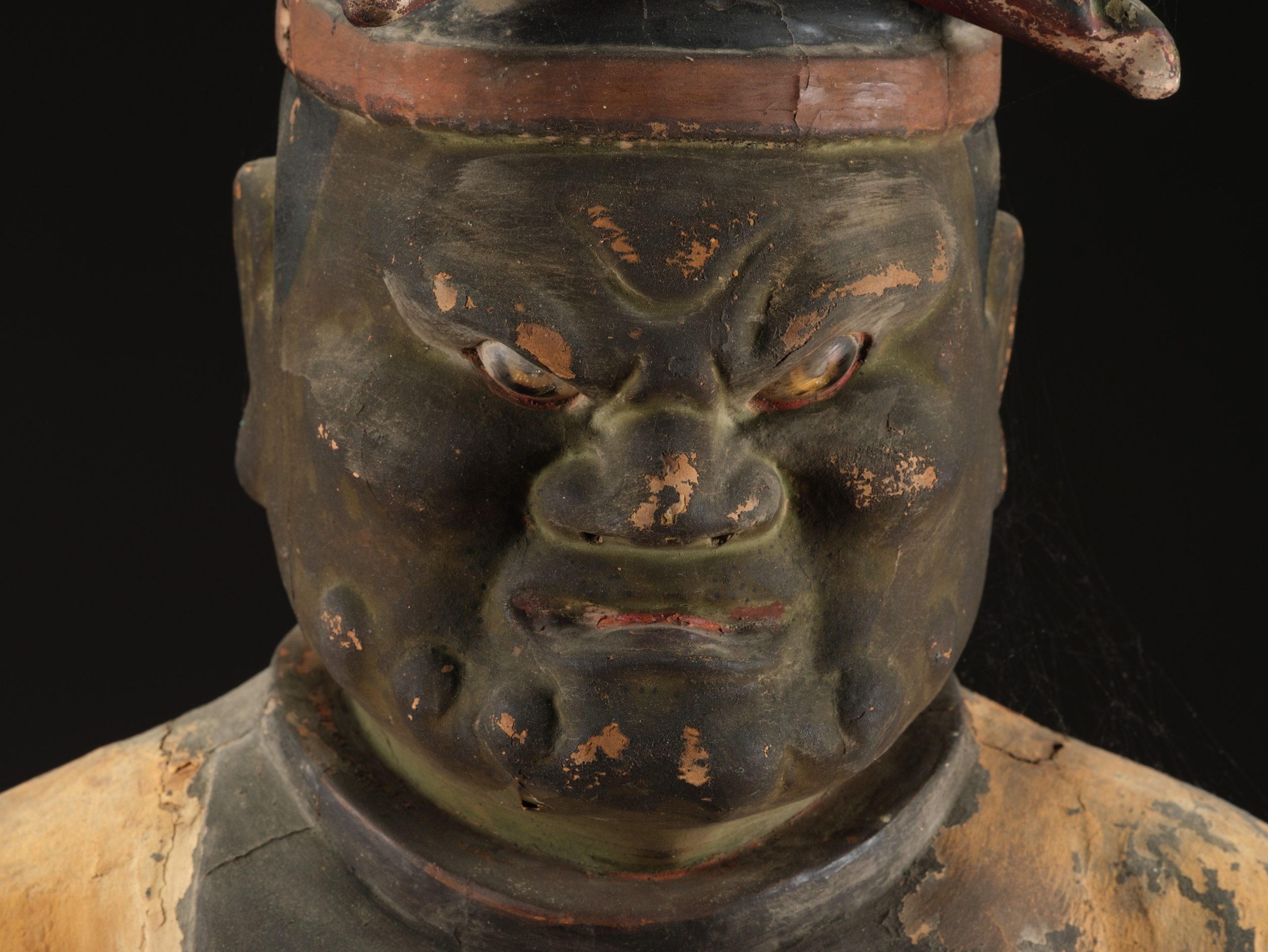
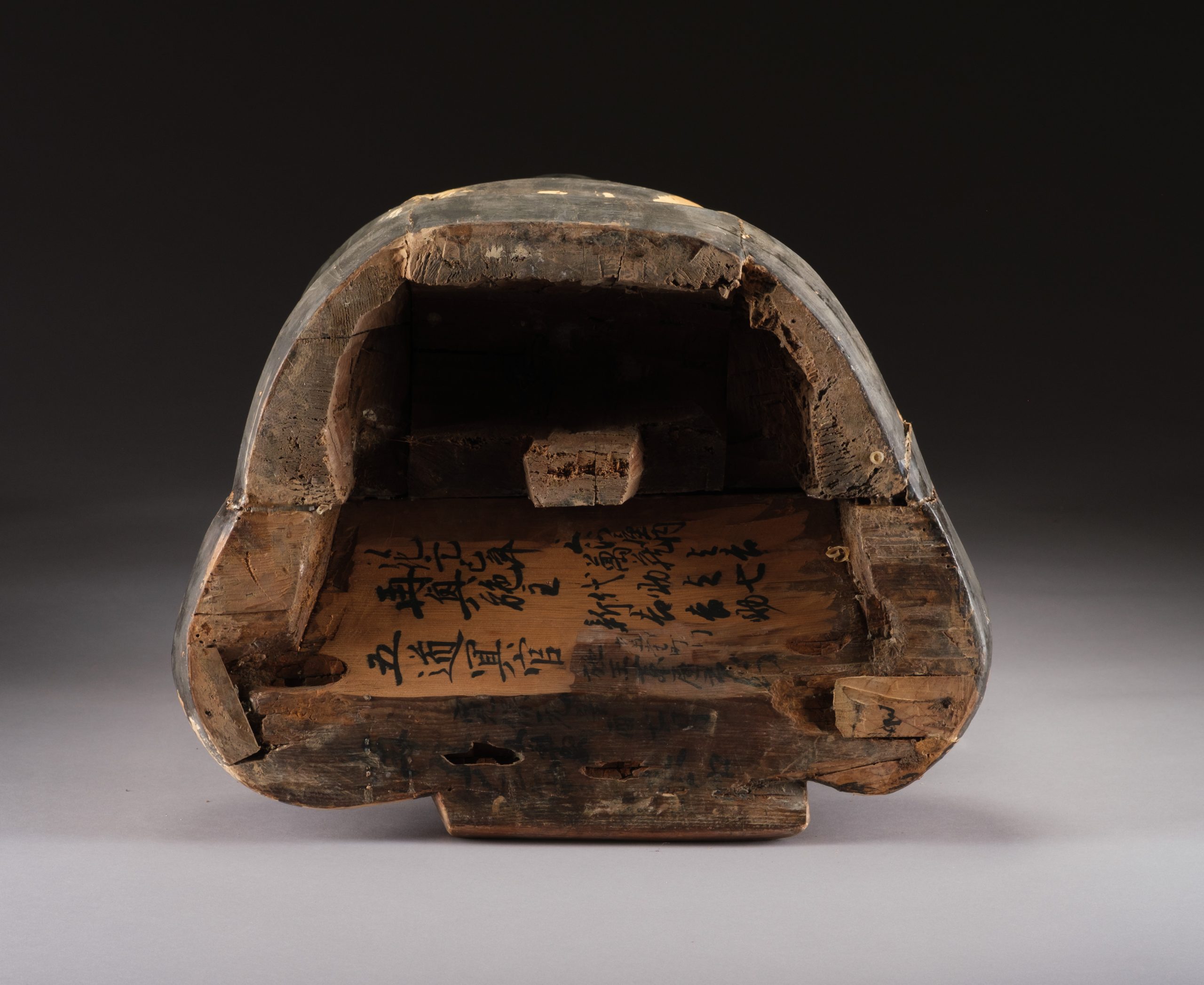
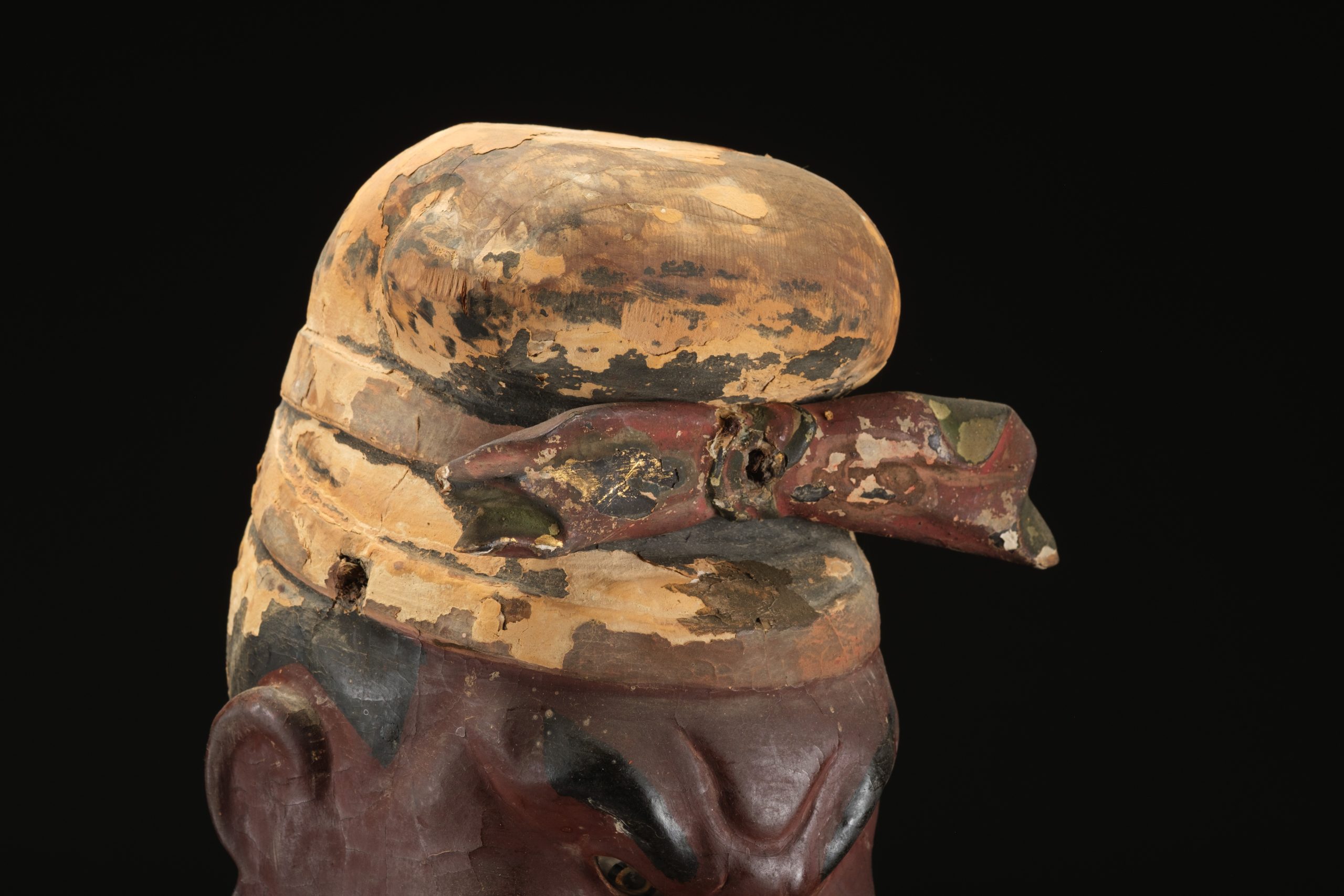
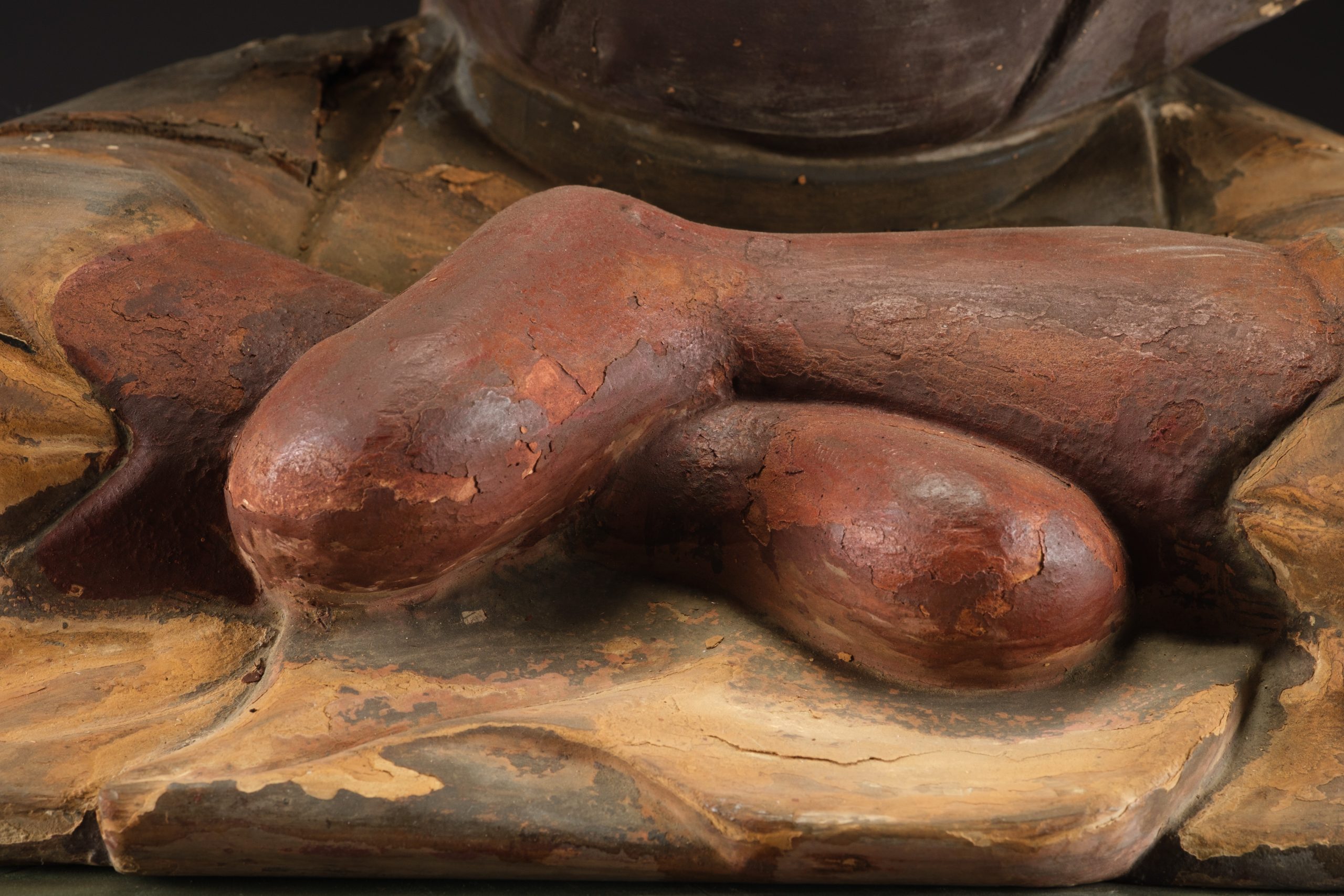
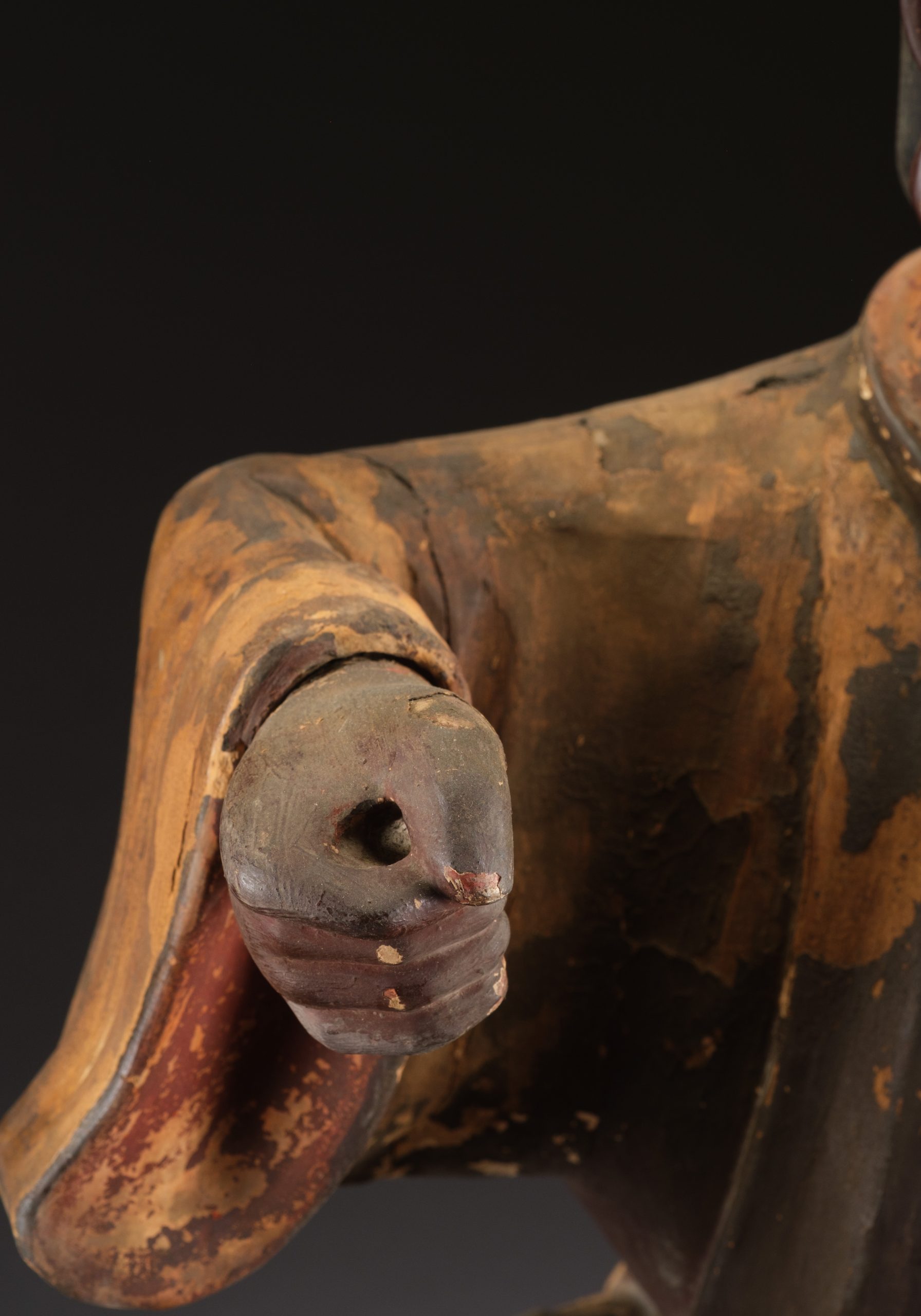
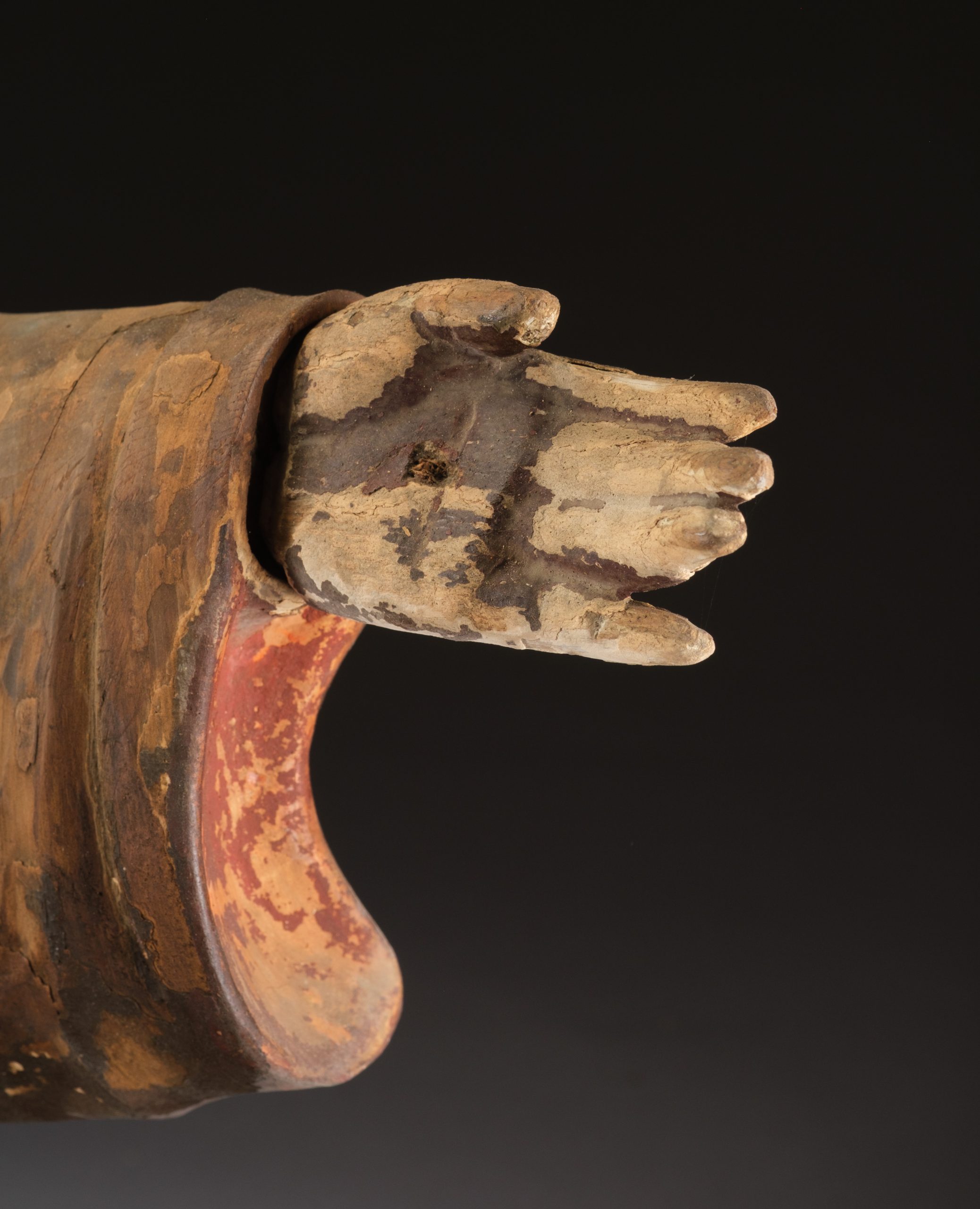
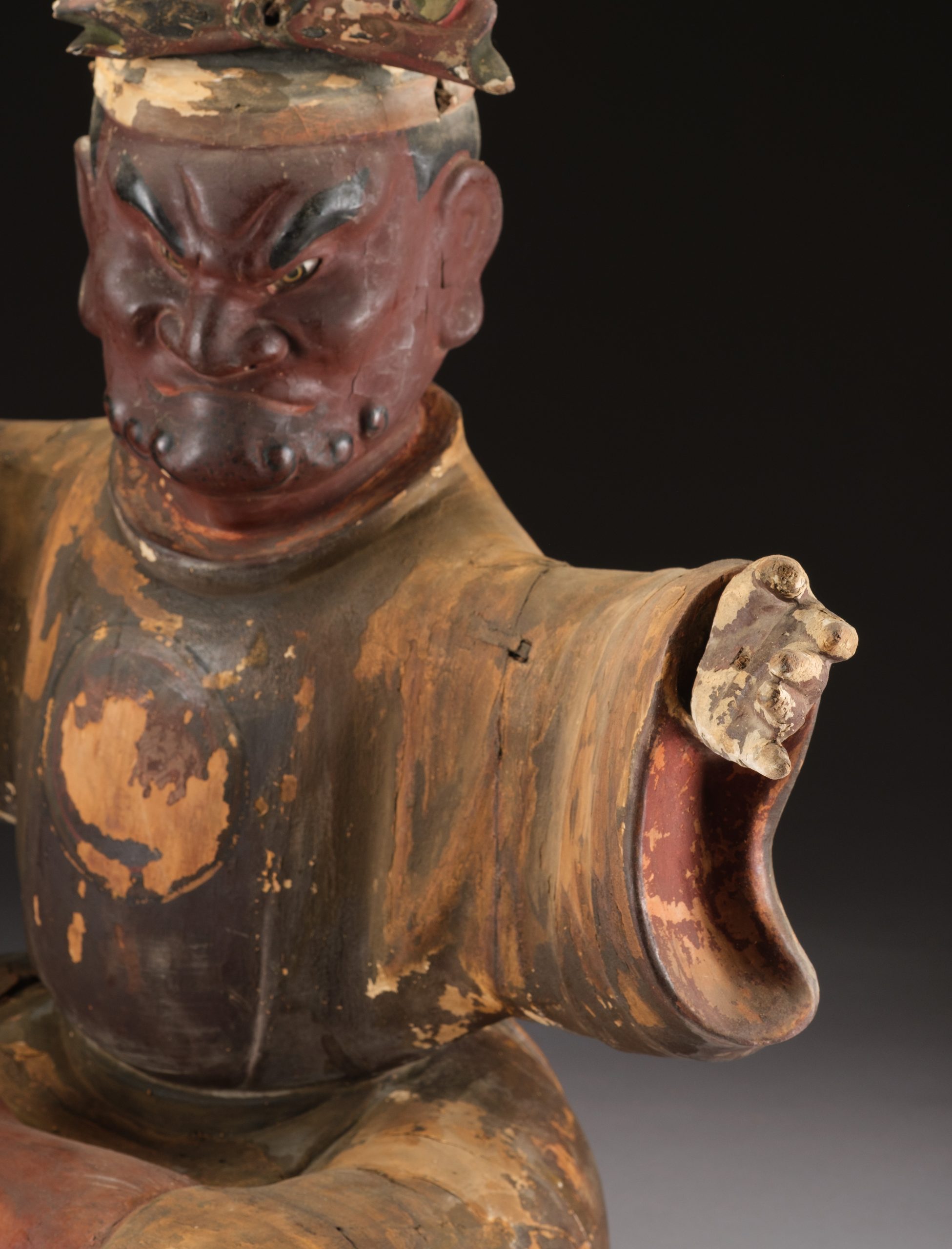
The figures are carved from wood using yosegi-zukuri technique and retain extensive original polychrome decoration, including painted robes, facial details and surviving attributes. The eyes are inlaid with reverse-painted glass. The group is accompanied by four wooden bases.
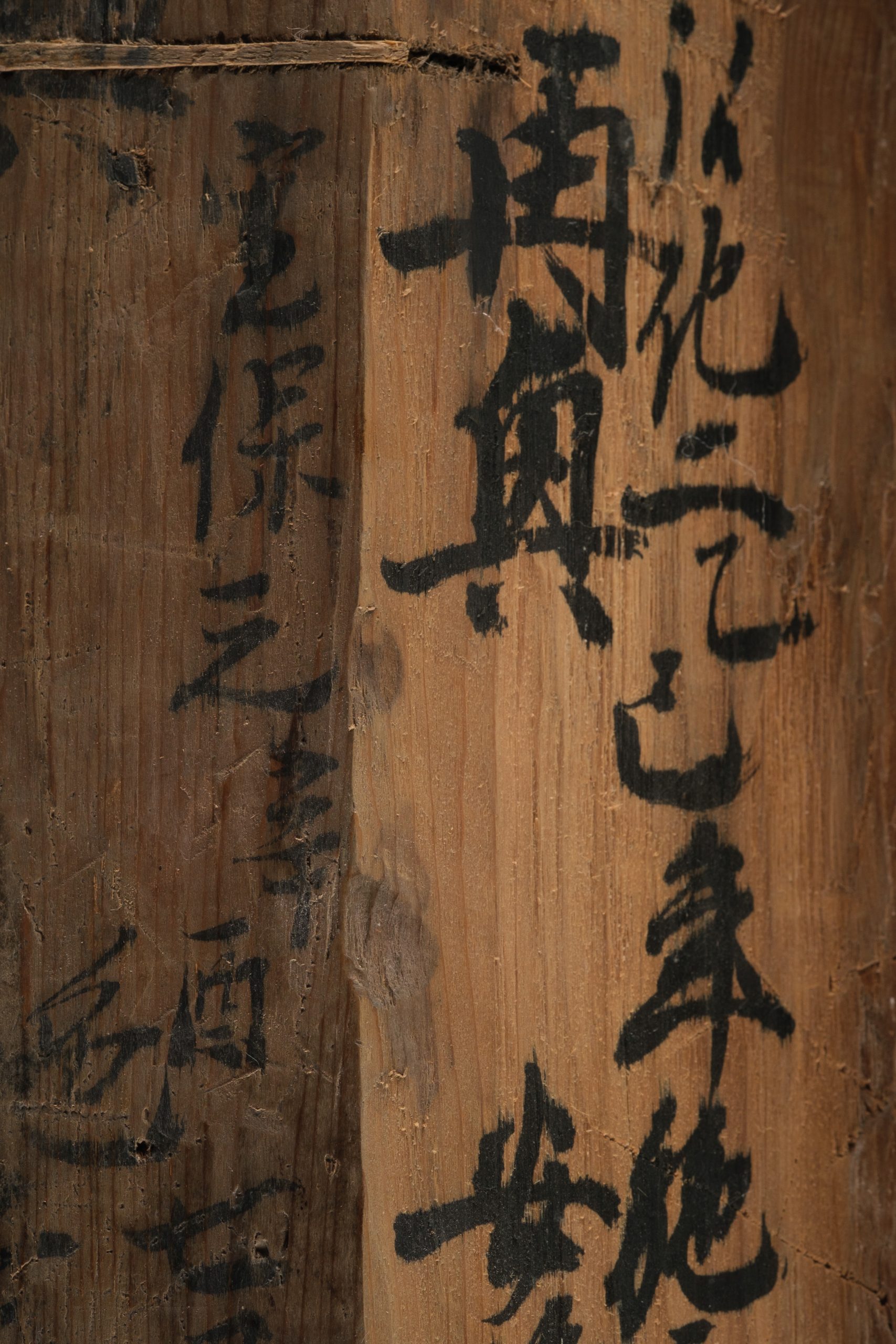
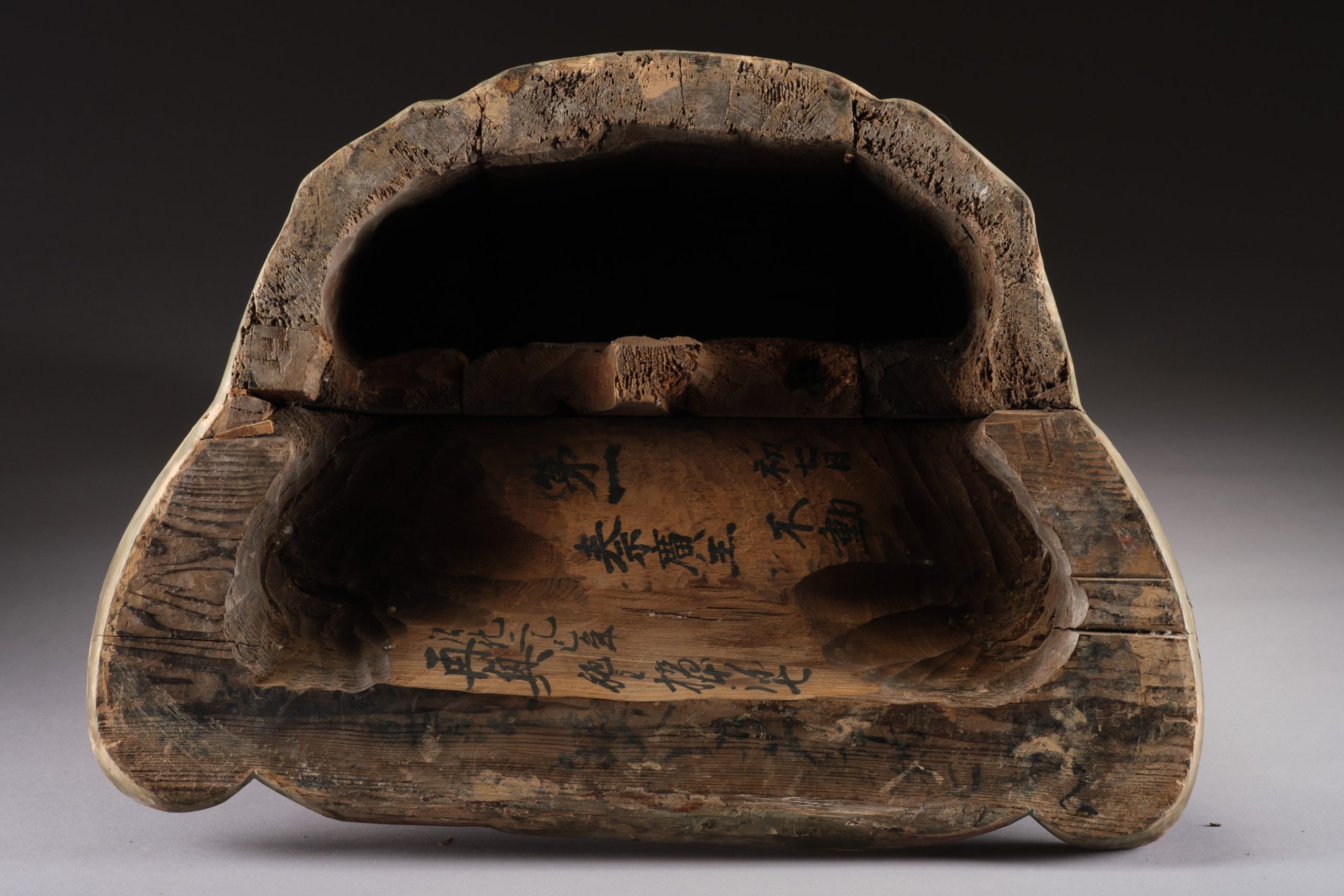
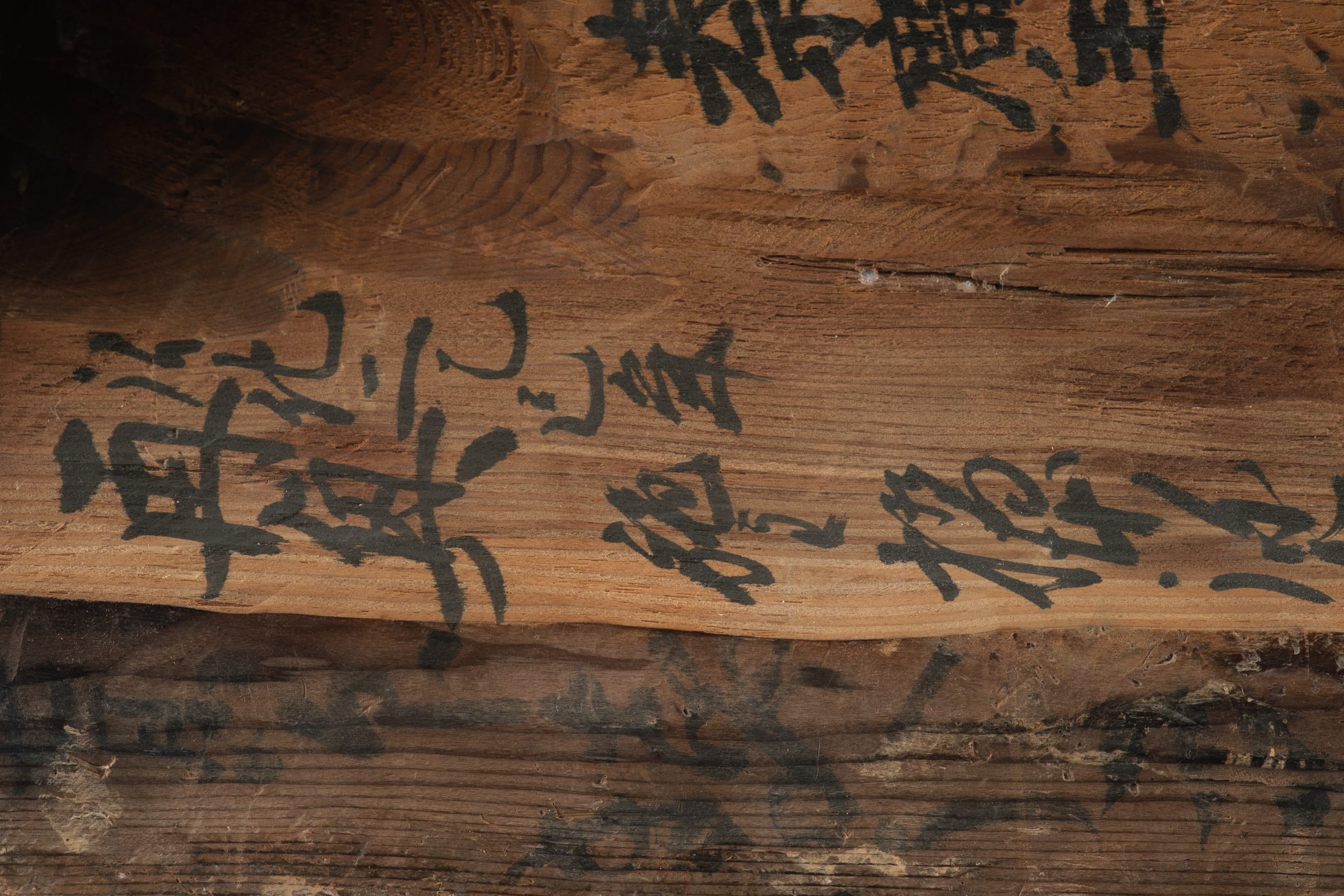
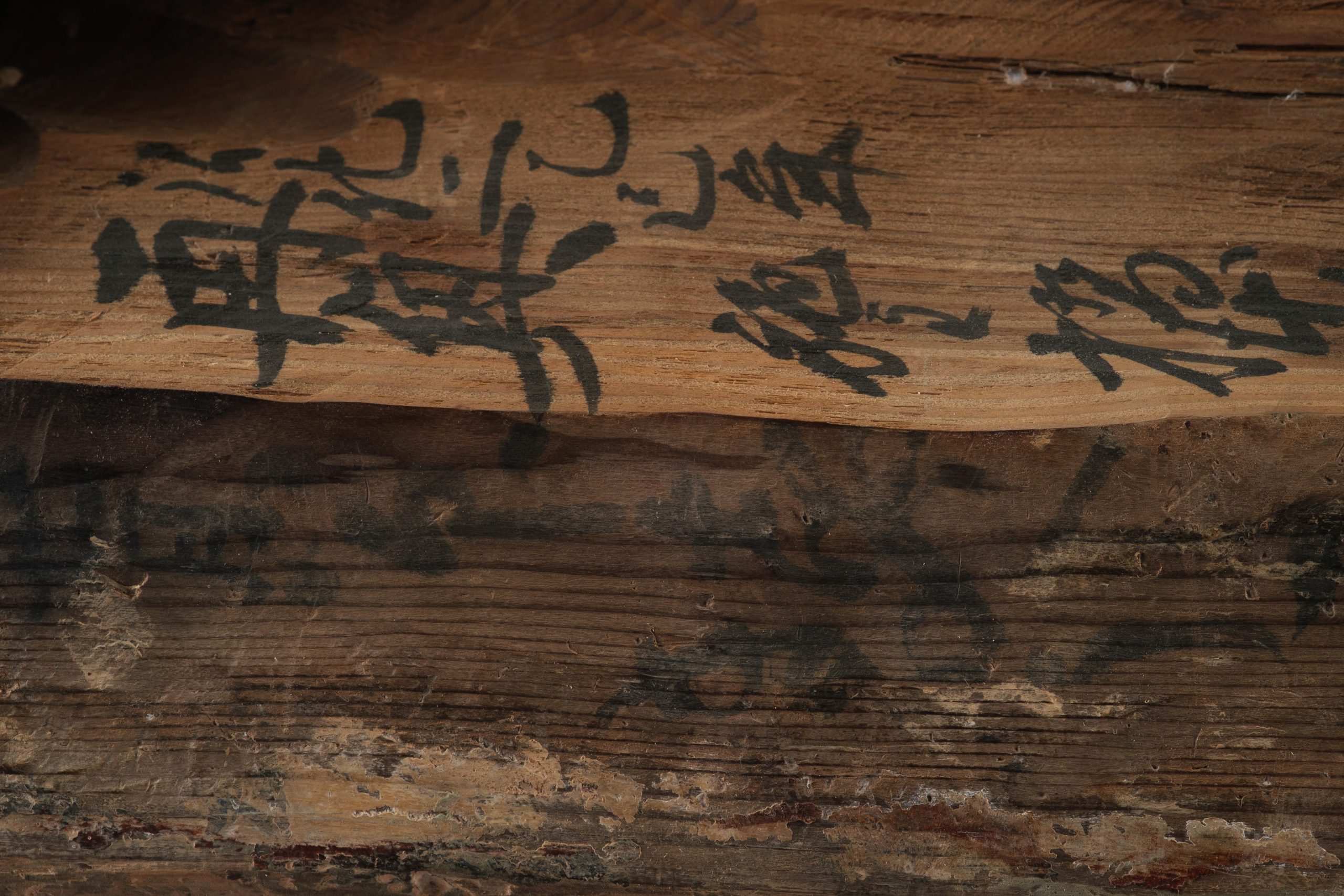
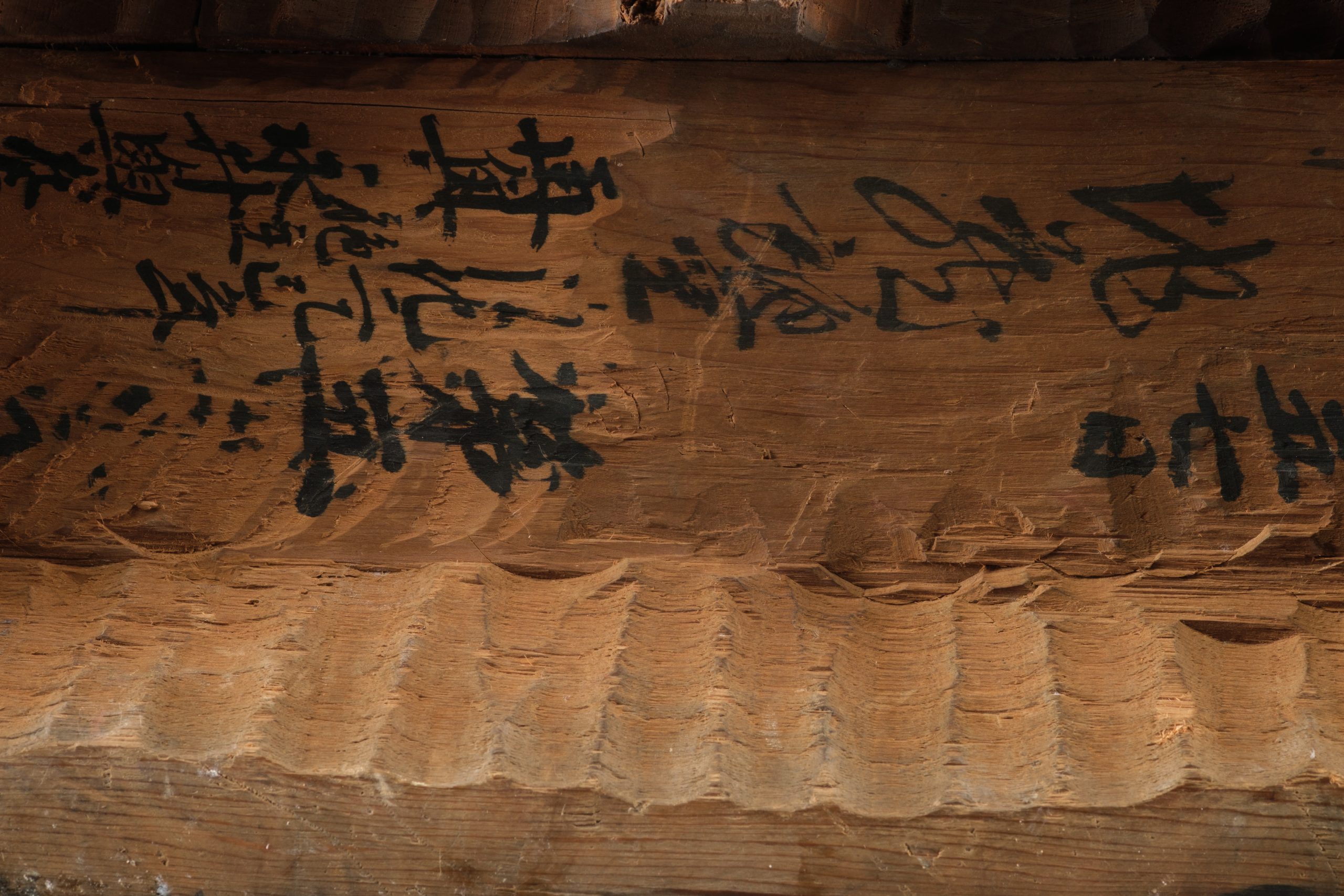
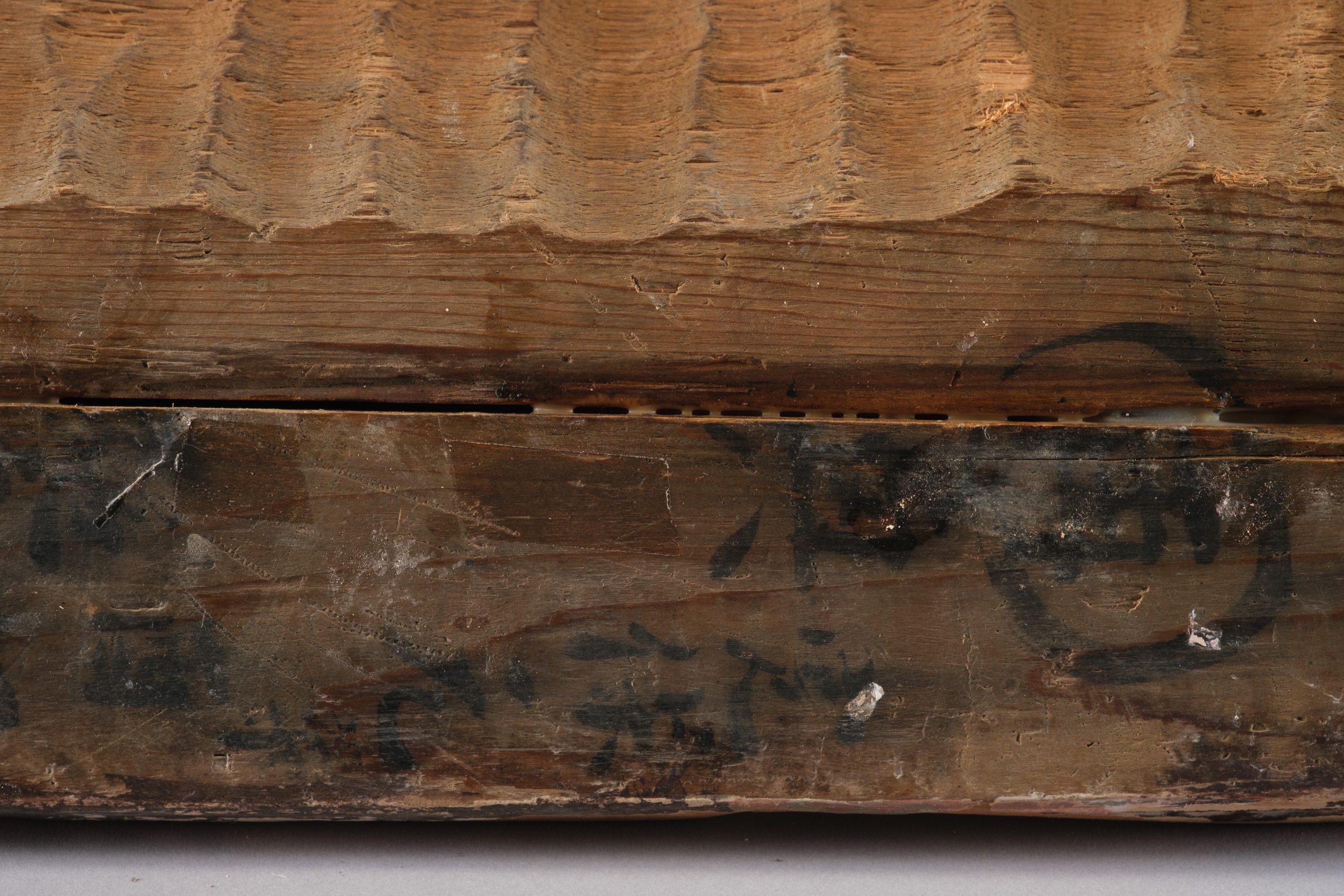
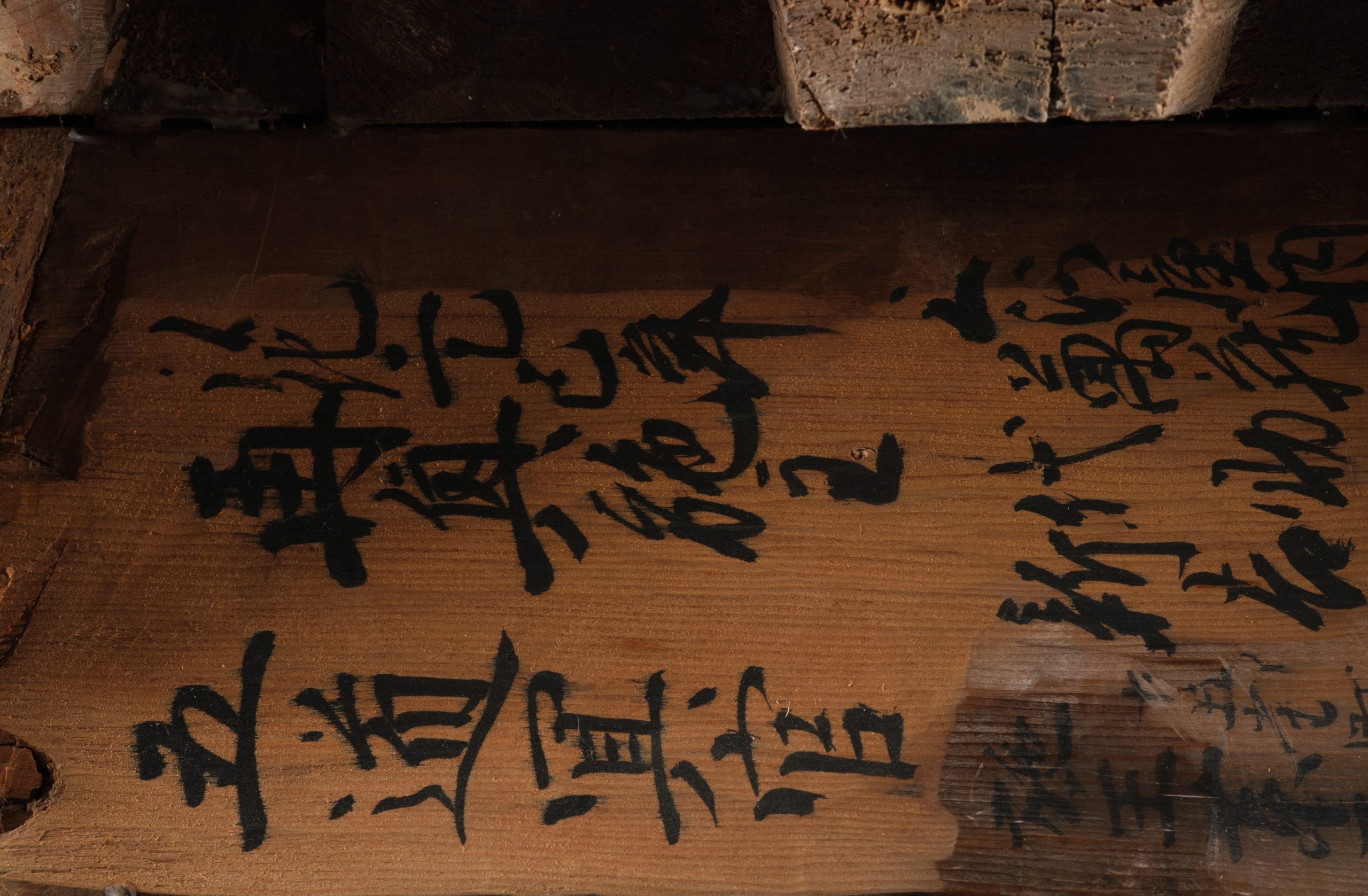
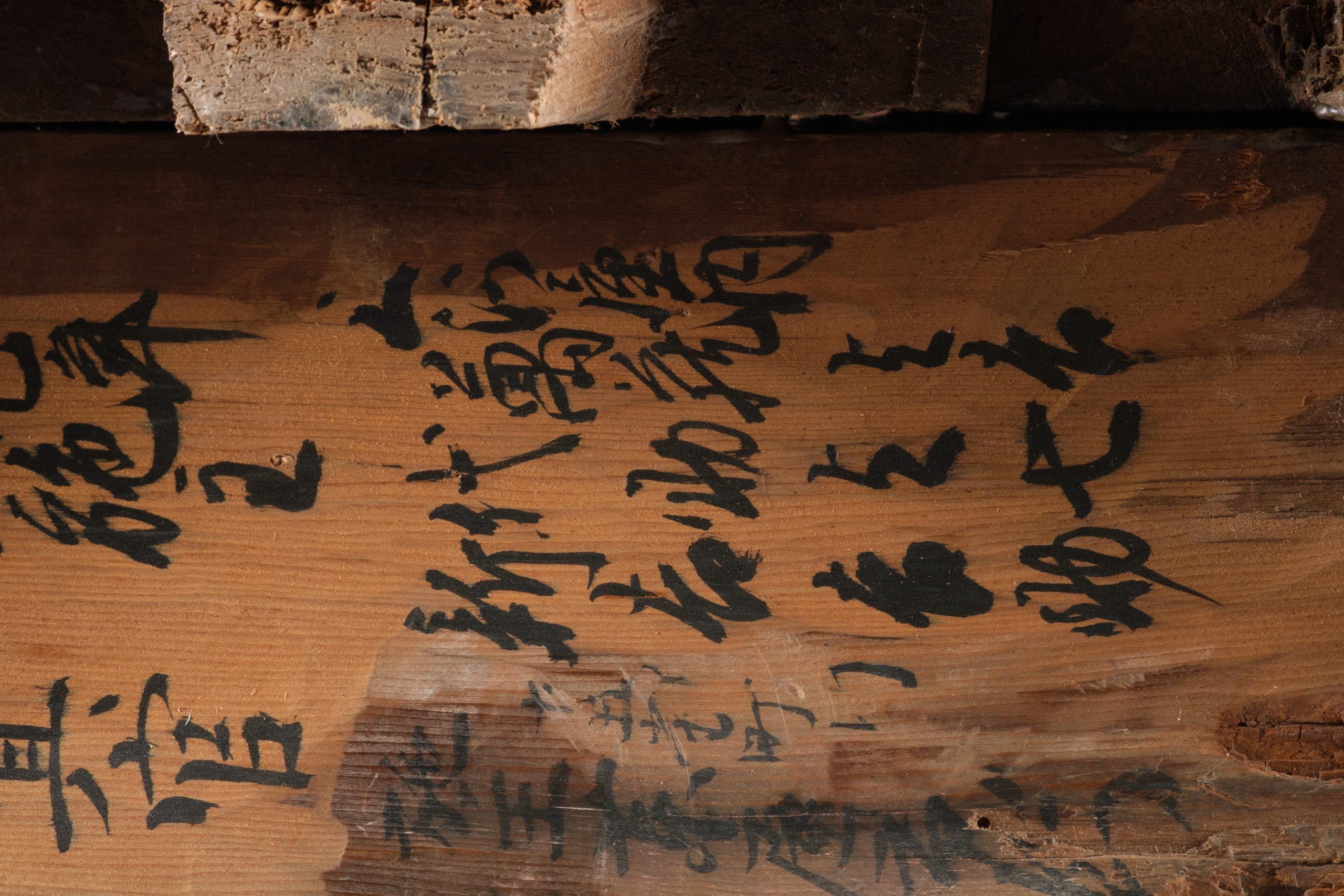
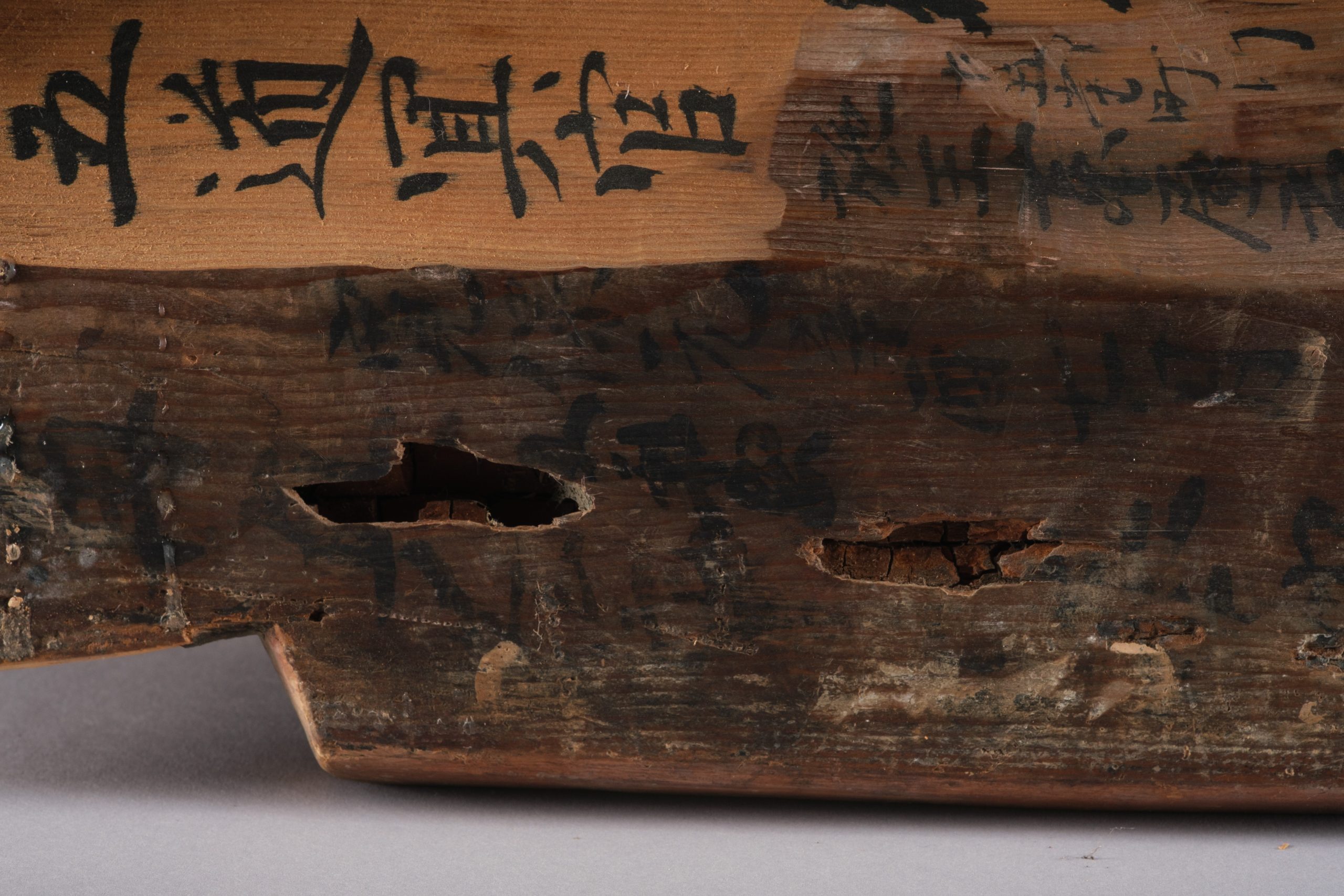
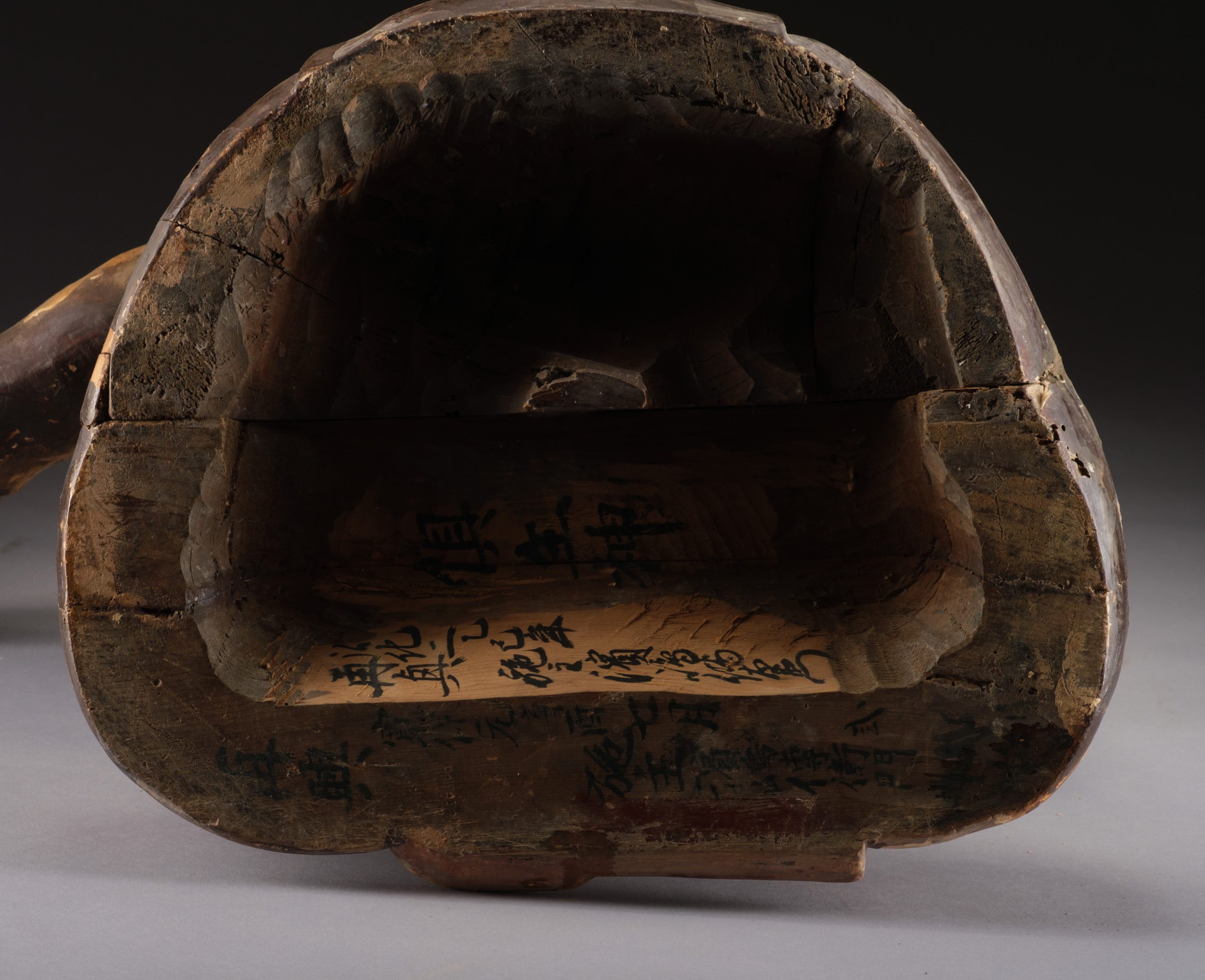
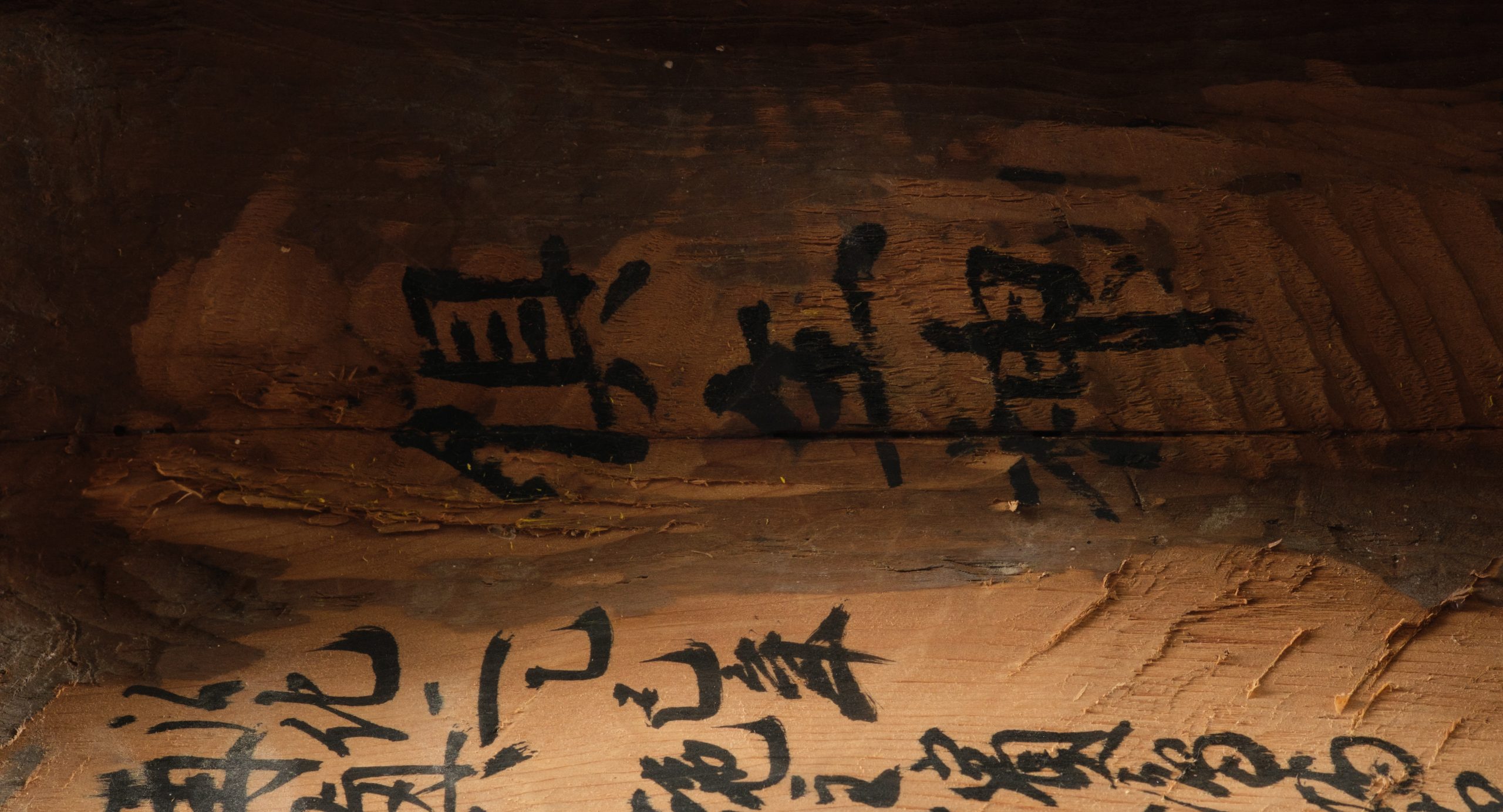
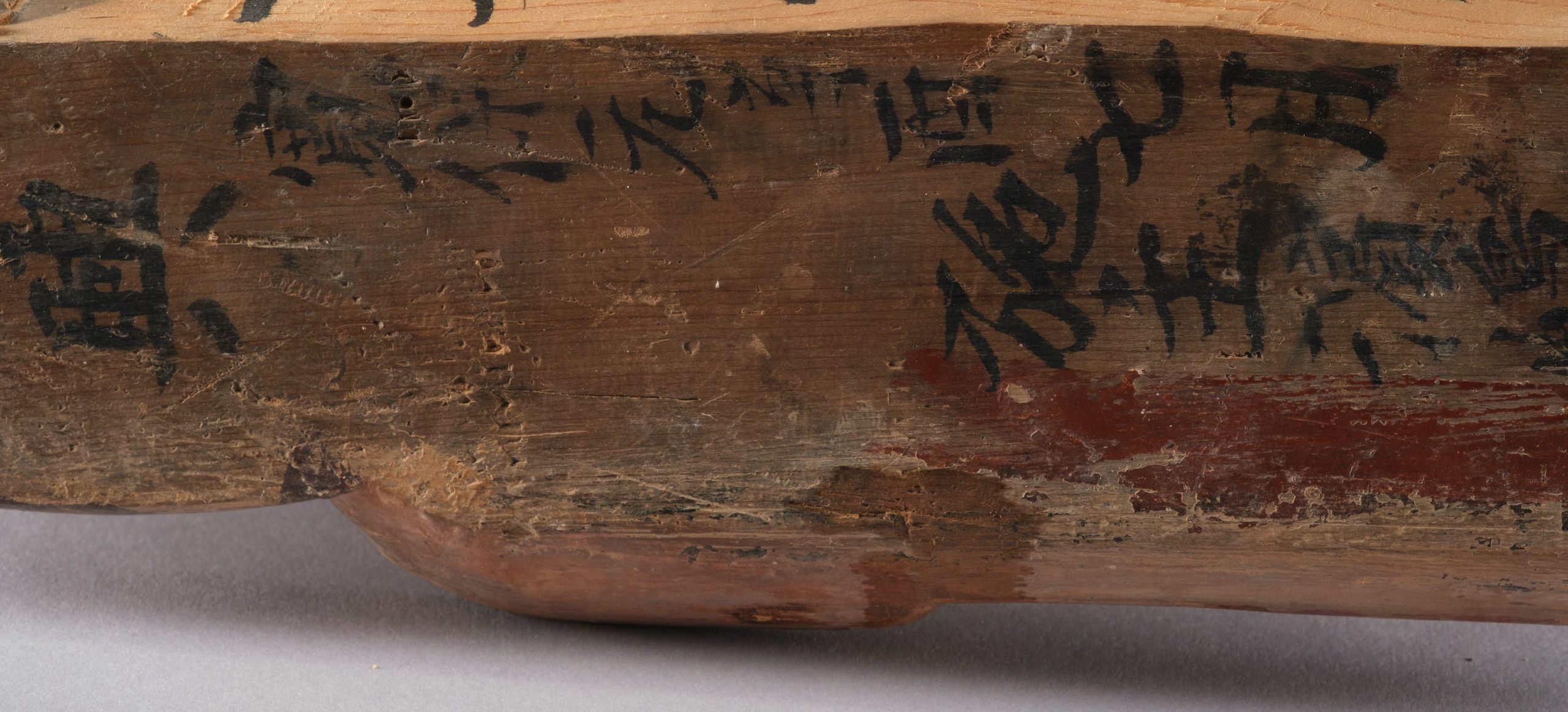
Each of the five figures carries inscriptions recording two separate restorations. The earlier inscription states that a restoration 再興 was undertaken in Kanpô 1 寛保元 (1741) by the donor 施主 濱嶋傳衛門 (Hamajima Den’emon). A second inscription on each sculpture records a further restoration carried out in Kôka 2 弘化二年 (1845), supported by multiple donors. The sculptures therefore predate the 1741 restoration and are demonstrably older than that date.
Complete groups of this type are exceptionally rare. One comparable five-figure ensemble is preserved at Hôshaku-ji 宝積寺 in Ôyamazaki, Kyoto Prefecture, where the figures have likewise remained together as a group.
Period: Japan – Edo period, before 1741, with documented restorations in Kanpô 1 (1741) and Kôka 2 (1845).
Dimensions:
King Enma 閻魔王 (Enma-ô): Height 52.5 cm, Width 51 cm, Depth 35 cm.
Shiroku 司録 (record-taker): Height 51.5 cm, Width 54.5 cm, Depth 29.5 cm.
Shimei 司命 (judgment-reader): Height 52 cm, Width 40 cm, Depth 27.5 cm.
King Taizan 泰山王 (Taizan-ô), holding a jar: Height 53 cm, Width 49 cm, Depth 33 cm.
King Godô Tenrin 五道転輪王 (Godô Tenrin-ô), with the tiger motif on the chest: Height 53.5 cm, Width 48.5 cm, Depth 34.5 cm.
Wooden base: Height 6.5 cm, Width 51 cm, Depth 36 cm.
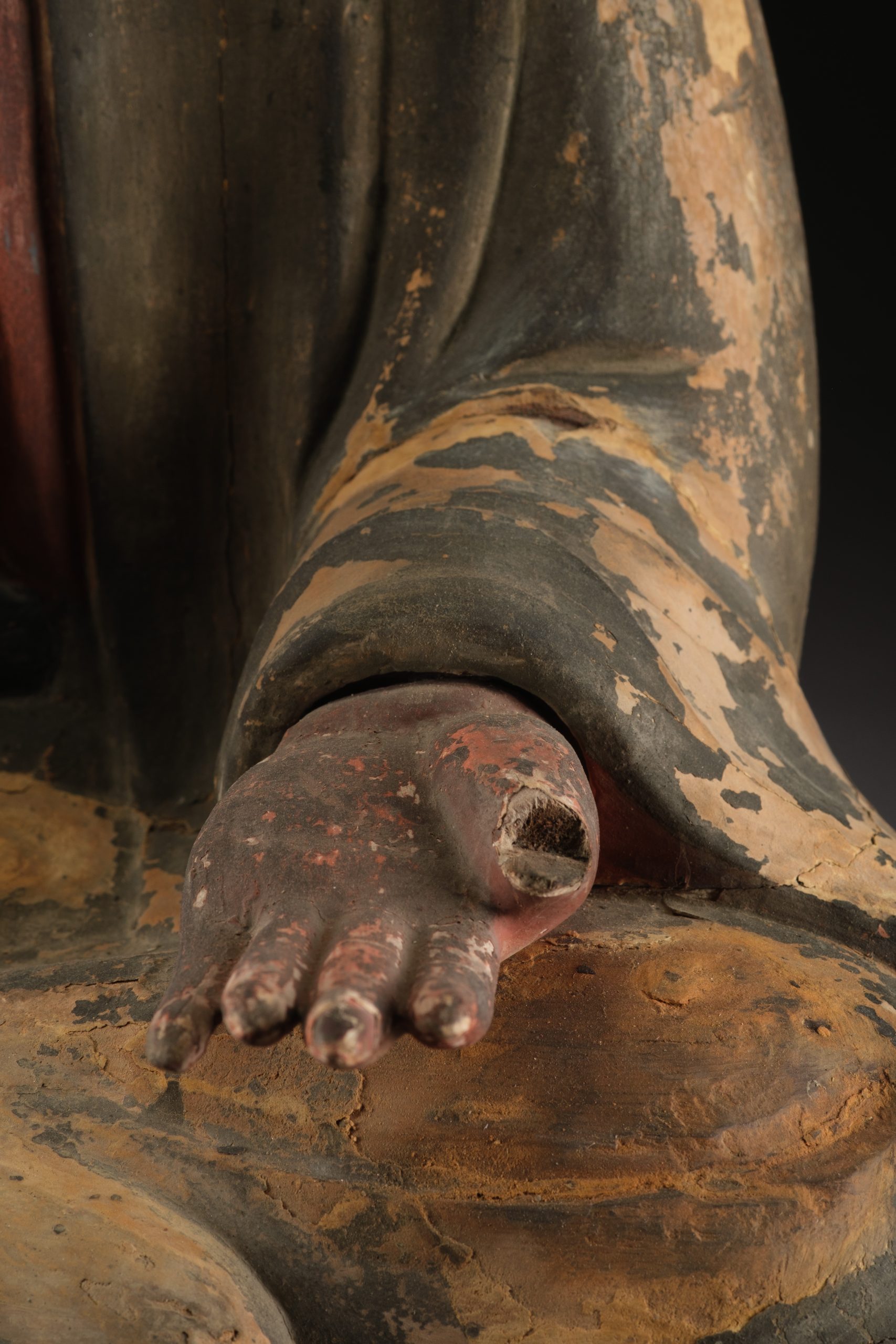
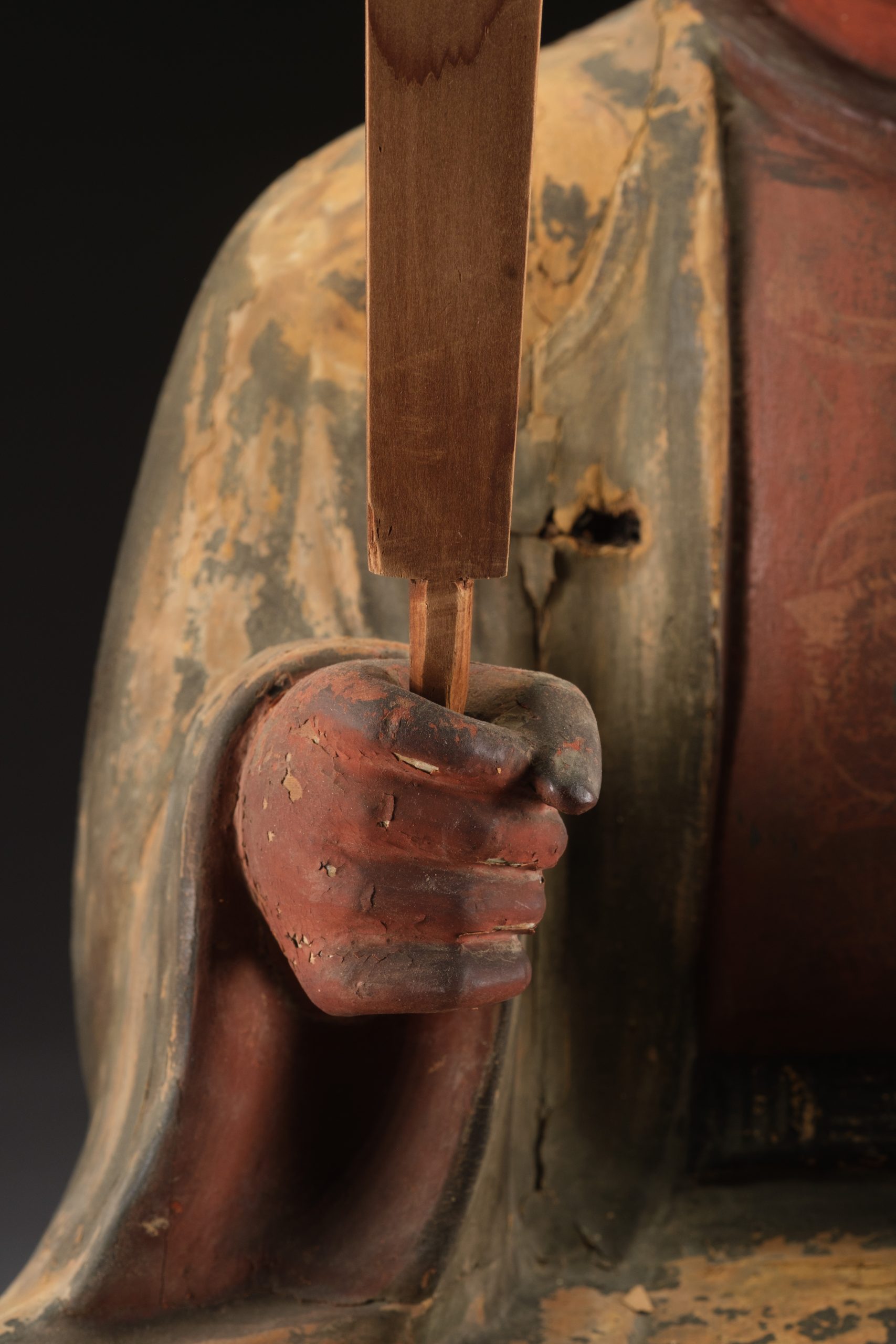
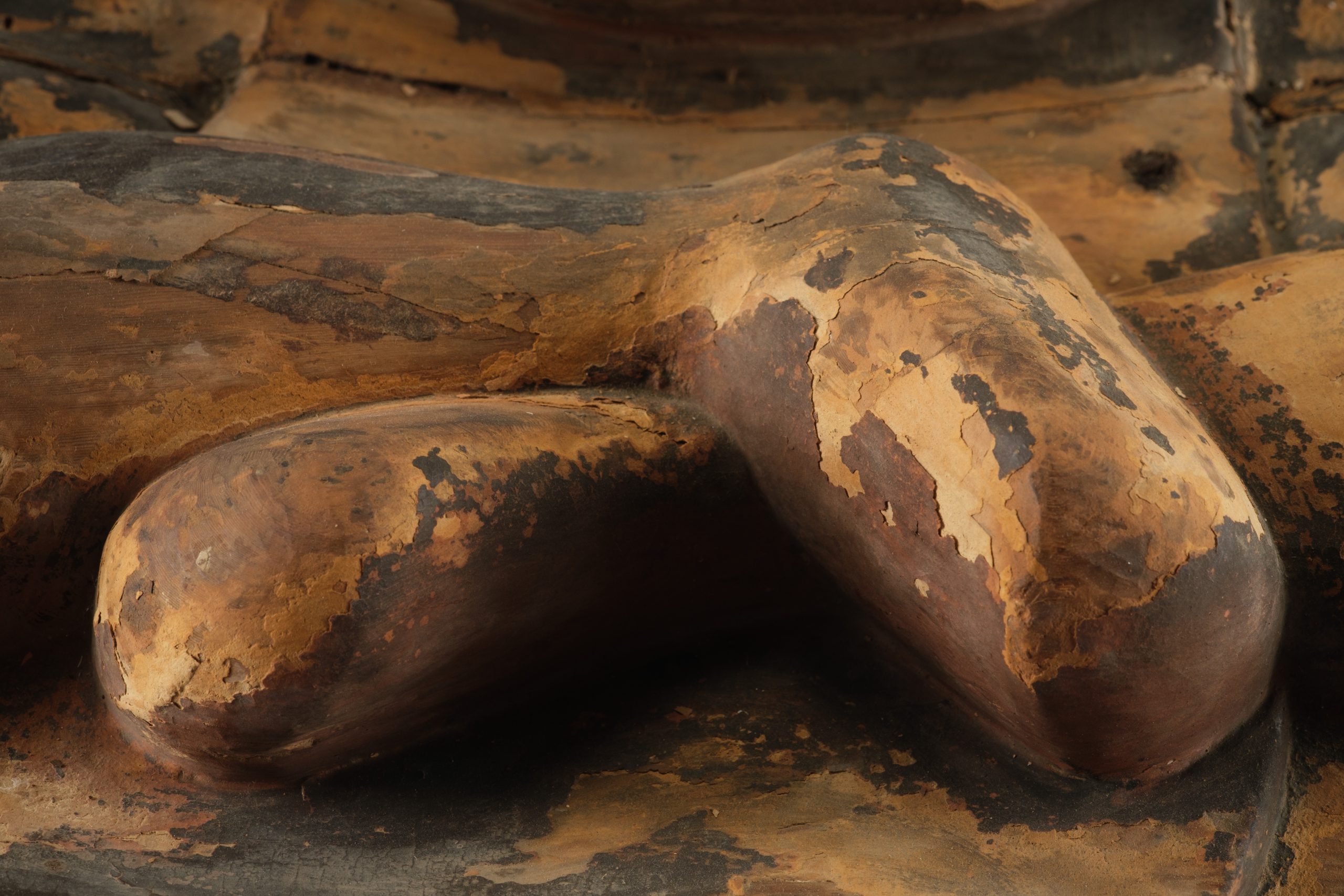
Considering their age, and particularly the fact that the complete group has remained together, the figures are in very good condition. There are losses, wear and old repairs consistent with age, including losses to the polychrome decoration, attributes and details of the headgear. The fan belonging to Godô Tenrin-ô is a later replacement. Please refer to the photographs for a clear impression of the condition.
When shipped, a certificate of authenticity will be included.